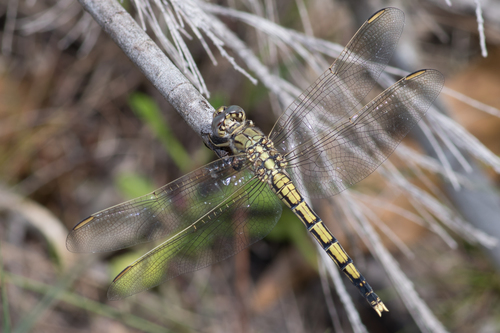
Wandering Pennant

Wandering Pennant

Macrodiplax cora

Daily sighting probability ~20% · Possible
at Kakadu National Park

In 3 days ~40% in a week ~70%

18 Verified sightings at Kakadu National Park From 2019 to 2026
44 In all 2 parks
August Best month
☀️ Diurnal When it's spotted

About the Wandering Pennant

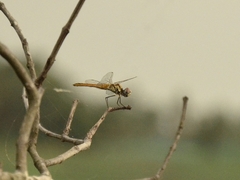
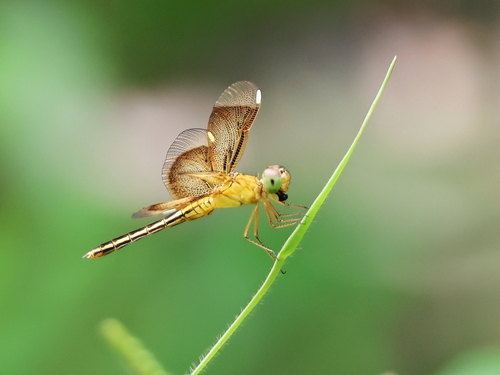
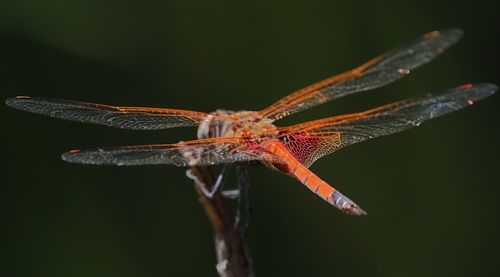
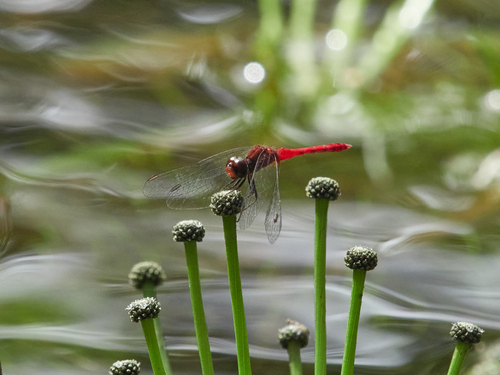
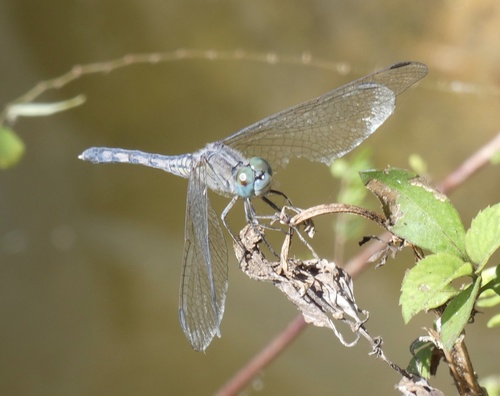
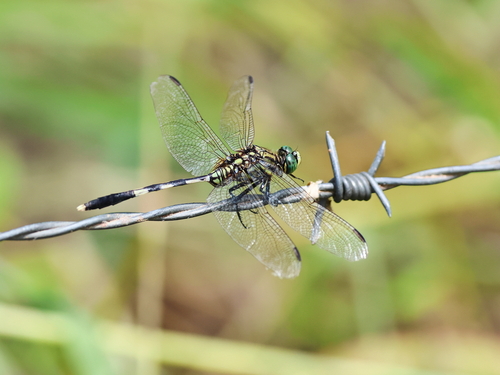
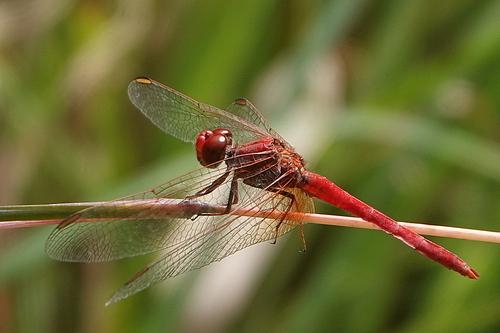
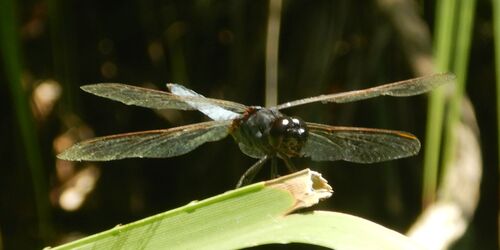
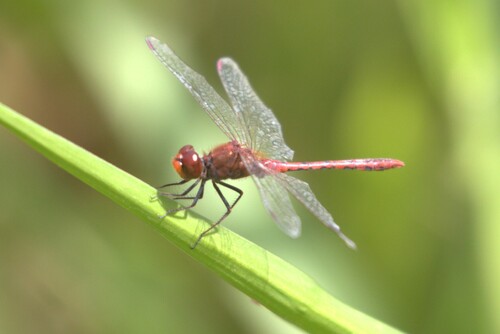
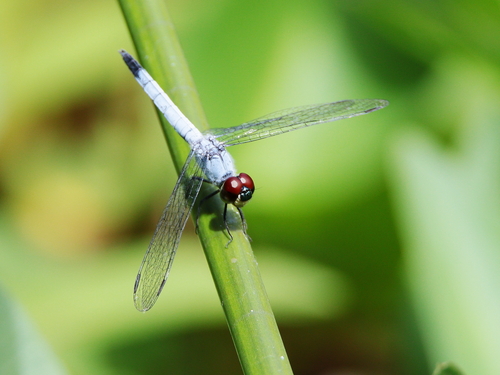
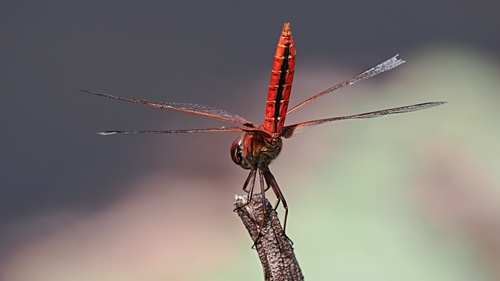
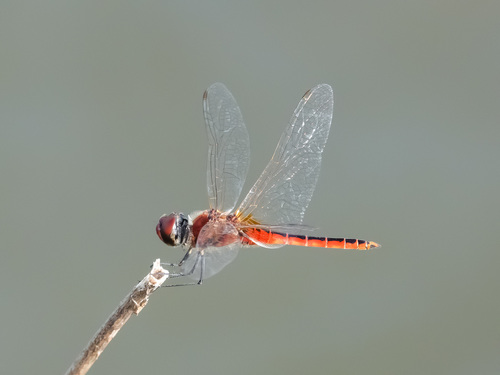
Macrodiplax cora, the coastal glider, also known as wandering pennant, and Cora's pennant, is a species of dragonfly in the family Libellulidae. An adult male Macrodiplax cora is a medium-sized dragonfly (length 45mm, wingspan 75mm) with a red abdomen, dorsally marked with black patches on each segment. The female abdomen is less brightly colored. The synthorax is a brownish color and may be hirsute. The wings are clear except for a yellowish patch at the base of the hind wing. Its bi-colored legs and hourglass shaped black patches on the abdominal segments will help to easily distinguish them from other red colored dragonflies.

The species undertakes migration and may be nomadic, and is thus widespread in tropical Asia and Australasia. It occurs in South Asia, Australia and a variety of Indian and Pacific Oceans Islands. It prefers coastal lagoons, estuaries and swamps, as it is somewhat salt-tolerant.

The genus name Macrodiplax combines the Greek μακρός (makros, "large" or "long") with Diplax, a genus name derived from the Greek δίς (dis, "twice") and πλάξ (plax, "flat and broad"). The name probably refers to the large... Wikipedia →
Global Distribution

Parks Where Found

# Park Country Daily sighting probability
1 Kakadu National Park 🇦🇺 Australia
~20%
2 iSimangaliso Wetland Park 🇿🇦 South Africa
~10%

Cities Where Found

# City Country Daily sighting probability
1 Kolkata 🇮🇳 India
~10%
2 Denpasar 🇮🇩 Indonesia
~10%
3 Kochi 🇮🇳 India
~10%
4 Bangkok 🇹🇭 Thailand
~10%
5 Kaohsiung 🇹🇼 Taiwan
~10%
6 Singapore 🇸🇬 Singapore
~10%
7 Manila 🇵🇭 Philippines
~10%
8 Chennai 🇮🇳 India
<5%
9 Brisbane 🇦🇺 Australia
<5%

Before you go

What are the chances of seeing a Wandering Pennant in Kakadu National Park?

Possible

About 20% of wildlife watchers report a Wandering Pennant sighting in Kakadu National Park on a given day, based on 18 verified sightings from GBIF citizen-science data from 2019 to 2026. It is the 28th most-seen of the 76 insects we can rate there. Over three days the chance rises to about 40%, and over a week to about 70%, if each day is a fresh chance.

When is the best time to see a Wandering Pennant in Kakadu National Park?

April, August and December

In those months about 30% of wildlife watchers report a Wandering Pennant in Kakadu National Park on a given day, against under 5% in January–March, May, July and October, the lowest months.

What time of day is best to see a Wandering Pennant?

Between 10 am and 1 pm

Across all the parks we cover, that three-hour window holds the most Wandering Pennant sightings with a recorded time, and nearly all of them come between 6 am and 6 pm: it is a daytime animal.

Is Kakadu National Park the best place to see a Wandering Pennant?

Yes

Of the 2 parks where we can rate Wandering Pennant sightings, Kakadu National Park has the highest daily chance: about 20%. Next come iSimangaliso Wetland Park (South Africa, about 10%).

Which relatives of the Wandering Pennant live in Kakadu National Park?

Same family: Libellulidae

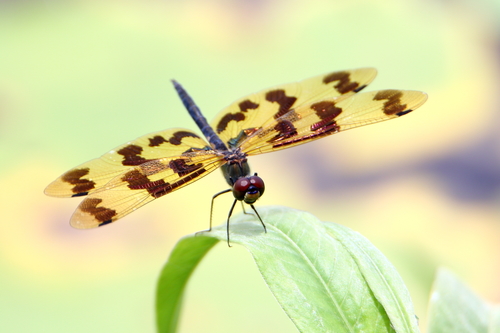
The closest relatives of the Wandering Pennant that you can see in Kakadu National Park (family Libellulidae, Skimmers) are Painted Grasshawk (about 40%), Graphic Flutterer (about 40%) and Common Glider (about 30%), with each one's daily chance of a sighting.

Where does the Wandering Pennant sighting chance come from?

GBIF citizen-science records

It is estimated from how often the Wandering Pennant is recorded against all the insects logged in Kakadu National Park (18 verified sightings from 2019 to 2026), calibrated against known sighting rates. Figures are rounded to the nearest 10% because citizen-science data supports honest approximations, not decimals, and months with records from fewer than five people show "—". How it works.

← Back to Kakadu National Park