Red-headed Bunting

Red-headed Bunting

Emberiza bruniceps

Silhouette: L. Shyamal · PhyloPic

LCLeast ConcernNTVUENCR
Daily sighting probability <5% · Rare
at Keoladeo National Park

In 3 days <5% in a week ~10%

18 Verified sightings at Keoladeo National Park From 2019 to 2026
51 In all 3 parks
April Best month
☀️ Diurnal When it's spotted

About the Red-headed Bunting

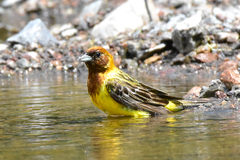
The red-headed bunting (Emberiza bruniceps) is a passerine bird in the bunting family Emberizidae. It breeds in central Asia, including Afghanistan, Iran, Kazakhstan, Kyrgyzstan, Mongolia; Russia (European Russia, Central Asian Russia), Tajikistan, Turkmenistan, Uzbekistan and China. It is migratory, wintering in India and Bangladesh. Its status in western Europe, where it is a vagrant, has been confused by escapes, especially as this species has been more commonly recorded than the closely related black-headed bunting, despite the latter having a more westerly breeding range. Reports in Britain have declined dramatically over recent years, coinciding with the decline in some Emberizidae species from the impact of illegal trade. An individual found on Shetland in 2010 was deemed to be wild in origin.

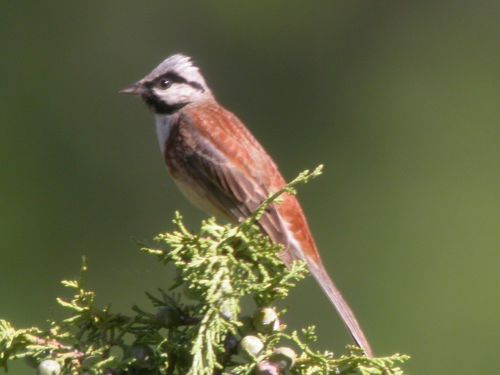
The red-headed bunting breeds in open scrubby areas including agricultural land. It lays three to five eggs in a nest in a tree or bush. Its natural food consists of seeds, or when feeding young, insects. This bird is 17 cm long, larger than reed bunting, with a long tail. The breeding male has bright yellow underparts, green upperparts and a brownish-red face and breast.

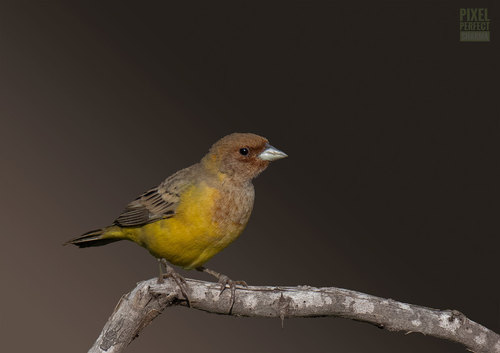
The female is a washed-out version of the male, with paler underparts, a grey-brown back and a greyish head. The juvenile is similar, and both can be difficult to separate from the corresponding plumages of black-headed bunting bird.

The song, given from a high perch, is a jerky sweet-sweet-churri-churri-churri. Wikipedia →
Sounds

Song0:55

Uzbekistan · 2025

© Frank Lambert · XC1029830 · CC BY-NC-ND 4.0

Call0:52

Kazakhstan · 2022

© Agris Celmins · XC736907 · CC BY-NC-ND 4.0

Song0:57

Kazakhstan · 2023

© Peter Boesman · XC813363 · CC BY-NC-ND 4.0

Global Distribution

Parks Where Found

# Park Country Daily sighting probability
1 Ranthambore National Park 🇮🇳 India
<5%
2 Keoladeo National Park 🇮🇳 India
<5%
3 Kanha National Park 🇮🇳 India
<5%

Cities Where Found

# City Country Daily sighting probability
1 Nagpur 🇮🇳 India
<5%
2 Kolkata 🇮🇳 India
<5%
3 Vasai-Virar 🇮🇳 India
<5%
4 Pune 🇮🇳 India
<5%
5 New Delhi 🇮🇳 India
<5%

Before you go

What are the chances of seeing a Red-headed Bunting in Keoladeo National Park?

Rare

Under 5% of wildlife watchers report a Red-headed Bunting sighting in Keoladeo National Park on a given day, based on 18 verified sightings from GBIF citizen-science data from 2019 to 2026. It is the 228th most-seen of the 278 birds we can rate there. Over three days the chance rises to under 5%, and over a week to about 10%, if each day is a fresh chance.

When is the best time to see a Red-headed Bunting in Keoladeo National Park?

Any time of year

In every month with enough records, under 5% of wildlife watchers report a Red-headed Bunting in Keoladeo National Park on a given day, so our monthly data shows no clear season.

What time of day is best to see a Red-headed Bunting?

Between 7 and 10 am

Across all the parks we cover, that three-hour window holds the most Red-headed Bunting sightings with a recorded time, and about 8 in 10 of them come between 6 am and 6 pm: it is a daytime animal.

Is Keoladeo National Park the best place to see a Red-headed Bunting?

Among the best

Of the 3 parks where we can rate Red-headed Bunting sightings, Keoladeo National Park ranks 2nd at under 5%, level with the leaders once rounded. The best odds are in Ranthambore National Park (India, under 5%).

Where does the Red-headed Bunting sighting chance come from?

GBIF citizen-science records

It is estimated from how often the Red-headed Bunting is recorded against all the birds logged in Keoladeo National Park (18 verified sightings from 2019 to 2026), calibrated against known sighting rates. Figures are rounded to the nearest 10% because citizen-science data supports honest approximations, not decimals, and months with records from fewer than five people show "—". How it works.

← Back to Keoladeo National Park