Short-Tailed Blue

Short-Tailed Blue

Elkalyce argiades

Daily sighting probability ~20% · Possible
at Kiskunság National Park

In 3 days ~50% in a week ~80%

6 Verified sightings at Kiskunság National Park From 2019 to 2026
121 In all 6 parks
April Best month
☀️ Diurnal When it's spotted

About the Short-Tailed Blue

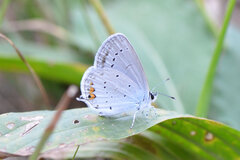
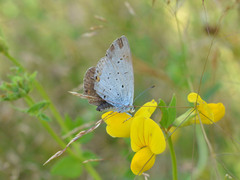
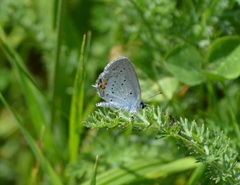
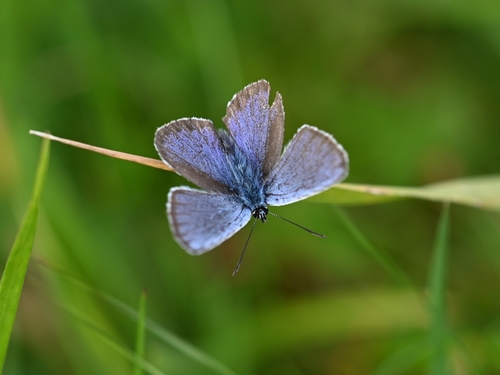
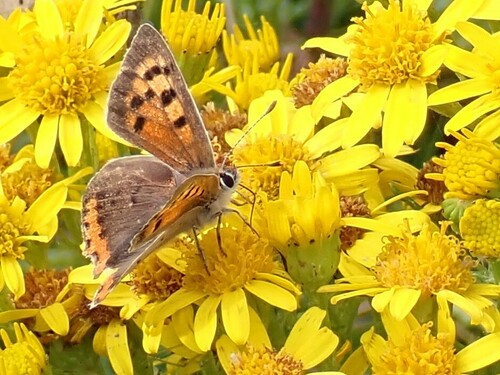
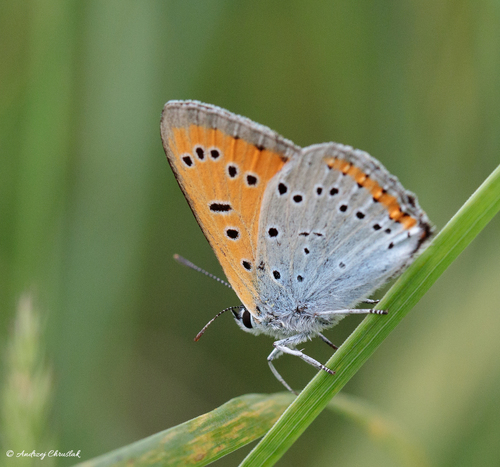
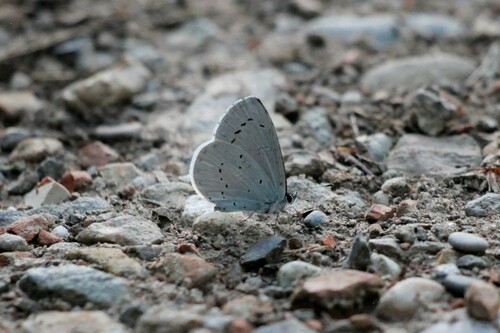
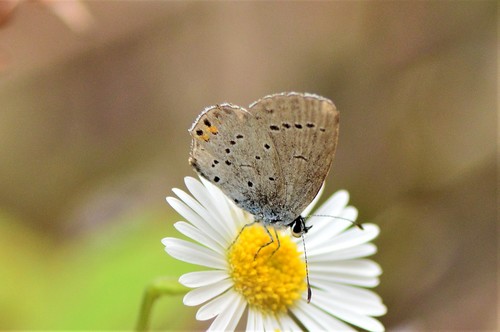
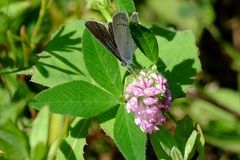
The short-tailed blue or tailed Cupid (Cupido argiades) is a butterfly that forms part of the family Lycaenidae. It is found from Europe to Japan and in India. The male has a violet upperside, a violet forewing with brown edging, and a violet hindwing with a brown edging of varying length. The wings have black spots, some of which have slight white edging. The tail is black with a white tip. The underside of the wings are white or brownish grey, the markings prominent or very faint. The antennae are black with white speckling on the shafts. The body is brown with a purple flush on fresh specimens.

The female has a dark grey-blue upperside, with black parts and broader edging. The undersides of the wings are like those of the male but with more stark markings. The body is like that of the male but without the purple flush.

Specimens from very dry localities in Upper Burma and from Great Nicobar Island are remarkably small and pale, with the markings on the underside, especially the subtornal ochraceous yellow patch, more or less obsolescent.

Southern short-tailed blue (Cupido alcetas ), southern Europe Eastern short-tailed blue ( Cupido decolorata... Wikipedia →
Global Distribution

Parks Where Found

# Park Country Daily sighting probability
1 Kiskunság National Park 🇭🇺 Hungary
~20%
2 Bavarian Forest National Park 🇩🇪 Germany
~20%
3 Picos de Europa National Park 🇪🇸 Spain
~10%
4 Aigüestortes National Park 🇪🇸 Spain
~10%
5 Fertő-Hanság National Park 🇭🇺 Hungary
~10%
6 Pyrénées National Park 🇫🇷 France
~10%

Cities Where Found

# City Country Daily sighting probability
1 Nagoya 🇯🇵 Japan
~30%
2 Wuhan 🇨🇳 China
~20%
3 Daegu 🇰🇷 South Korea
~20%
4 Daejeon 🇰🇷 South Korea
~20%
5 Osaka 🇯🇵 Japan
~10%
6 Seoul 🇰🇷 South Korea
~10%
7 Suzhou 🇨🇳 China
~10%
8 Beijing 🇨🇳 China
~10%
9 Sendai 🇯🇵 Japan
~10%
10 Tokyo 🇯🇵 Japan
~10%

Before you go

What are the chances of seeing a Short-Tailed Blue in Kiskunság National Park?

Possible

About 20% of wildlife watchers report a Short-Tailed Blue sighting in Kiskunság National Park on a given day, based on 6 verified sightings from GBIF citizen-science data from 2019 to 2026. It is the 67th most-seen of the 95 insects we can rate there. Over three days the chance rises to about 50%, and over a week to about 80%, if each day is a fresh chance.

When is the best time to see a Short-Tailed Blue in Kiskunság National Park?

April and May

In those months about 30% of wildlife watchers report a Short-Tailed Blue in Kiskunság National Park on a given day, against under 5% in January–March, June and August–October, the lowest months.

What time of day is best to see a Short-Tailed Blue?

Between 10 am and 1 pm

Across all the parks we cover, that three-hour window holds the most Short-Tailed Blue sightings with a recorded time, and about 9 in 10 of them come between 6 am and 6 pm: it is a daytime animal.

Is Kiskunság National Park the best place to see a Short-Tailed Blue?

Yes

Of the 6 parks where we can rate Short-Tailed Blue sightings, Kiskunság National Park has the highest daily chance: about 20%. Next come Bavarian Forest National Park (Germany, about 20%) and Picos de Europa National Park (Spain, about 10%).

Which relatives of the Short-Tailed Blue live in Kiskunság National Park?

Same family: Lycaenidae

The closest relatives of the Short-Tailed Blue that you can see in Kiskunság National Park (family Lycaenidae, Gossamer-winged Butterflies) are Common Blue (about 40%), Silver-Studded Blue (about 40%) and Small Copper (about 30%), with each one's daily chance of a sighting.

Where does the Short-Tailed Blue sighting chance come from?

GBIF citizen-science records

It is estimated from how often the Short-Tailed Blue is recorded against all the insects logged in Kiskunság National Park (6 verified sightings from 2019 to 2026), calibrated against known sighting rates. Figures are rounded to the nearest 10% because citizen-science data supports honest approximations, not decimals, and months with records from fewer than five people show "—". How it works.

← Back to Kiskunság National Park