Black Crevice-skink

Black Crevice-skink

Egernia saxatilis

Silhouette: Kailah Thorn & Ben King · PhyloPic

LCLeast ConcernNTVUENCR Endemic
Daily sighting probability ~20% · Possible
at Kosciuszko National Park

In 3 days ~50% in a week ~80%

11 Verified sightings at Kosciuszko National Park From 2019 to 2026
205 In all 3 parks
October Best month
☀️ Diurnal When it's spotted

About the Black Crevice-skink

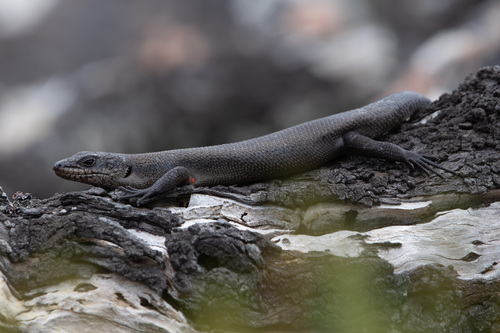
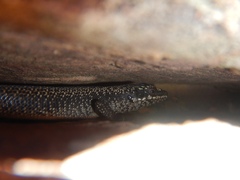
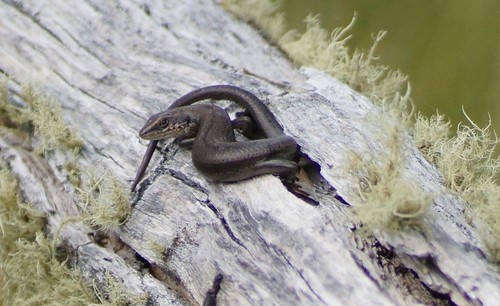
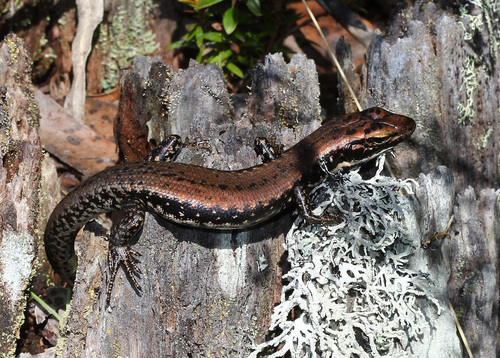
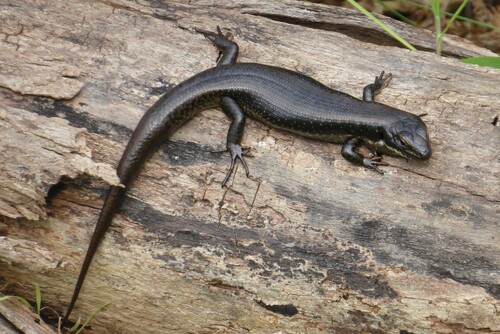
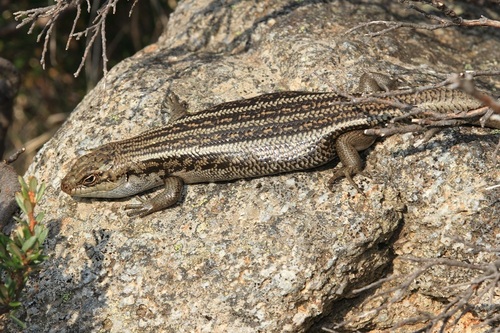
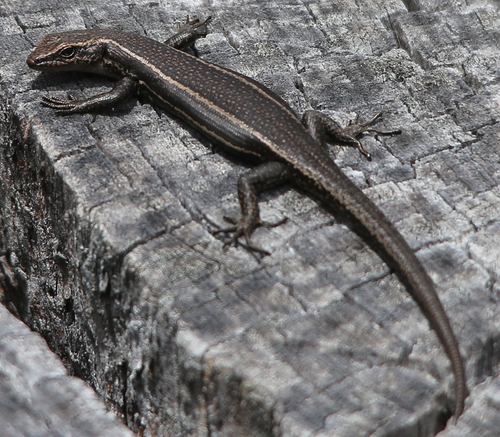
The black rock skink (Egernia saxatilis) is a species of large skink native to Eastern and Southern Australia from central New South Wales to Grampians National Park in Victoria. A large, dark colored skink, up to 135 mm from snout to base of the tail, the black rock skink is the first reptile discovered to have a "nuclear family" structure where the parents form a pair and care for their offspring for more than one year. The black rock skink is a viviparous skink meaning females give birth to live offspring instead of laying eggs. They defend their home range and families against conspecifics for up to several years.

Egernia saxatilis is divided into two separate subspecies: E. saxatilis saxatilis and E. saxatilis intermedia. Morphological and ecological differences exist between the two subspecies. The two subspecies differ in their scale counts and degree of spinosity, along with being found in two different parts of Southeastern Australia in different types of habitats. Wikipedia →

Global Distribution

Parks Where Found

# Park Country Daily sighting probability
1 Grampians National Park 🇦🇺 Australia
~60%
2 Kosciuszko National Park 🇦🇺 Australia
~20%
3 Blue Mountains National Park 🇦🇺 Australia
~10%

Closest Relatives at Kosciuszko National Park

Before you go

What are the chances of seeing a Black Crevice-skink in Kosciuszko National Park?

Possible

About 20% of wildlife watchers report a Black Crevice-skink sighting in Kosciuszko National Park on a given day, based on 11 verified sightings from GBIF citizen-science data from 2019 to 2026. It is the 15th most-seen of the 20 reptiles we can rate there. Over three days the chance rises to about 50%, and over a week to about 80%, if each day is a fresh chance.

When is the best time to see a Black Crevice-skink in Kosciuszko National Park?

October and November

In those months about 30% of wildlife watchers report a Black Crevice-skink in Kosciuszko National Park on a given day, against under 5% in March to August, the lowest months.

What time of day is best to see a Black Crevice-skink?

Between noon and 3 pm

Across all the parks we cover, that three-hour window holds the most Black Crevice-skink sightings with a recorded time, and nearly all of them come between 6 am and 6 pm: it is a daytime animal.

Is Kosciuszko National Park the best place to see a Black Crevice-skink?

2nd of 3

Of the 3 parks where we can rate Black Crevice-skink sightings, Kosciuszko National Park ranks 2nd at about 20%. The best odds are in Grampians National Park (Australia, about 60%).

Where does the Black Crevice-skink sighting chance come from?

GBIF citizen-science records

It is estimated from how often the Black Crevice-skink is recorded against all the reptiles logged in Kosciuszko National Park (11 verified sightings from 2019 to 2026), calibrated against known sighting rates. Figures are rounded to the nearest 10% because citizen-science data supports honest approximations, not decimals, and months with records from fewer than five people show "—". How it works.

← Back to Kosciuszko National Park