
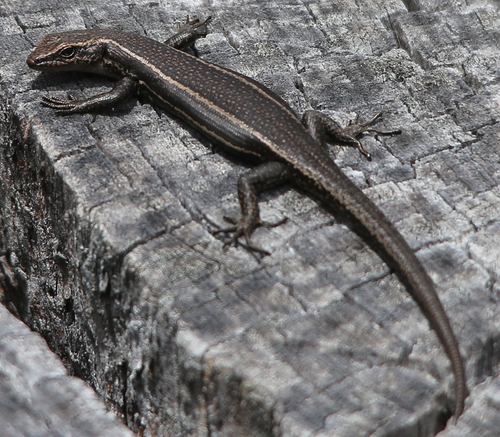
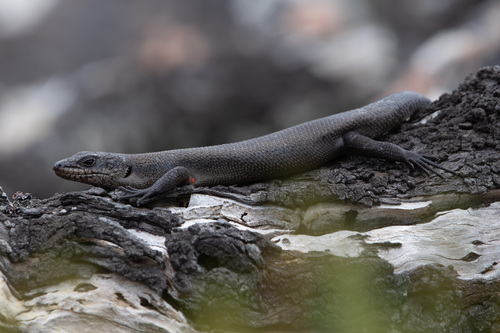
Blotched Bluetongue

Blotched Bluetongue

Tiliqua nigrolutea

Silhouette: David Orr · PhyloPic

LCLeast ConcernNTVUENCR Endemic
Daily sighting probability ~40% · Likely
at Kosciuszko National Park

In 3 days ~80% in a week >90%

56 Verified sightings at Kosciuszko National Park From 2019 to 2026
326 In all 6 parks
October Best month
☀️ Diurnal When it's spotted

About the Blotched Bluetongue

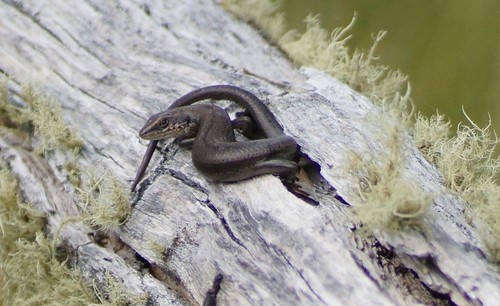
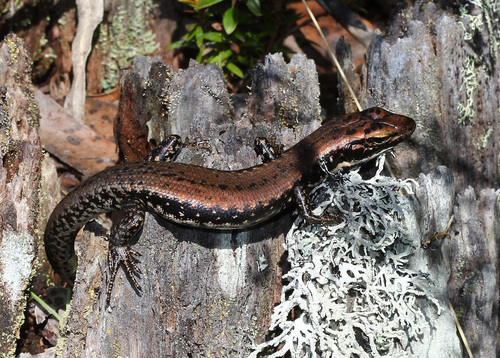
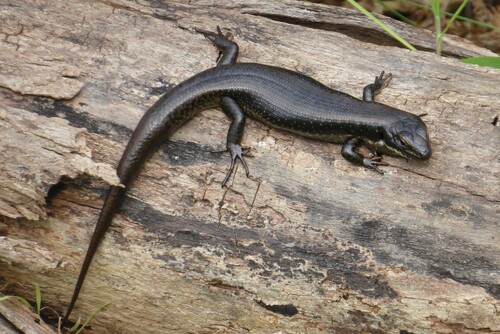
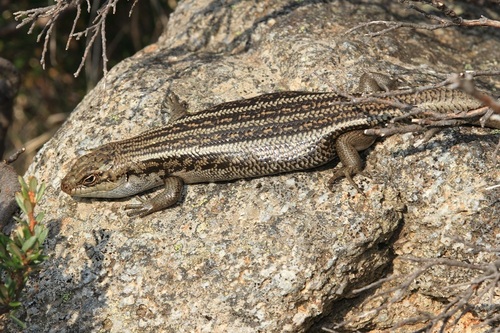
The blotched blue-tongued skink (Tiliqua nigrolutea), also known as the southern blue-tongued lizard or blotched blue-tongued lizard, is a blue-tongued skink endemic to south-eastern Australia. This species is a relatively large member of the skink family (Scincidae) with a robust body and relatively short limbs. Colouration and pattern varies geographically, with two distinct forms recognised by some herpetologists, i.e lowlands and highlands. The lowlands form tends to be shades of grey or brown with paler silvery to tan coloured blotches along the back, that are contrasted by surrounding darker areas. The highlands form is typically darker (often jet black) that provides a strong contrast to much paler cream or more brightly coloured pink, salmon or orange coloured blotches.

They have a fleshy blue tongue that is used to taste the air and scare off potential predators. They tend to rely on camouflage and bluff as their primary means of defence; however, if cornered or molested, they can put on an impressive and effective defensive display. If further molested, it will bite as a last resort and although the bite can be painful due to its powerful jaws, the teeth... Wikipedia →

Global Distribution

Parks Where Found

# Park Country Daily sighting probability
1 Kosciuszko National Park 🇦🇺 Australia
~40%
2 Wilsons Promontory National Park 🇦🇺 Australia
~40%
3 Blue Mountains National Park 🇦🇺 Australia
~30%
4 Great Otway National Park 🇦🇺 Australia
~20%
5 Freycinet National Park 🇦🇺 Australia
~20%
6 Grampians National Park 🇦🇺 Australia
~10%

Cities Where Found

# City Country Daily sighting probability
1 Melbourne 🇦🇺 Australia
~10%
2 Hobart 🇦🇺 Australia
~10%

Zoos & Centres Where Found

# Zoo / Centre Country
1 Columbus Zoo and Aquarium 🇺🇸 United States In captivity
2 Schönbrunn Zoo 🇦🇹 Austria In captivity
3 East Coast Natureworld 🇦🇺 Australia In captivity
4 Gorge Wildlife Park 🇦🇺 Australia In captivity
5 Greenville Zoo 🇺🇸 United States In captivity
6 Featherdale Sydney Wildlife Park 🇦🇺 Australia In captivity
7 Bonorong Wildlife Sanctuary 🇦🇺 Australia In captivity
8 Sea Life Sydney Aquarium 🇦🇺 Australia In captivity
9 Cairns Aquarium 🇦🇺 Australia In captivity
10 Wild Life Sydney 🇦🇺 Australia In captivity
11 AOAO Sapporo 🇯🇵 Japan In captivity
12 átoa 🇯🇵 Japan In captivity
13 Trowunna Wildlife Park 🇦🇺 Australia In captivity

Closest Relatives at Kosciuszko National Park

Before you go

What are the chances of seeing a Blotched Bluetongue in Kosciuszko National Park?

Likely

About 40% of wildlife watchers report a Blotched Bluetongue sighting in Kosciuszko National Park on a given day, based on 56 verified sightings from GBIF citizen-science data from 2019 to 2026. It is the 2nd most-seen of the 20 reptiles we can rate there. Over three days the chance rises to about 80%, and over a week to over 90%, if each day is a fresh chance.

When is the best time to see a Blotched Bluetongue in Kosciuszko National Park?

October to December

In those months about 60% of wildlife watchers report a Blotched Bluetongue in Kosciuszko National Park on a given day, against under 5% in April–June and August–September, the lowest months.

What time of day is best to see a Blotched Bluetongue?

Between 11 am and 2 pm

Across all the parks we cover, that three-hour window holds the most Blotched Bluetongue sightings with a recorded time, and nearly all of them come between 6 am and 6 pm: it is a daytime animal.

Which relatives of the Blotched Bluetongue live in Kosciuszko National Park?

Same family: Scincidae

The closest relatives of the Blotched Bluetongue that you can see in Kosciuszko National Park (family Scincidae, Skinks) are Entrecasteaux's Skink (about 40%), Cunningham's Skink (about 40%) and Southern Water Skink (about 30%), with each one's daily chance of a sighting.

Where does the Blotched Bluetongue sighting chance come from?

GBIF citizen-science records

It is estimated from how often the Blotched Bluetongue is recorded against all the reptiles logged in Kosciuszko National Park (56 verified sightings from 2019 to 2026), calibrated against known sighting rates. Figures are rounded to the nearest 10% because citizen-science data supports honest approximations, not decimals, and months with records from fewer than five people show "—". How it works.

← Back to Kosciuszko National Park