Entrecasteaux's Skink

Entrecasteaux's Skink

Pseudemoia entrecasteauxii

Silhouette: Oliver Griffith · PhyloPic

LCLeast ConcernNTVUENCR Endemic
Daily sighting probability ~40% · Likely
at Kosciuszko National Park

In 3 days ~70% in a week >90%

48 Verified sightings at Kosciuszko National Park From 2019 to 2026
69 In all 3 parks
February Best month
☀️ Diurnal When it's spotted

About the Entrecasteaux's Skink

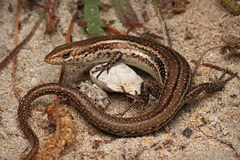
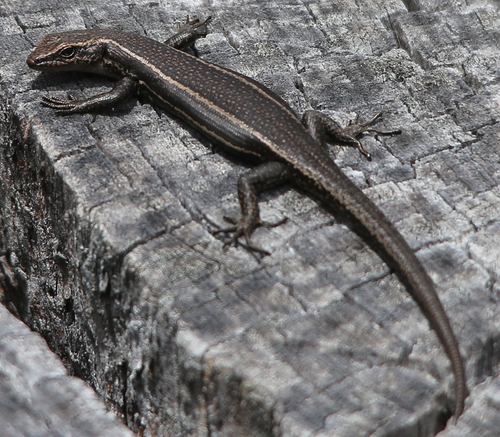
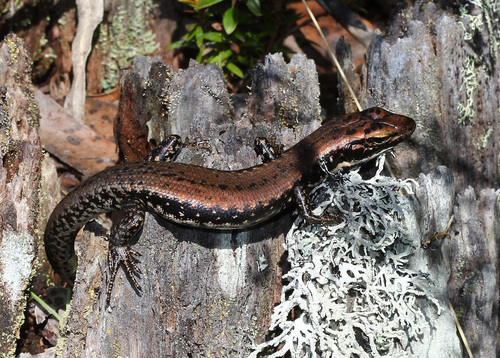
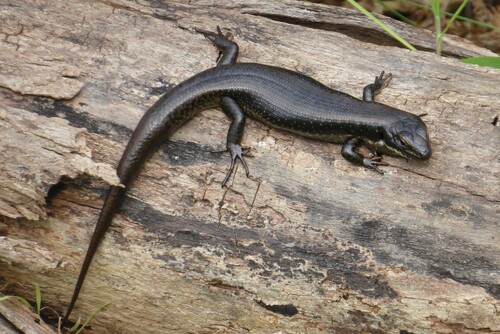
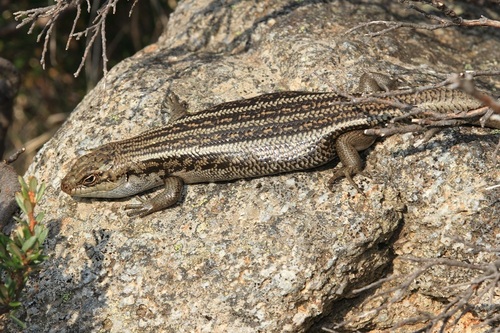
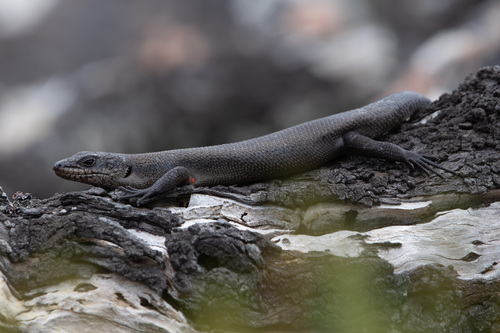
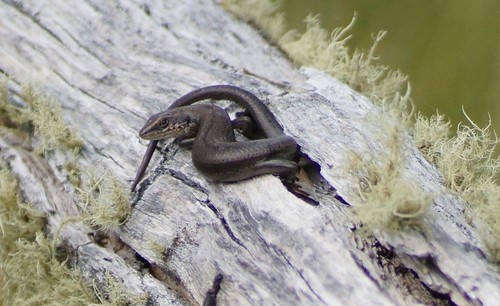
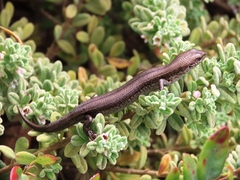
Pseudemoia entrecasteauxii, also known commonly as Entrecasteaux's skink, the southern grass skink, the tussock cool-skink, and the tussock skink, is a species of lizard in the family Scincidae. The species is endemic to Australia.

P. entrecasteauxii is found in the south-east of the continent of Australia, as well as in Tasmania and the islands of Bass Strait. Although it occurs in a variety of habitats, P. entrecasteauxii is most commonly found in open grassy woodlands.

The southern grass skink has a lifespan of about 5 or 6 years. P. entrecasteauxii grows up to 7.5 cm (3.0 in) in length (not including the tail). Male skinks change colouration during the breeding season. The specific name, entrecasteauxii, is in honor of French naval officer and explorer Antoine Bruni d'Entrecasteaux.

The southern grass skink has become a model species for reproductive biology in reptiles because it gives birth to live young and exhibits non-invasive epitheliochorial placentation. Unlike the majority of live bearing reptiles, Pseudemoia develop complex placentae, which provide a substantial... Wikipedia →
Global Distribution

Parks Where Found

# Park Country Daily sighting probability
1 Kosciuszko National Park 🇦🇺 Australia
~40%
2 Grampians National Park 🇦🇺 Australia
~10%
3 Great Otway National Park 🇦🇺 Australia
~10%

Closest Relatives at Kosciuszko National Park

Before you go

What are the chances of seeing an Entrecasteaux's Skink in Kosciuszko National Park?

Likely

About 40% of wildlife watchers report an Entrecasteaux's Skink sighting in Kosciuszko National Park on a given day, based on 48 verified sightings from GBIF citizen-science data from 2019 to 2026. It is the 3rd most-seen of the 20 reptiles we can rate there. Over three days the chance rises to about 70%, and over a week to over 90%, if each day is a fresh chance.

When is the best time to see an Entrecasteaux's Skink in Kosciuszko National Park?

February

In that month about 60% of wildlife watchers report an Entrecasteaux's Skink in Kosciuszko National Park on a given day, against under 5% in May to September, the lowest months.

What time of day is best to see an Entrecasteaux's Skink?

Between 1 and 4 pm

Across all the parks we cover, that three-hour window holds the most Entrecasteaux's Skink sightings with a recorded time, and about 9 in 10 of them come between 6 am and 6 pm: it is a daytime animal.

Is Kosciuszko National Park the best place to see an Entrecasteaux's Skink?

Yes

Of the 3 parks where we can rate Entrecasteaux's Skink sightings, Kosciuszko National Park has the highest daily chance: about 40%. Next come Grampians National Park (Australia, about 10%) and Great Otway National Park (Australia, about 10%).

Which relatives of the Entrecasteaux's Skink live in Kosciuszko National Park?

Same genus: Pseudemoia

The closest relatives of the Entrecasteaux's Skink that you can see in Kosciuszko National Park (genus Pseudemoia, Pseudemoia Grass Skinks) are Trunk-climbing Cool-skink (about 30%) and Tussock Skink (about 20%), with each one's daily chance of a sighting.

Where does the Entrecasteaux's Skink sighting chance come from?

GBIF citizen-science records

It is estimated from how often the Entrecasteaux's Skink is recorded against all the reptiles logged in Kosciuszko National Park (48 verified sightings from 2019 to 2026), calibrated against known sighting rates. Figures are rounded to the nearest 10% because citizen-science data supports honest approximations, not decimals, and months with records from fewer than five people show "—". How it works.

← Back to Kosciuszko National Park