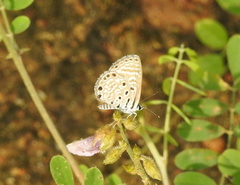
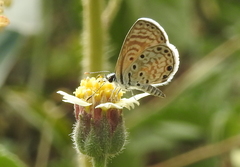
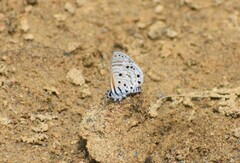
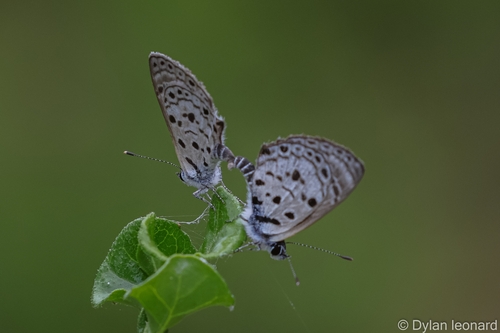
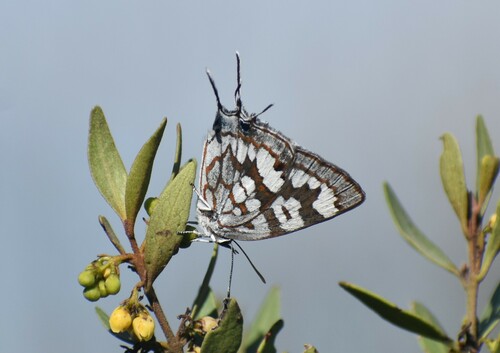
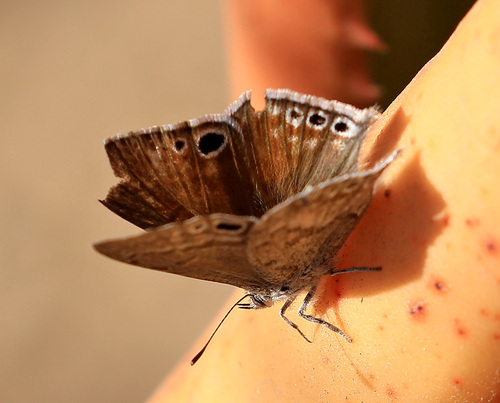
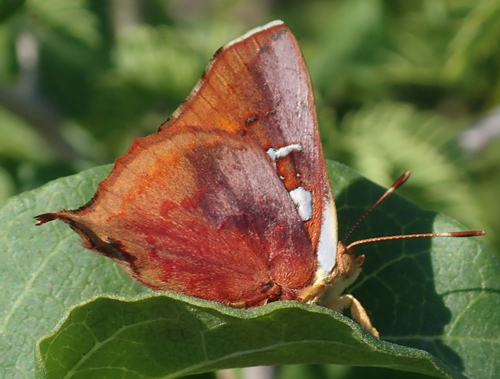
African Babul Blue

African Babul Blue

Azanus jesous

Daily sighting probability ~10% · With luck
at Kruger National Park

In 3 days ~20% in a week ~40%

29 Verified sightings at Kruger National Park From 2019 to 2026
60 In all 5 parks
December Best month
☀️ Diurnal When it's spotted

About the African Babul Blue

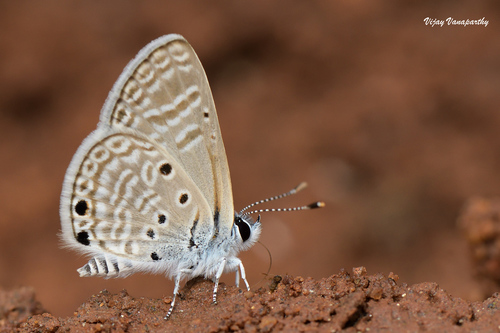
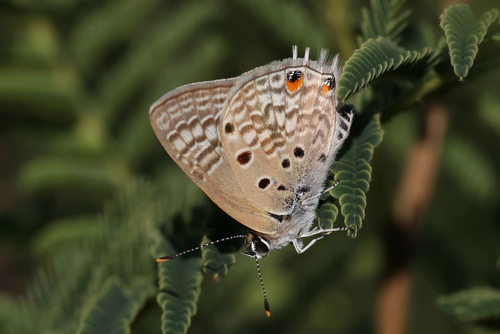
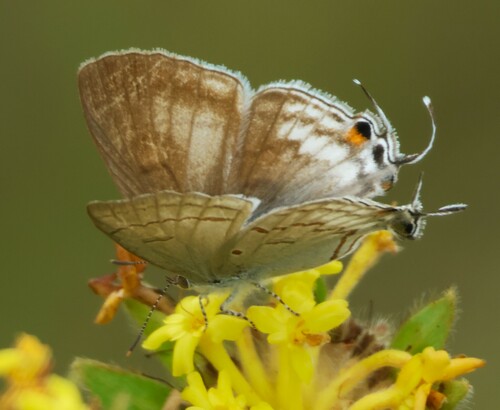
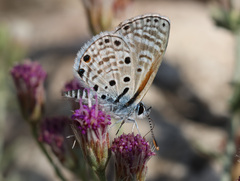
Azanus jesous, the African babul blue or topaz-spotted blue, is a small butterfly found in Africa, Egypt, Syria, India, Sri Lanka and Myanmar that belongs to the lycaenids or blues family. The male upperside is a paler and much brighter purple than in A. ubaldus, the dark blue tint at the base of the wings is more pronounced. Forewing: without the clothing of specialized hair-like scales so conspicuous in A. ubaldus. Hindwing: with the dark tornal spots very obscure. Forewings and hindwings: with only slender dark anteciliary lines, but no regular brown edging. Underside: dull pale grey. Forewing: costal margin brown, a black white-encircled spot in cell, a dark chestnut-brown streak between vein 12 and subcostal vein; similarly coloured but somewhat paler transverse bars cross the upper discal area of the wing as follows: one on the discocellulars and three beyond, each bar edged internally and externally with white; below this two elongate brownish white-edged spots placed en echelon and beyond a slender, unbroken, transverse, postdiscal brown line; a transverse subterminal series of black spots, each surrounded with white, and a slender anteciliary dark line. In... Wikipedia →
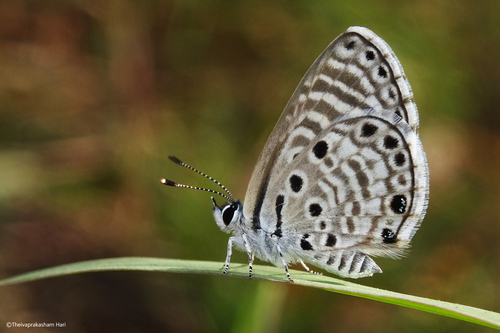
Global Distribution

Parks Where Found

# Park Country Daily sighting probability
1 Pilanesberg National Park 🇿🇦 South Africa
~10%
2 Ngorongoro Conservation Area 🇹🇿 Tanzania
~10%
3 Serengeti National Park 🇹🇿 Tanzania
~10%
4 iSimangaliso Wetland Park 🇿🇦 South Africa
~10%
5 Kruger National Park 🇿🇦 South Africa
~10%

Cities Where Found

# City Country Daily sighting probability
1 Tel Aviv 🇮🇱 Israel
~10%
2 Pune 🇮🇳 India
~10%
3 Hyderabad 🇮🇳 India
~10%
4 Chennai 🇮🇳 India
~10%
5 New Delhi 🇮🇳 India
~10%
6 Pretoria 🇿🇦 South Africa
<5%
7 Bengaluru 🇮🇳 India
<5%

Before you go

What are the chances of seeing an African Babul Blue in Kruger National Park?

With luck

About 10% of wildlife watchers report an African Babul Blue sighting in Kruger National Park on a given day, based on 29 verified sightings from GBIF citizen-science data from 2019 to 2026. It is the 166th most-seen of the 748 insects we can rate there. Over three days the chance rises to about 20%, and over a week to about 40%, if each day is a fresh chance.

When is the best time to see an African Babul Blue in Kruger National Park?

April–June and November–January

In those months about 10% of wildlife watchers report an African Babul Blue in Kruger National Park on a given day, against under 5% in February–March and July–October, the lowest months.

What time of day is best to see an African Babul Blue?

Between 1 and 4 pm

Across all the parks we cover, that three-hour window holds the most African Babul Blue sightings with a recorded time, and nearly all of them come between 6 am and 6 pm: it is a daytime animal.

Is Kruger National Park the best place to see an African Babul Blue?

Among the best

Of the 5 parks where we can rate African Babul Blue sightings, Kruger National Park ranks 5th at about 10%, level with the leaders once rounded. The best odds are in Pilanesberg National Park (South Africa, about 10%), Ngorongoro Conservation Area (Tanzania, about 10%) and Serengeti National Park (Tanzania, about 10%).

Where does the African Babul Blue sighting chance come from?

GBIF citizen-science records

It is estimated from how often the African Babul Blue is recorded against all the insects logged in Kruger National Park (29 verified sightings from 2019 to 2026), calibrated against known sighting rates. Figures are rounded to the nearest 10% because citizen-science data supports honest approximations, not decimals, and months with records from fewer than five people show "—". How it works.

← Back to Kruger National Park