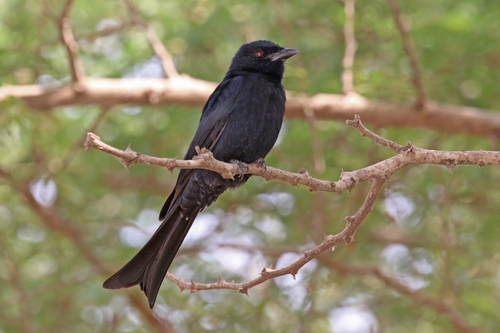
Malachite Sunbird

Malachite Sunbird

Nectarinia famosa

Silhouette: Sheatherius · PhyloPic

LCLeast ConcernNTVUENCR
Daily sighting probability <5% · Rare
at Kruger National Park

In 3 days <5%

19 Verified sightings at Kruger National Park From 2019 to 2026
3,880 In all 14 parks
December Best month
☀️ Diurnal When it's spotted

About the Malachite Sunbird

The malachite sunbird (Nectarinia famosa) is a small nectarivorous bird found from the highlands of Ethiopia southwards to South Africa. They pollinate many flowering plants, particularly those with long corolla tubes, in the Fynbos.

The malachite sunbird was formally described in 1766 by the Swedish naturalist Carl Linnaeus in the twelfth edition of his Systema Naturae under the binomial name Certhia famosa. Linnaeus specified the type locality as the Cape of Good Hope in South Africa. He based his account on "Le grimpereau à longue queue du Cap de Bonne Espérance" that had been described and illustrated in 1760 by French zoologist Mathurin Jacques Brisson. The specific epithet is from Latin famosus meaning "renowned" (from fama meaning "fame" or "repute").

The sunbirds are a group of small Old World passerine birds, and are placed within the family Nectariniidae, which is found across Africa, the Middle East and into South-east Asia. Also called green sugarbird. The malachite sunbird has two subspecies. Wikipedia →

Sounds

Song0:33

Kenya · 2026

© Ding Li Yong · XC1179294 · CC BY-NC-ND 4.0

Call0:07

Zimbabwe · 2024

© Dries Van de Loock · XC963287 · CC BY-NC-ND 4.0

Song0:58

South Africa · 2022

© Lynette Rudman · XC743095 · CC BY-NC-SA 4.0

Global Distribution

Parks Where Found

# Park Country Daily sighting probability
1 Golden Gate Highlands National Park 🇿🇦 South Africa
~40%
2 Table Mountain National Park 🇿🇦 South Africa
~30%
3 Aberdare National Park 🇰🇪 Kenya
~30%
4 West Coast National Park 🇿🇦 South Africa
~30%
5 De Hoop Nature Reserve 🇿🇦 South Africa
~20%
6 Addo Elephant National Park 🇿🇦 South Africa
~20%
7 Bale Mountains National Park 🇪🇹 Ethiopia
~10%
8 Ngorongoro Conservation Area 🇹🇿 Tanzania
<5%
9 Garden Route National Park 🇿🇦 South Africa
<5%
10 Lake Nakuru National Park 🇰🇪 Kenya
<5%
11 Virunga National Park 🇨🇩 Democratic Republic of the Congo
<5%
12 Volcanoes National Park 🇷🇼 Rwanda
<5%
13 Kruger National Park 🇿🇦 South Africa
<5%
14 Serengeti National Park 🇹🇿 Tanzania
<5%

Cities Where Found

# City Country Daily sighting probability
1 Cape Town 🇿🇦 South Africa
~10%
2 Johannesburg 🇿🇦 South Africa
<5%
3 Durban 🇿🇦 South Africa
<5%

Before you go

What are the chances of seeing a Malachite Sunbird in Kruger National Park?

Rare

Under 5% of wildlife watchers report a Malachite Sunbird sighting in Kruger National Park on a given day, based on 19 verified sightings from GBIF citizen-science data from 2019 to 2026. It is the 387th most-seen of the 464 birds we can rate there. Over three days the chance rises to under 5%, if each day is a fresh chance.

When is the best time to see a Malachite Sunbird in Kruger National Park?

Any time of year

In every month with enough records, under 5% of wildlife watchers report a Malachite Sunbird in Kruger National Park on a given day, so our monthly data shows no clear season.

What time of day is best to see a Malachite Sunbird?

Between noon and 3 pm

Across all the parks we cover, that three-hour window holds the most Malachite Sunbird sightings with a recorded time, and nearly all of them come between 6 am and 6 pm: it is a daytime animal.

Which relatives of the Malachite Sunbird live in Kruger National Park?

Same family: Nectariniidae

The closest relatives of the Malachite Sunbird that you can see in Kruger National Park (family Nectariniidae, Sunbirds and Spiderhunters) are White-breasted Sunbird (about 30%), Mariqua Sunbird (about 20%) and Scarlet-chested Sunbird (about 20%), with each one's daily chance of a sighting.

Where does the Malachite Sunbird sighting chance come from?

GBIF citizen-science records

It is estimated from how often the Malachite Sunbird is recorded against all the birds logged in Kruger National Park (19 verified sightings from 2019 to 2026), calibrated against known sighting rates. Figures are rounded to the nearest 10% because citizen-science data supports honest approximations, not decimals, and months with records from fewer than five people show "—". How it works.

← Back to Kruger National Park