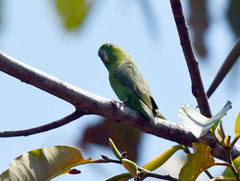
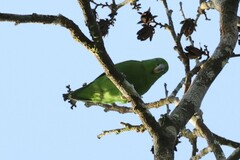
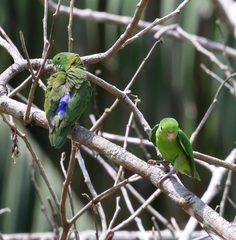
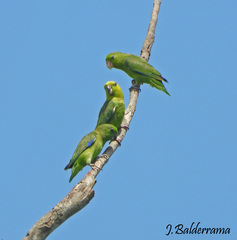
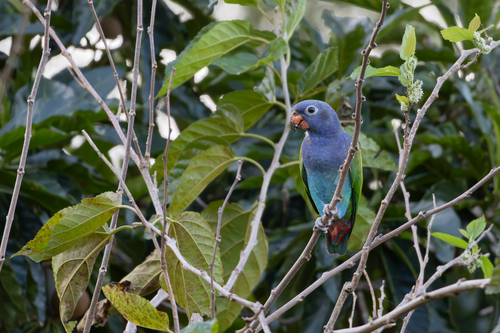
Dusky-billed Parrotlet

Dusky-billed Parrotlet

Forpus modestus

Silhouette: Sheatherius · PhyloPic

LCLeast ConcernNTVUENCR
Daily sighting probability <5% · Rare
at Manu National Park

In 3 days ~10%

65 Verified sightings at Manu National Park From 2019 to 2026
259 In all 5 parks
April Best month
☀️ Diurnal When it's spotted

About the Dusky-billed Parrotlet

The dusky-billed parrotlet (Forpus modestus), also known as Sclater's parrotlet, is a small species of parrot in the family Psittacidae. There is one subspecies: Forpus modestus sclateri. The dusky-billed parrotlet is found in the Amazon rainforest in South America, where it is locally fairly common; it also occurs in the Andes and the Amazonian foothills, the Amazon River outlet, and Marajo Island.

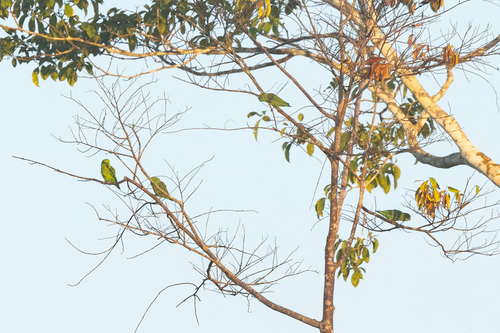
Dusky-billed parrotlets prefer lowland tropical rainforest edges and clearings, riparian zones, secondary habitats, and savanna. They seem to favor seasonally-flooding forests. They are not found at altitudes higher than 1,000 metres (3,300 ft) above sea level.

According to the IUCN Red List, dusky-billed parrotlets are a species of Least Concern. Their population size is unknown, but is believed to be stable. Unlike many members of the genus Forpus, they are not captured for the parrot trade, and they are relatively unaffected by deforestation. There are many protected areas throughout their range.

Dusky-billed parrotlets are usually found... Wikipedia →
Sounds

Call0:14

Brazil · 2022

© JAYRSON ARAUJO DE OLIVEIRA · XC755140 · CC BY-NC-SA 4.0

Chamado0:26

Brazil · 2018

© Caio Brito · XC556322 · CC BY-NC-SA 4.0

Recording0:17

Colombia · 2001

© Mauricio Álvarez-Rebolledo · XC525133 · CC BY-NC-SA 4.0

Global Distribution

Parks Where Found

# Park Country Daily sighting probability
1 Tambopata National Reserve 🇵🇪 Peru
<5%
2 Amacayacu National Natural Park 🇨🇴 Colombia
<5%
3 Manu National Park 🇵🇪 Peru
<5%
4 Cuyabeno Wildlife Reserve 🇪🇨 Ecuador
<5%
5 Yasuní National Park 🇪🇨 Ecuador
<5%

Before you go

What are the chances of seeing a Dusky-billed Parrotlet in Manu National Park?

Rare

Under 5% of wildlife watchers report a Dusky-billed Parrotlet sighting in Manu National Park on a given day, based on 65 verified sightings from GBIF citizen-science data from 2019 to 2026. It is the 415th most-seen of the 641 birds we can rate there. Over three days the chance rises to about 10%, if each day is a fresh chance.

When is the best time to see a Dusky-billed Parrotlet in Manu National Park?

April

In that month about 10% of wildlife watchers report a Dusky-billed Parrotlet in Manu National Park on a given day, against under 5% in May to March, the lowest months.

What time of day is best to see a Dusky-billed Parrotlet?

Between 9 am and noon

Across all the parks we cover, that three-hour window holds the most Dusky-billed Parrotlet sightings with a recorded time, and about 8 in 10 of them come between 6 am and 6 pm: it is a daytime animal.

Is Manu National Park the best place to see a Dusky-billed Parrotlet?

Among the best

Of the 5 parks where we can rate Dusky-billed Parrotlet sightings, Manu National Park ranks 3rd at under 5%, level with the leaders once rounded. The best odds are in Tambopata National Reserve (Peru, under 5%) and Amacayacu National Natural Park (Colombia, under 5%).

Which relatives of the Dusky-billed Parrotlet live in Manu National Park?

Same family: Psittacidae

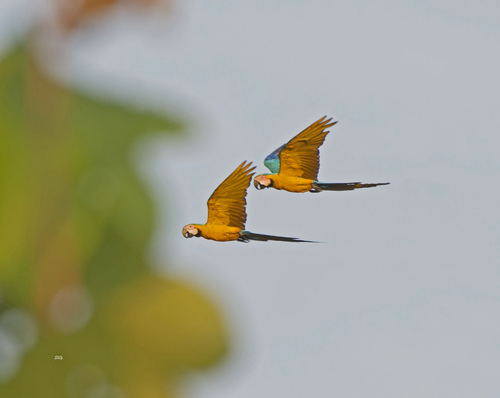
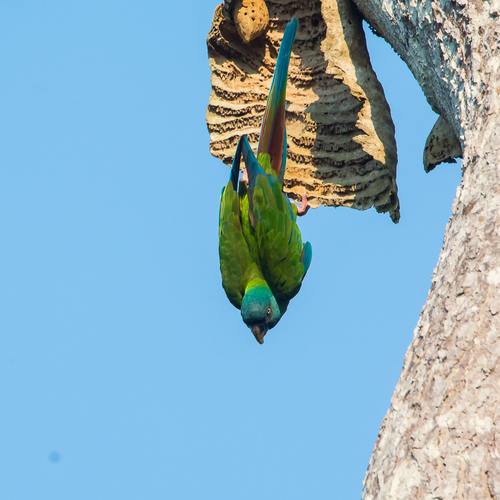
The closest relatives of the Dusky-billed Parrotlet that you can see in Manu National Park (family Psittacidae, New World and African Parrots) are Chestnut-fronted Macaw (about 50%), Blue-headed Parrot (about 40%) and Blue-and-yellow Macaw (about 30%), with each one's daily chance of a sighting.

Where does the Dusky-billed Parrotlet sighting chance come from?

GBIF citizen-science records

It is estimated from how often the Dusky-billed Parrotlet is recorded against all the birds logged in Manu National Park (65 verified sightings from 2019 to 2026), calibrated against known sighting rates. Figures are rounded to the nearest 10% because citizen-science data supports honest approximations, not decimals, and months with records from fewer than five people show "—". How it works.

← Back to Manu National Park