Giant Armadillo

Giant Armadillo

Priodontes maximus

Silhouette: Xavier A. Jenkins · PhyloPic

LCNTVUVulnerableENCR
Daily sighting probability ~10% · With luck
at Manu National Park

In 3 days ~20% in a week ~40%

6 Verified sightings at Manu National Park From 2019 to 2026
11 In all 2 parks
May Best month
☀️🌙 Day & Night When it's spotted

About the Giant Armadillo

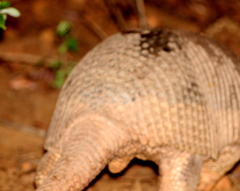
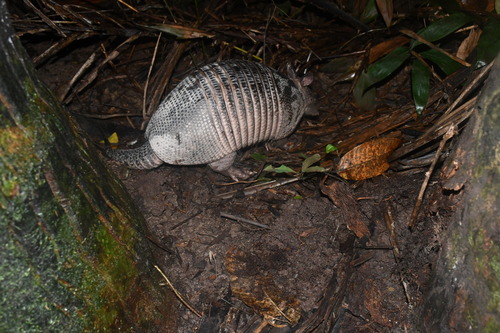
The giant armadillo (Priodontes maximus), colloquially tatu-canastra, tatou, ocarro or tatú carreta, is the largest living species of armadillo (although their extinct relatives the glyptodonts were much larger). It lives in South America, ranging throughout as far south as northern Argentina. This species is considered vulnerable to extinction.

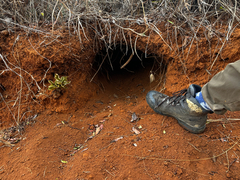
The giant armadillo prefers termites and some ants as prey, and often consumes the entire population of a termite mound. It also has been known to prey upon worms, larvae and larger creatures, such as spiders and snakes, and plants. Some giant armadillos have been reported to have eaten bees by digging into beehives.

The giant armadillo is the largest living species of armadillo, with 11 to 13 hinged bands protecting the body and a further three or four on the neck. Its body is dark brown in color, with a lighter, yellowish band running along the sides, and a pale, yellow-white head. These armadillos have around 80 to 100 teeth, which is more than any other terrestrial mammal. The teeth are all similar in appearance, being reduced premolars and molars, grow constantly throughout life, and lack enamel. They also possess extremely... Wikipedia →

Global Distribution

Parks Where Found

# Park Country Daily sighting probability
1 Yasuní National Park 🇪🇨 Ecuador
~10%
2 Manu National Park 🇵🇪 Peru
~10%

Zoos & Centres Where Found

# Zoo / Centre Country
1 Bioparque Los Ocarros 🇨🇴 Colombia In captivity

Before you go

What are the chances of seeing a Giant Armadillo in Manu National Park?

With luck

About 10% of wildlife watchers report a Giant Armadillo sighting in Manu National Park on a given day, based on 6 verified sightings from GBIF citizen-science data from 2019 to 2026. It is the 38th most-seen of the 42 mammals we can rate there. Over three days the chance rises to about 20%, and over a week to about 40%, if each day is a fresh chance.

When is the best time to see a Giant Armadillo in Manu National Park?

March, May–July, September and November

In those months about 10% of wildlife watchers report a Giant Armadillo in Manu National Park on a given day, against under 5% in April, August, October and December–February, the lowest months.

What time of day is best to see a Giant Armadillo?

Between 11 pm and 2 am

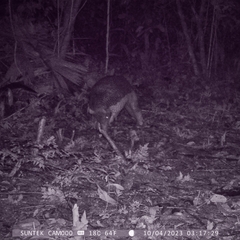
Across all the parks we cover, that three-hour window holds the most Giant Armadillo sightings with a recorded time, and about half of them come between 6 am and 6 pm: it is seen both by day and at night.

Is Manu National Park the best place to see a Giant Armadillo?

Among the best

Of the 2 parks where we can rate Giant Armadillo sightings, Manu National Park ranks 2nd at about 10%, level with the leaders once rounded. The best odds are in Yasuní National Park (Ecuador, about 10%).

Which relatives of the Giant Armadillo live in Manu National Park?

Same family: Dasypodidae

The closest relatives of the Giant Armadillo that you can see in Manu National Park (family Dasypodidae, Long-nosed Armadillos) are Nine-banded Armadillo (about 10%) and Greater Long-nosed Armadillo (about 10%), with each one's daily chance of a sighting.

Where does the Giant Armadillo sighting chance come from?

GBIF citizen-science records

It is estimated from how often the Giant Armadillo is recorded against all the mammals logged in Manu National Park (6 verified sightings from 2019 to 2026), calibrated against known sighting rates. Figures are rounded to the nearest 10% because citizen-science data supports honest approximations, not decimals, and months with records from fewer than five people show "—". How it works.

← Back to Manu National Park