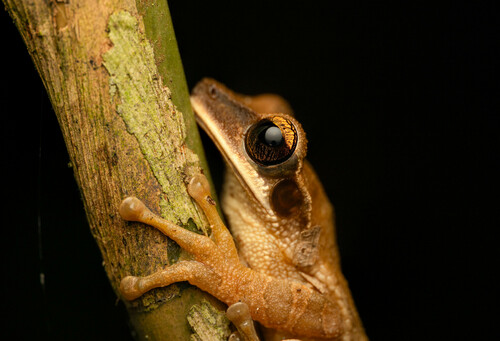
About the Polka-dot Tree Frog
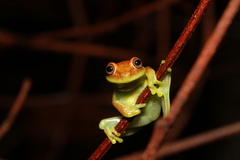
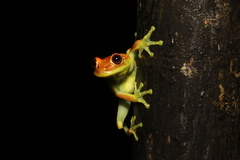
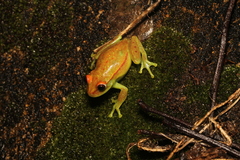
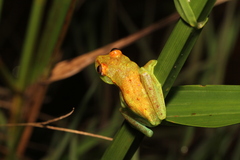
The polka-dot tree frog (Boana punctata), also known as the dotted tree frog, is a frog species in the family Hylidae found in much of South America and also in Trinidad and Tobago. It is fairly small with a snout–to–vent length of c. 3–4 cm (1.2–1.6 in).
Its natural habitats are subtropical or tropical dry forest, subtropical or tropical moist lowland forest, subtropical or tropical swamps, subtropical or tropical moist montane forest, swamps, freshwater marshes, intermittent freshwater marshes, rural gardens, urban areas, and heavily degraded former forests. It is not considered threatened by the IUCN.
In 2017, several polka-dot tree frogs collected in the Santa Fe Province in Argentina were the first amphibian, amongst more than 6,000 species of frog, identified as naturally fluorescent. Among land-living vertebrates, it had only been confirmed earlier in certain parrots (as opposed to fish and invertebrates where fluorescence is relatively widespread). A few months later, fluorescence was discovered in the closely related Boana atlantica, and in 2019 it was discovered in the distantly related pumpkin toadlet (Brachycephalus ephippium) and... Wikipedia →