South American Yellowfoot Tortoise

South American Yellowfoot Tortoise

Chelonoidis denticulatus

Silhouette: Andrew A. Farke · PhyloPic

LCNTVUVulnerableENCR
Daily sighting probability ~20% · Possible
at Manu National Park

In 3 days ~50% in a week ~80%

30 Verified sightings at Manu National Park From 2019 to 2026
239 In all 4 parks
February Best month
☀️ Diurnal When it's spotted

About the South American Yellowfoot Tortoise

The yellow-footed tortoise (Chelonoidis denticulatus), also known as the Brazilian giant tortoise, is a species of tortoise in the family Testudinidae and is closely related to the red-footed tortoise (C. carbonarius). It is found in the Amazon Basin of South America. The species name has often been misspelled as denticulata, an error introduced in the 1980s when Chelonoidis was elevated to genus and mistakenly treated as feminine, an error recognized and fixed in 2017.

With an average length of 40 cm (15.75 in) and the largest known specimen at 94 cm (37 in), this is the sixth-largest tortoise species on Earth, after the Galapagos tortoise, the Aldabra tortoise, the African spurred tortoise (Geochelone sulcata, typical size 76 cm (30 in)), the leopard tortoise (Stigmochelys pardalis), and the Asian forest tortoise (Manouria emys), typical size 60 cm (23.6 in)).

The yellow-footed tortoise is also called the yellow-foot or yellow-legged tortoise, the Brazilian giant tortoise, or South American forest tortoise, as well as local names such as jabuti-tinga, jabuti, morrocoy, woyamou or wayamo, or some variation of jabuta. Many of the local names are shared with the similar... Wikipedia →

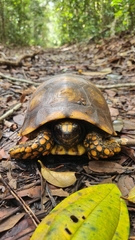
Sounds

Recording0:07

Brazil · 2024

© Franciele Cristina · iNaturalist · CC BY-NC 4.0

Global Distribution

Parks Where Found

# Park Country Daily sighting probability
1 Yasuní National Park 🇪🇨 Ecuador
~40%
2 Tambopata National Reserve 🇵🇪 Peru
~20%
3 Manu National Park 🇵🇪 Peru
~20%
4 Tijuca National Park 🇧🇷 Brazil
~10%

Zoos & Centres Where Found

# Zoo / Centre Country
1 Copenhagen Zoo 🇩🇰 Denmark In captivity
2 Tulsa Zoo 🇺🇸 United States In captivity
3 Parc Phœnix 🇫🇷 France In captivity
4 Zoo de Doué 🇫🇷 France In captivity
5 Al Ain Zoo 🇦🇪 United Arab Emirates In captivity
6 Taipei Zoo 🇹🇼 Taiwan In captivity
7 Parque Zoobotânico de Teresina 🇧🇷 Brazil In captivity
8 Shanghai Zoo 🇨🇳 China In captivity
9 Cape May County Park & Zoo 🇺🇸 United States In captivity
10 Wildlife World Zoo 🇺🇸 United States In captivity
11 Parque Natural de Pucallpa 🇵🇪 Peru In captivity
12 Parque Zoologico Guátika 🇨🇴 Colombia In captivity
13 Colchester Zoo 🇬🇧 United Kingdom In captivity
14 Zoológico de Goiânia 🇧🇷 Brazil In captivity
15 Biocentro Güembé 🇧🇴 Bolivia In captivity
16 Parque Zoobotânico Arruda Câmara (BICA) 🇧🇷 Brazil In captivity
17 Bioparque Municipal Vesty Pakos 🇧🇴 Bolivia In captivity
18 Senda Verde (Wildlife Sanctuary) 🇧🇴 Bolivia In captivity
19 Pittsburgh Zoo & Aquarium 🇺🇸 United States In captivity
20 Lincoln Park Zoo 🇺🇸 United States In captivity
21 Plock Zoo 🇵🇱 Poland In captivity
22 Tiergarten Straubing 🇩🇪 Germany In captivity
23 Parque Ecológico de São Carlos 🇧🇷 Brazil In captivity
24 Amaru 🇪🇨 Ecuador In captivity
25 Bioparque Educativo Quillón 🇨🇱 Chile In captivity
26 Aalborg Zoo 🇩🇰 Denmark In captivity
27 Bioparque Los Ocarros 🇨🇴 Colombia In captivity
28 Guyana Zoo 🇬🇾 Guyana In captivity
29 Zoológico de Fauna Sudamericana 🇧🇴 Bolivia In captivity
30 Hong Kong Zoological and Botanical Gardens 🇨🇳 China In captivity
31 Parque Tematico de Aves Gigantes 🇵🇪 Peru In captivity
32 Parque Zoológico El Pinar 🇻🇪 Venezuela In captivity
33 Santa Fe College Teaching Zoo 🇺🇸 United States In captivity
34 Ecozoológico San Martín 🇪🇨 Ecuador In captivity
35 Zoo El Pantanal 🇪🇨 Ecuador In captivity
36 Zoologico Mundo Andino - Tipon 🇵🇪 Peru In captivity
37 Amazona Zoo 🇬🇧 United Kingdom In captivity
38 A Cupulatta 🇫🇷 France In captivity
39 Arequipa zoo 🇵🇪 Peru In captivity
40 Coral World Ocean Park 🇺🇸 United States In captivity
41 Emperor Valley Zoo 🇹🇹 Trinidad & Tobago In captivity
42 zoologico de barranquilla 🇨🇴 Colombia In captivity
43 Zoologico Huanchaco 🇵🇪 Peru In captivity
44 Parc zoologique de Fort-Mardyck Dunkerque Grand Littoral 🇫🇷 France In captivity
45 Entopia 🇲🇾 Malaysia In captivity
46 Agroflori Parque de las Aves 🇧🇴 Bolivia In captivity
47 El Refugio foundation 🇨🇴 Colombia In captivity
48 Selva Viva Park 🇵🇪 Peru In captivity
49 Birch Aquarium 🇺🇸 United States In captivity
50 Projeto TAMAR 🇧🇷 Brazil In captivity

Closest Relatives at Manu National Park

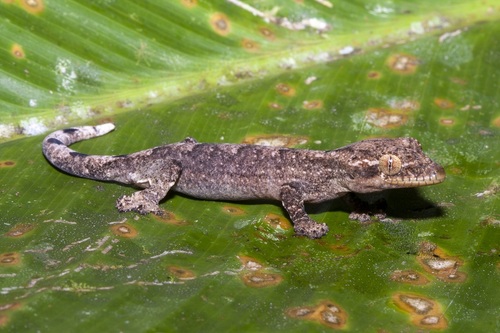
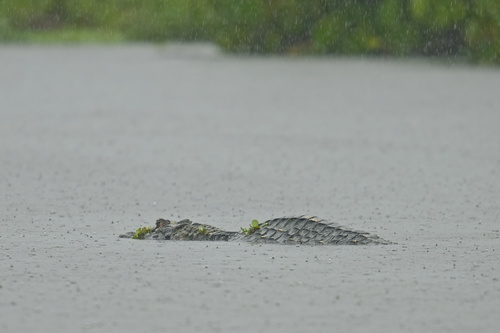
No species of the same family or order lives in Manu National Park, so these are its closest relatives here: other reptiles.

Before you go

What are the chances of seeing a South American Yellowfoot Tortoise in Manu National Park?

Possible

About 20% of wildlife watchers report a South American Yellowfoot Tortoise sighting in Manu National Park on a given day, based on 30 verified sightings from GBIF citizen-science data from 2019 to 2026. It is the 17th most-seen of the 56 reptiles we can rate there. Over three days the chance rises to about 50%, and over a week to about 80%, if each day is a fresh chance.

When is the best time to see a South American Yellowfoot Tortoise in Manu National Park?

January–February and October

In those months about 30% of wildlife watchers report a South American Yellowfoot Tortoise in Manu National Park on a given day, against under 5% in March, June and December, the lowest months.

What time of day is best to see a South American Yellowfoot Tortoise?

Between 3 and 6 pm

Across all the parks we cover, that three-hour window holds the most South American Yellowfoot Tortoise sightings with a recorded time, and about 9 in 10 of them come between 6 am and 6 pm: it is a daytime animal.

Is Manu National Park the best place to see a South American Yellowfoot Tortoise?

3rd of 4

Of the 4 parks where we can rate South American Yellowfoot Tortoise sightings, Manu National Park ranks 3rd at about 20%. The best odds are in Yasuní National Park (Ecuador, about 40%) and Tambopata National Reserve (Peru, about 20%).

Where does the South American Yellowfoot Tortoise sighting chance come from?

GBIF citizen-science records

It is estimated from how often the South American Yellowfoot Tortoise is recorded against all the reptiles logged in Manu National Park (30 verified sightings from 2019 to 2026), calibrated against known sighting rates. Figures are rounded to the nearest 10% because citizen-science data supports honest approximations, not decimals, and months with records from fewer than five people show "—". How it works.

← Back to Manu National Park