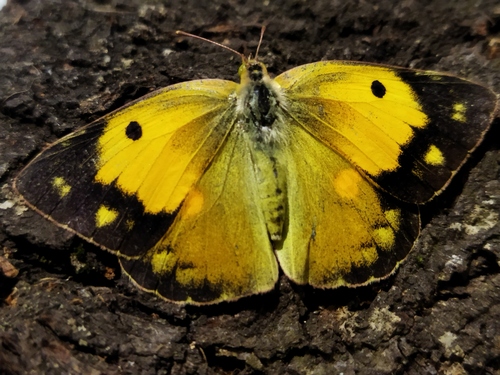
Spanish Festoon

Spanish Festoon

Zerynthia rumina

Daily sighting probability ~30% · Possible
at Monfragüe National Park

In 3 days ~70% in a week ~90%

43 Verified sightings at Monfragüe National Park From 2019 to 2026
336 In all 5 parks
March Best month
☀️ Diurnal When it's spotted

About the Spanish Festoon

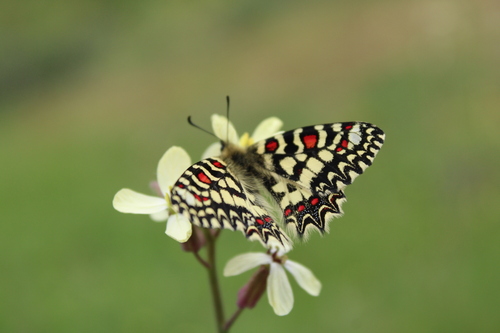
Zerynthia rumina, the Spanish festoon, is a butterfly belonging to the family Papilionidae. It is a widespread species in Iberia and frequents most habitats. North Africa, the Iberian Peninsula and southern France. Zerynthia rumina is an extremely striking species. In south east France it can be confused with the southern festoon (Zerynthia polyxena). The two can be told apart by the presence of blue on the hindwing of the southern festoon. The Spanish festoon also has extensive red on the forewings.

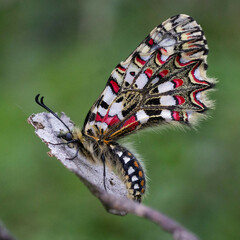
T. rumina L. (10 a). At once distinguished from polyxena by the totally different underside of the hindwing, which bears whitish yellow spots at the base. Nearly all the costal spots of the forewing are marked with red. The 3 or 4 black parallel cell-bars of polyxena are in rumina enlarged, being separated by thin yellow bands. In Spain and Portugal, also in Morocco and Algiers, but occurring here only in the coast districts in a slightly different form (10 a). — In ab. canteneri Stgr. (10 a), which occurs singly among ordinary rumina in South Spain and Morocco, the ground-colour is dark yellow, almost orange, the transparent... Wikipedia →
Global Distribution

Parks Where Found

# Park Country Daily sighting probability
1 Monfragüe National Park 🇪🇸 Spain
~30%
2 Sierra Nevada National Park 🇪🇸 Spain
~20%
3 Sierra de Guadarrama National Park 🇪🇸 Spain
~20%
4 Cévennes National Park 🇫🇷 France
~10%
5 Pyrénées National Park 🇫🇷 France
~10%

Cities Where Found

# City Country Daily sighting probability
1 Lisbon 🇵🇹 Portugal
<5%

Before you go

What are the chances of seeing a Spanish Festoon in Monfragüe National Park?

Possible

About 30% of wildlife watchers report a Spanish Festoon sighting in Monfragüe National Park on a given day, based on 43 verified sightings from GBIF citizen-science data from 2019 to 2026. It is the 3rd most-seen of the 84 insects we can rate there. Over three days the chance rises to about 70%, and over a week to about 90%, if each day is a fresh chance.

When is the best time to see a Spanish Festoon in Monfragüe National Park?

March and April

In those months about 50% of wildlife watchers report a Spanish Festoon in Monfragüe National Park on a given day, against under 5% in June to December, the lowest months. Those are among Monfragüe National Park's wettest months, with about 70 mm of rain a month against almost none in July.

What time of day is best to see a Spanish Festoon?

Between 11 am and 2 pm

Across all the parks we cover, that three-hour window holds the most Spanish Festoon sightings with a recorded time, and about 9 in 10 of them come between 6 am and 6 pm: it is a daytime animal.

Is Monfragüe National Park the best place to see a Spanish Festoon?

Yes

Of the 5 parks where we can rate Spanish Festoon sightings, Monfragüe National Park has the highest daily chance: about 30%. Next come Sierra Nevada National Park (Spain, about 20%) and Sierra de Guadarrama National Park (Spain, about 20%).

Where does the Spanish Festoon sighting chance come from?

GBIF citizen-science records

It is estimated from how often the Spanish Festoon is recorded against all the insects logged in Monfragüe National Park (43 verified sightings from 2019 to 2026), calibrated against known sighting rates. Figures are rounded to the nearest 10% because citizen-science data supports honest approximations, not decimals, and months with records from fewer than five people show "—". How it works.

← Back to Monfragüe National Park