Two-Tailed Pasha

Two-Tailed Pasha

Charaxes jasius

Daily sighting probability ~30% · Possible
at Monfragüe National Park

In 3 days ~60% in a week ~90%

28 Verified sightings at Monfragüe National Park From 2019 to 2026
211 In all 9 parks
August Best month
☀️ Diurnal When it's spotted

About the Two-Tailed Pasha

Charaxes jasius, the two-tailed pasha, is a butterfly in the family Nymphalidae. It is the only European species of the genus Charaxes. Divergence of the Mediterranean species C. jasius from the last common ancestor with its closest related species still flying in the Afrotropical realm most probably occurred around 2 mya, i.e. during the Pliocene.

Charaxes jasius is a medium to large butterfly with a wingspan reaching 76–83 mm in males, the female being larger. Males up to 80–100 mm wingspan, with females even larger, may be found in Morocco. Each hindwing bears two tails, characteristic of most species of the genus. The spring seasonal brood is smaller in size compared with the second and sometimes third broods, and the two tails on each hindwing tend to curve somewhat towards each other resembling a pincer, less so in the later broods with slightly longer straighter tails. The upperside ground colour of the wings is dark brownish-black, with some changeable purplish sheen viewed at varying angles; forewing with suggestion of darker discal bars, postdiscal spots orange; hindwing with whitish patch near costal border, dusted with brownish scales; outer border of... Wikipedia →

Global Distribution

Parks Where Found

# Park Country Daily sighting probability
1 Waterberg Plateau Park 🇳🇦 Namibia
~40%
2 Gonarezhou National Park 🇿🇼 Zimbabwe
~30%
3 Monfragüe National Park 🇪🇸 Spain
~30%
4 Hwange National Park 🇿🇼 Zimbabwe
~20%
5 Etosha National Park 🇳🇦 Namibia
~20%
6 Cévennes National Park 🇫🇷 France
~20%
7 Chobe National Park 🇧🇼 Botswana
~10%
8 Kruger National Park 🇿🇦 South Africa
~10%
9 Pyrénées National Park 🇫🇷 France
<5%

Cities Where Found

# City Country Daily sighting probability
1 Barcelona 🇪🇸 Spain
~10%
2 Lisbon 🇵🇹 Portugal
~10%
3 Porto 🇵🇹 Portugal
~10%
4 Madrid 🇪🇸 Spain
<5%

Before you go

What are the chances of seeing a Two-Tailed Pasha in Monfragüe National Park?

Possible

About 30% of wildlife watchers report a Two-Tailed Pasha sighting in Monfragüe National Park on a given day, based on 28 verified sightings from GBIF citizen-science data from 2019 to 2026. It is the 8th most-seen of the 84 insects we can rate there. Over three days the chance rises to about 60%, and over a week to about 90%, if each day is a fresh chance.

When is the best time to see a Two-Tailed Pasha in Monfragüe National Park?

May and August–October

In those months about 40% of wildlife watchers report a Two-Tailed Pasha in Monfragüe National Park on a given day, against under 5% in March, June and November–December, the lowest months.

What time of day is best to see a Two-Tailed Pasha?

Between 1 and 4 pm

Across all the parks we cover, that three-hour window holds the most Two-Tailed Pasha sightings with a recorded time, and about 9 in 10 of them come between 6 am and 6 pm: it is a daytime animal.

Is Monfragüe National Park the best place to see a Two-Tailed Pasha?

3rd of 9

Of the 9 parks where we can rate Two-Tailed Pasha sightings, Monfragüe National Park ranks 3rd at about 30%. The best odds are in Waterberg Plateau Park (Namibia, about 40%) and Gonarezhou National Park (Zimbabwe, about 30%).

Which relatives of the Two-Tailed Pasha live in Monfragüe National Park?

Same family: Nymphalidae

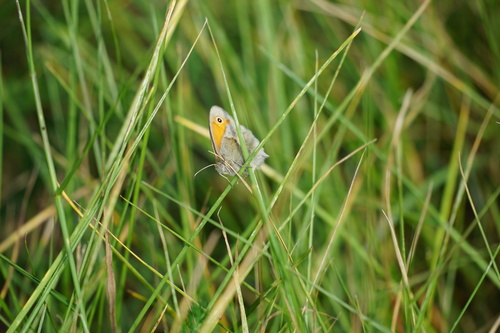
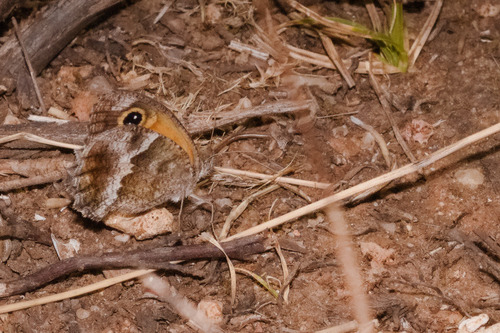
The closest relatives of the Two-Tailed Pasha that you can see in Monfragüe National Park (family Nymphalidae, Brush-footed Butterflies) are Small Heath (about 30%), Speckled Wood (about 30%) and Southern Gatekeeper (about 20%), with each one's daily chance of a sighting.

Where does the Two-Tailed Pasha sighting chance come from?

GBIF citizen-science records

It is estimated from how often the Two-Tailed Pasha is recorded against all the insects logged in Monfragüe National Park (28 verified sightings from 2019 to 2026), calibrated against known sighting rates. Figures are rounded to the nearest 10% because citizen-science data supports honest approximations, not decimals, and months with records from fewer than five people show "—". How it works.

← Back to Monfragüe National Park