






safaribookings.com Web excerpt · 2026
“Amber Mountain isn’t that great for lemurs – the only ones we saw were crowned lemur and Sanford’s brown lemur – but it is truly remarkable when it comes to chameleons.”
🇲🇬 Madagascar
Montagne d'Ambre National Park is a national park in the Diana Region of northern Madagascar. The park is known for its endemic flora and fauna, water falls and crater lakes. It is 1,000 km north of the capital, Antananarivo, and is one of the most biologically diverse places in all of Madagascar with seventy-five species of birds, twenty-five species of mammals, and fifty-nine species of reptiles known to inhabit the park. The park is centred around Mount Ambohitra, the highest mountain in northern Madagascar.
The park covers an area of 18,200 ha on an isolated volcanic massif, of mostly basaltic rock, above the surrounding dry region. Attractions include spectacular waterfalls and several crater lakes. There are numerous rivers and streams and the park is a water catchment area for the town of Antsiranana, which is surrounded by dry, sparse forests and semi-desert with succulent plants. Annual rainfall in the park is 3,585 mm compared with 1,000 mm around the town. The area is named after the deposits of copal, a soft form of amber.
Amber is one of the most accessible parks in northern Madagascar.
-12.584° S 49.165° E

Warmer areas are where all species together are recorded most often.




How rich is the wildlife?
How likely to see animals?
How easy and pleasant is the visit?
Your review
“Amber Mountain isn’t that great for lemurs – the only ones we saw were crowned lemur and Sanford’s brown lemur – but it is truly remarkable when it comes to chameleons.”
429 species
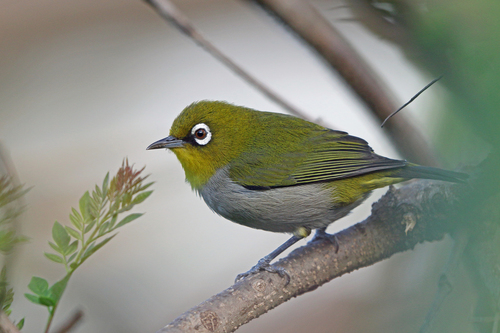
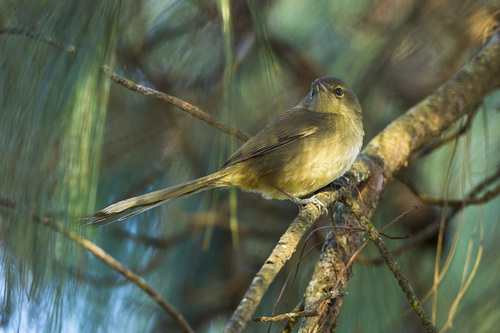
Montagne d'Ambre National Park has 429 recorded vertebrate species. The ones wildlife watchers report most often on a given day are Mount Amber Blue-nosed Chameleon (about 90%), Mount d'Ambre Leaf Chameleon (about 80%), Malagasy Ring-tailed Mongoose (about 80%), Mossy Leaf-tailed Gecko (about 80%) and Panther Chameleon (about 70%). Among birds, the most-seen is Madagascar Bulbul (about 60%).
September
In that month the park's 12 most-seen species average about 80% on a given day, against about 50% in April–May and November. That is one of Montagne d'Ambre National Park's driest months, with about 45 mm of rain against 410 mm in January.
Yes
About 50% of wildlife watchers report a Sanford's Brown Lemur sighting in Montagne d'Ambre National Park on a given day, based on 31 verified sightings from GBIF citizen-science data from 2019 to 2026. The best time is January and September (about 70%).
Yes
About 90% of wildlife watchers report a Mount Amber Blue-nosed Chameleon sighting in Montagne d'Ambre National Park on a given day, based on 45 verified sightings from GBIF citizen-science data from 2019 to 2026. The best time is February, April–May, September–October and December (about 90%).
Yes
About 80% of wildlife watchers report a Mossy Leaf-tailed Gecko sighting in Montagne d'Ambre National Park on a given day, based on 23 verified sightings from GBIF citizen-science data from 2019 to 2026. The best time is January, April and August–October (about 80%).
Yes
About 80% of wildlife watchers report a Malagasy Ring-tailed Mongoose sighting in Montagne d'Ambre National Park on a given day, based on 19 verified sightings from GBIF citizen-science data from 2019 to 2026. The best time is October (about 90%).
3.1 out of 5
On the Wallace's Line Score, Montagne d'Ambre National Park rates 3.1/5: 289th of 340 parks worldwide and 72nd in Africa. 24 of its species are reported by about 40% or more of wildlife watchers on a given day.


