










matadornetwork.com Web excerpt · 2026
“From the coast, we went to Lokobe National Park where we saw this male black lemur.”
🇲🇬 Madagascar
Ankarana Special Reserve is a protected area in northern Madagascar created in 1956. It is a small, partially vegetated plateau composed of 150-million-year-old middle Jurassic limestone. With an average annual rainfall of about 2,000 millimetres, the underlying rocks have been eroded to produce caves and feed subterranean rivers—a karst topography. The rugged relief and the dense vegetation have helped protect the region from human intrusion and exploitation. The Ankarana Massif is the setting for a wildlife rich adventure story for children.
The southern entrance of what is now designated the Ankarana National Park is in Mahamasina on the Route nationale 6 some 108 km south-west of Antsiranana and 29 km north-east of Ambilobe.
-12.878° S 49.155° E

Warmer areas are where all species together are recorded most often.




How rich is the wildlife?
How likely to see animals?
How easy and pleasant is the visit?
Your review
“From the coast, we went to Lokobe National Park where we saw this male black lemur.”
“To build a custom itinerary incorporating Ankarana, explore our Madagascar journeys.”
“The park offers many hiking trails ranging from one hour to a long day hike: You can visit Ankarana National Park during our Northern Madagascar itinerary.”
391 species
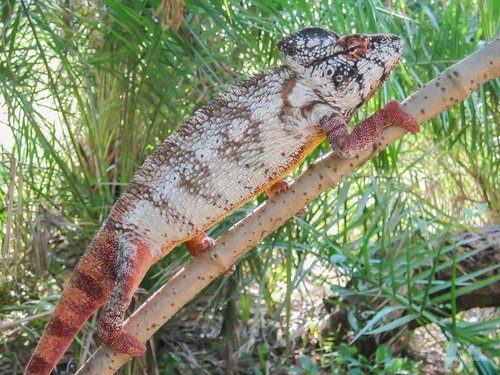
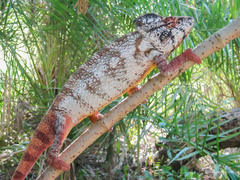
Ankarana National Park has 391 recorded vertebrate species. The ones wildlife watchers report most often on a given day are Madagascar Giant Day Gecko (about 80%), Panther Chameleon (about 80%), Ankarana Sportive Lemur (about 80%), Oustalet's Giant Chameleon (about 80%) and Crowned Lemur (about 70%). Among birds, the most-seen is Madagascar Magpie-Robin (about 60%).
April, July and September–October
In those months the park's 12 most-seen species average about 70% on a given day, against about 60% in May–June, August and November–December. Those are among Ankarana National Park's driest months, with about 30 mm of rain a month against 460 mm in January.
Yes
About 80% of wildlife watchers report an Ankarana Sportive Lemur sighting in Ankarana National Park on a given day, based on 53 verified sightings from GBIF citizen-science data from 2019 to 2026. The best time is October (about 90%).
Yes
About 70% of wildlife watchers report a Crowned Lemur sighting in Ankarana National Park on a given day, based on 57 verified sightings from GBIF citizen-science data from 2019 to 2026. The best time is September and October (about 80%).
Yes
About 80% of wildlife watchers report a Madagascar Giant Day Gecko sighting in Ankarana National Park on a given day, based on 63 verified sightings from GBIF citizen-science data from 2019 to 2026. The best time is August to October (about 90%).
Yes
About 30% of wildlife watchers report a Perrier’s Sifaka sighting in Ankarana National Park on a given day, based on 5 verified sightings from GBIF citizen-science data from 2019 to 2026. The best time is May (about 60%).
Around Mahamasina
The richest sighting zone is around Mahamasina, followed by West park edge, ranked by how many of the park's headline animals visitors can expect to see in each. See the zones on the map.
3.3 out of 5
On the Wallace's Line Score, Ankarana National Park rates 3.3/5: 266th of 340 parks worldwide and 70th in Africa. 25 of its species are reported by about 40% or more of wildlife watchers on a given day.


