About the Chilean Swallow
The Chilean swallow (Tachycineta leucopyga) is a species of bird in the family Hirundinidae. It breeds in Chile and Patagonia, migrating north as far as Bolivia, Paraguay, and Rio Grande do Sul. The new genus Tachycineta was created for this group of swallows by German ornithologist Jean Cabanis in 1850. The current genus name Tachycineta, is from Ancient Greek takhukinetos, "moving quickly", and the specific meyeni commemorates Prussian botanist and collector Franz Meyen. Some consider the species name to be leucopyga, which is what the species name originally was. This species, along with the white-rumped swallow, T. leucorrhoa, form a superspecies. This species is monotypic.
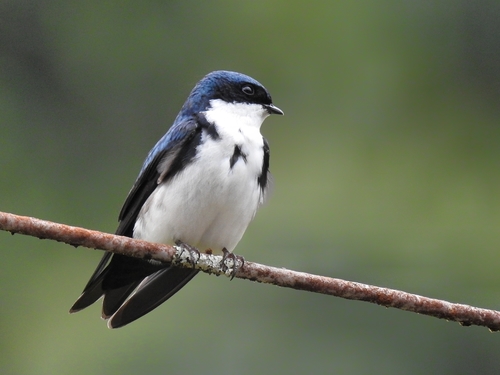
The Chilean swallow is about 13 centimetres (5.1 in) in length and weighs 15–20 grams (0.53–0.71 oz). It is glossy blue-black above and white below with a white rump. Its wings and tail are black, with white tips on its inner secondaries and its tertials. Their underwing coverts and auxiliaries are both grey. The Chilean swallow's bill and legs are black. The sexes are alike, and the juveniles are duller and browner.
It is similar to the white-rumped swallow, but... Wikipedia →