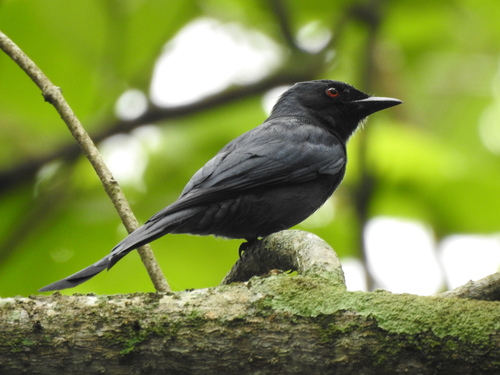
Sultan Tit

Sultan Tit

Melanochlora sultanea

Silhouette: Sheatherius · PhyloPic

LCLeast ConcernNTVUENCR
Daily sighting probability ~50% · Likely
at Namdapha National Park

In 3 days ~90% in a week >90%

783 Verified sightings at Namdapha National Park From 2019 to 2026
2,950 In all 9 parks
January Best month
🌅 Crepuscular When it's spotted

About the Sultan Tit

The sultan tit (Melanochlora sultanea) is an Asian forest bird with black upperparts plumage and yellow underparts, dark bill, and (depending on subspecies) a yellow or black crest. The sexes are similar, though the female has slightly duller plumage with greenish-black upperparts and throat. The young bird is duller than the adult and has a shorter crest. It is the only member of the monotypic genus Melanochlora, which is fairly distinct from other tits, third-basal in the family Paridae after Cephalopyrus and Sylviparus.

The sultan tit forages mostly on invertebrates and larvae. The food sources are grasshoppers, mantises and web spiders, in addition to berries, other fruits and seeds. The search for food is mostly in the tree canopy, but sometimes also in higher undergrowth and bamboo areas.

Sultan tits appear often in small associations of up to twelve individuals and socialize with other species like warblers. The male has the forehead and crown with the crest brilliant yellow (except glossy black in one subspecies); the whole upper plumage, sides of the head and neck, chin, throat, and breast-deep black glossed with... Wikipedia →

Sounds

Call0:34

Vietnam · 2026

© Tim Dinh / Annambirding · XC1185355 · CC BY-NC-SA 4.0

Uncertain0:11

Bhutan · 2026

© Sonam Dorji, Bhutan Quest Travel (www.bhutanbird.com) · XC1099381 · CC BY-NC-SA 4.0

Song0:12

Thailand

© Peter Ericsson · XC1088142 · CC BY-NC-SA 4.0

Global Distribution

Parks Where Found

# Park Country Daily sighting probability
1 Namdapha National Park 🇮🇳 India
~50%
2 Royal Manas National Park 🇧🇹 Bhutan
~30%
3 Kaeng Krachan National Park 🇹🇭 Thailand
~30%
4 Cuc Phuong National Park 🇻🇳 Vietnam
~30%
5 Manas National Park 🇮🇳 India
~10%
6 Khao Yai National Park 🇹🇭 Thailand
~10%
7 Khao Luang National Park 🇹🇭 Thailand
<5%
8 Taman Negara National Park 🇲🇾 Malaysia
<5%
9 Doi Inthanon National Park 🇹🇭 Thailand
<5%

Before you go

What are the chances of seeing a Sultan Tit in Namdapha National Park?

Likely

About 50% of wildlife watchers report a Sultan Tit sighting in Namdapha National Park on a given day, based on 783 verified sightings from GBIF citizen-science data from 2019 to 2026. It is the 8th most-seen of the 298 birds we can rate there. Over three days the chance rises to about 90%, and over a week to over 90%, if each day is a fresh chance.

When is the best time to see a Sultan Tit in Namdapha National Park?

January and March

In those months about 60% of wildlife watchers report a Sultan Tit in Namdapha National Park on a given day, against about 30% in May, the lowest month. Those are among Namdapha National Park's driest months, with about 85 mm of rain a month against 660 mm in July. June to September have too few records to rate.

What time of day is best to see a Sultan Tit?

Between 2 and 5 am

Across all the parks we cover, that three-hour window holds the most Sultan Tit sightings with a recorded time, and about 7 in 10 of them come between 6 pm and 6 am: it is most active around dawn and dusk.

Where does the Sultan Tit sighting chance come from?

GBIF citizen-science records

It is estimated from how often the Sultan Tit is recorded against all the birds logged in Namdapha National Park (783 verified sightings from 2019 to 2026), calibrated against known sighting rates. Figures are rounded to the nearest 10% because citizen-science data supports honest approximations, not decimals, and months with records from fewer than five people show "—". How it works.

← Back to Namdapha National Park