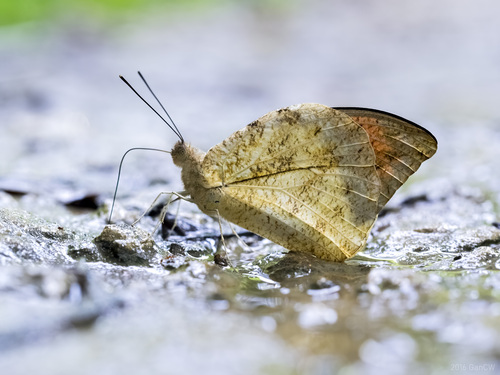
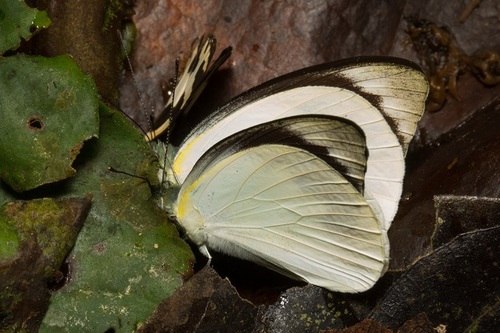
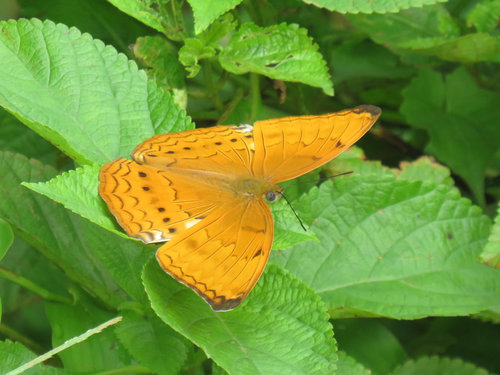
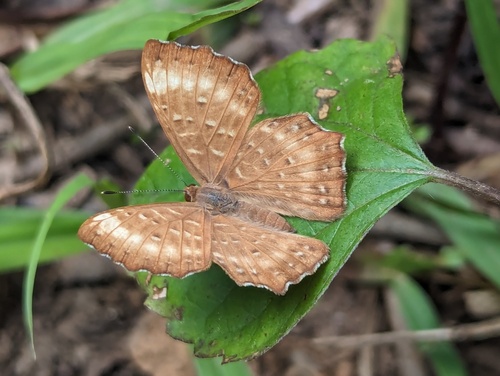
Three-Spotted Grass Yellow

Three-Spotted Grass Yellow

Eurema blanda

Daily sighting probability ~30% · Possible
at Namdapha National Park

In 3 days ~70% in a week ~90%

7 Verified sightings at Namdapha National Park From 2019 to 2026
67 In all 7 parks
December Best month
☀️ Diurnal When it's spotted

About the Three-Spotted Grass Yellow

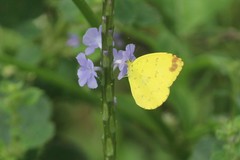
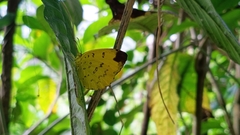
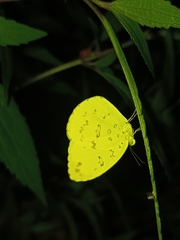
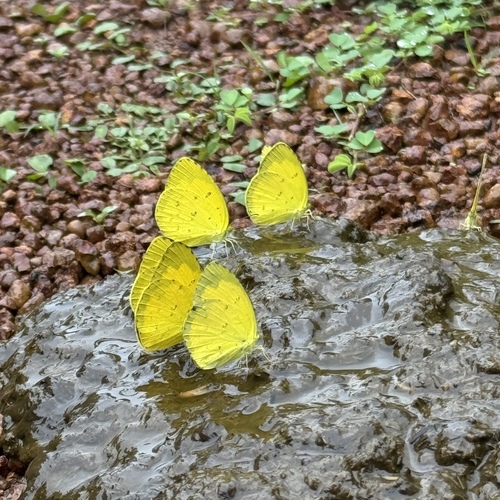
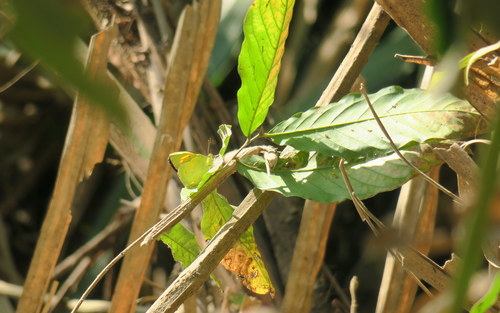
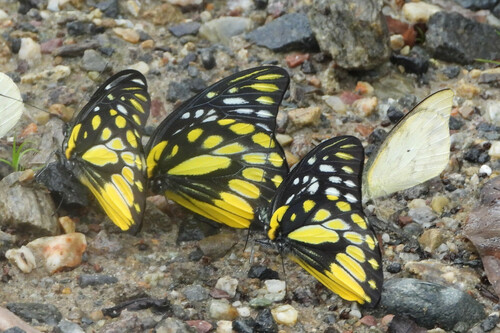
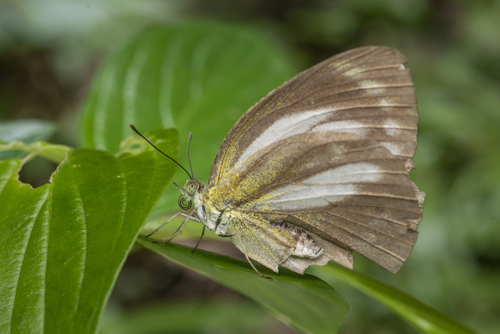
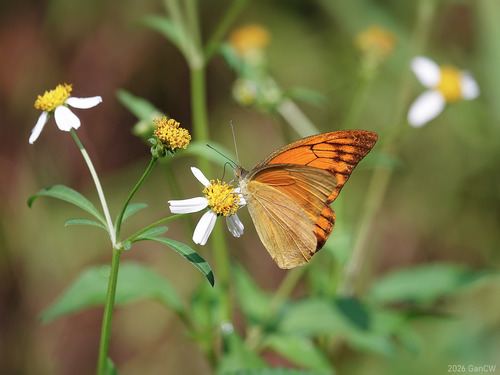
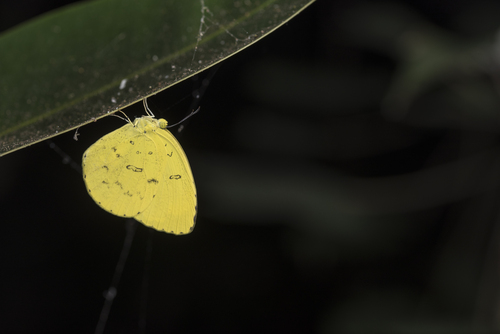
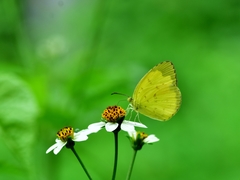
Eurema blanda, the three-spot grass yellow, is a small butterfly of the family Pieridae which is found in Sri Lanka, India and southeast Asia. Wet form: Male. Upper-side lemon-yellow. Fore-wing with the outer marginal black band anteriorly broader than in Sri Lankan specimens of Eurema hecabe, the posterior end shorter and its inner edge outwardly oblique. Hind-wing with a moderately broad black outer band. Underside. Both wings with more or less defined ordinary markings of wet form. Fore-wing with three marks in the cell, in addition to the discocellular. No sub-apical patch. Female. Not seen.

Intermediate form: Male. Not seen. Female. Upper-side. Fore-wing with similar outer band to the wet form. Hind-wing with a broad black outer marginal band. Underside with slightly-defined ordinary brown markings as in wet form. Fore-wing with a brown sub-apical patch.

Dry form: Smaller than in wet form. Male. Upper-side. Fore-wing with narrower outer marginal band, its posterior end much smaller. Hind-wing with a slender outer band. Underside. Both wings with similar ordinary markings to the wet form. Fore-wing with a more or less defined sub-apical patch. Female. Upper-side... Wikipedia →

Global Distribution

Parks Where Found

# Park Country Daily sighting probability
1 Cuc Phuong National Park 🇻🇳 Vietnam
~30%
2 Namdapha National Park 🇮🇳 India
~30%
3 Sinharaja Forest Reserve 🇱🇰 Sri Lanka
~30%
4 Periyar National Park 🇮🇳 India
~20%
5 Kinabalu Park 🇲🇾 Malaysia
~10%
6 Khao Yai National Park 🇹🇭 Thailand
~10%
7 Taroko National Park 🇹🇼 Taiwan
~10%

Cities Where Found

# City Country Daily sighting probability
1 Salem 🇮🇳 India
~50%
2 Tuen Mun 🇨🇳 China
~20%
3 Thrissur 🇮🇳 India
~20%
4 Mysuru 🇮🇳 India
~20%
5 Yogyakarta 🇮🇩 Indonesia
~20%
6 Guwahati 🇮🇳 India
~20%
7 Bengaluru 🇮🇳 India
~20%
8 Ponnani 🇮🇳 India
~10%
9 Kochi 🇮🇳 India
~10%
10 Kozhikode 🇮🇳 India
~10%

Before you go

What are the chances of seeing a Three-Spotted Grass Yellow in Namdapha National Park?

Possible

About 30% of wildlife watchers report a Three-Spotted Grass Yellow sighting in Namdapha National Park on a given day, based on 7 verified sightings from GBIF citizen-science data from 2019 to 2026. It is the 46th most-seen of the 71 insects we can rate there. Over three days the chance rises to about 70%, and over a week to about 90%, if each day is a fresh chance.

When is the best time to see a Three-Spotted Grass Yellow in Namdapha National Park?

April and October–December

In those months about 40% of wildlife watchers report a Three-Spotted Grass Yellow in Namdapha National Park on a given day, against about 10% in January–March, May and September, the lowest months. Those are among Namdapha National Park's driest months, with about 130 mm of rain a month against 660 mm in July. June to August have too few records to rate.

What time of day is best to see a Three-Spotted Grass Yellow?

Between 9 am and noon

Across all the parks we cover, that three-hour window holds the most Three-Spotted Grass Yellow sightings with a recorded time, and about 8 in 10 of them come between 6 am and 6 pm: it is a daytime animal.

Is Namdapha National Park the best place to see a Three-Spotted Grass Yellow?

Among the best

Of the 7 parks where we can rate Three-Spotted Grass Yellow sightings, Namdapha National Park ranks 2nd at about 30%, level with the leaders once rounded. The best odds are in Cuc Phuong National Park (Vietnam, about 30%).

Where does the Three-Spotted Grass Yellow sighting chance come from?

GBIF citizen-science records

It is estimated from how often the Three-Spotted Grass Yellow is recorded against all the insects logged in Namdapha National Park (7 verified sightings from 2019 to 2026), calibrated against known sighting rates. Figures are rounded to the nearest 10% because citizen-science data supports honest approximations, not decimals, and months with records from fewer than five people show "—". How it works.
← Back to Namdapha National Park