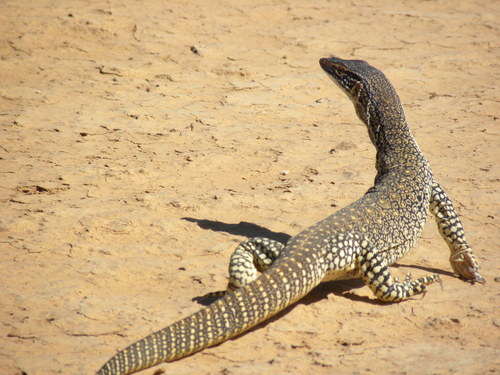
Mulga Snake

Mulga Snake

Pseudechis australis

Silhouette: SeismicShrimp · PhyloPic

LCLeast ConcernNTVUENCR Endemic
Daily sighting probability ~30% · Possible
at Ningaloo Marine Park

In 3 days ~60% in a week ~90%

19 Verified sightings at Ningaloo Marine Park From 2019 to 2026
61 In all 4 parks
March Best month
☀️🌙 Day & Night When it's spotted

About the Mulga Snake

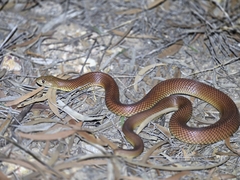
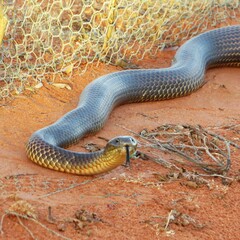
The king brown snake (Pseudechis australis) is a species of highly venomous snake of the family Elapidae, native to northern, western, and Central Australia. The king brown snake is the largest terrestrial venomous snake in Australia. Despite its common name, it is a member of the genus Pseudechis (black snakes) and only distantly related to true brown snakes. Its alternative common name is the mulga snake, although it lives in many habitats apart from mulga. First described by English zoologist John Edward Gray in 1842, it is a robust snake up to 3.3 m (11 ft) long. It is variable in appearance, with individuals from northern Australia having tan upper parts, while those from southern Australia are dark brown to blackish. Sometimes, it is seen in a reddish-green texture. The dorsal scales are two-toned, sometimes giving the snake a patterned appearance. Its underside is cream or white, often with orange splotches. The species is oviparous. The snake is considered to be a least-concern species according to the International Union for Conservation of Nature, though may have declined with the spread of the cane toad.

Its venom is not as potent as those of Australia's other dangerous snakes, but can still cause severe effects if delivered in large enough quantities. Its main effect is on striated muscle tissue, causing paralysis from muscle damage, and also commonly affects blood clotting (coagulopathy). Often, extensive pain and swelling occur, rarely with necrosis, at the bite site. Deaths from its bites have been recorded, with the most recent being in 1969. Its victims are treated with black snake (not brown snake) antivenom. Wikipedia →

Global Distribution

Parks Where Found

# Park Country Daily sighting probability
1 Cape Range 🇦🇺 Australia
~40%
2 Ningaloo Marine Park 🇦🇺 Australia
~30%
3 Kakadu National Park 🇦🇺 Australia
~20%
4 Uluru-Kata Tjuta National Park 🇦🇺 Australia
~20%

Zoos & Centres Where Found

# Zoo / Centre Country
1 Australia Zoo 🇦🇺 Australia In captivity
2 Hartley’s Crocodile Adventures 🇦🇺 Australia In captivity
3 Australian Reptile Park 🇦🇺 Australia In captivity
4 Birdworld Kuranda 🇦🇺 Australia In captivity
5 Kuranda Koala Gardens 🇦🇺 Australia In captivity
6 Kungsbyn Zoo 🇸🇪 Sweden In captivity

Before you go

What are the chances of seeing a Mulga Snake in Ningaloo Marine Park?

Possible

About 30% of wildlife watchers report a Mulga Snake sighting in Ningaloo Marine Park on a given day, based on 19 verified sightings from GBIF citizen-science data from 2019 to 2026. It is the 7th most-seen of the 29 reptiles we can rate there. Over three days the chance rises to about 60%, and over a week to about 90%, if each day is a fresh chance.

When is the best time to see a Mulga Snake in Ningaloo Marine Park?

February–April and October

In those months about 40% of wildlife watchers report a Mulga Snake in Ningaloo Marine Park on a given day, against under 5% in June and December, the lowest months.

What time of day is best to see a Mulga Snake?

Between 7 and 10 pm

Across all the parks we cover, that three-hour window holds the most Mulga Snake sightings with a recorded time, and about 6 in 10 of them come between 6 pm and 6 am: it is seen both by day and at night.

Is Ningaloo Marine Park the best place to see a Mulga Snake?

2nd of 4

Of the 4 parks where we can rate Mulga Snake sightings, Ningaloo Marine Park ranks 2nd at about 30%. The best odds are in Cape Range (Australia, about 40%).

Which relatives of the Mulga Snake live in Ningaloo Marine Park?

Same family: Elapidae

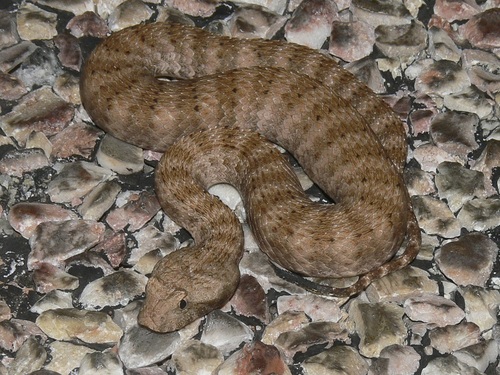
The closest relatives of the Mulga Snake that you can see in Ningaloo Marine Park (family Elapidae, Elapid Snakes) are Olive Sea Snake (about 30%), Pilbara Death Adder (about 30%) and Stokes's Seasnake (about 20%), with each one's daily chance of a sighting.

Where does the Mulga Snake sighting chance come from?

GBIF citizen-science records

It is estimated from how often the Mulga Snake is recorded against all the reptiles logged in Ningaloo Marine Park (19 verified sightings from 2019 to 2026), calibrated against known sighting rates. Figures are rounded to the nearest 10% because citizen-science data supports honest approximations, not decimals, and months with records from fewer than five people show "—". How it works.

← Back to Ningaloo Marine Park