Western Red Colobus

Western Red Colobus

Piliocolobus badius

Silhouette: Margot Michaud · PhyloPic

LCNTVUENEndangeredCR
Daily sighting probability ~60% · Likely
at Niokolo-Koba National Park

In 3 days ~90% in a week >90%

25 Verified sightings at Niokolo-Koba National Park From 2019 to 2026
40 In all 2 parks
January Best month
☀️ Diurnal When it's spotted

About the Western Red Colobus

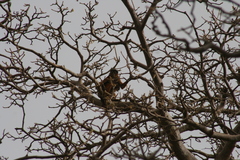
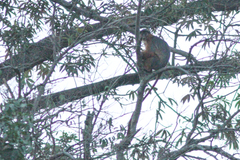
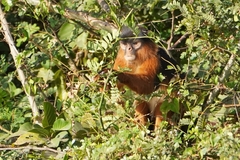
The western red colobus (Piliocolobus badius), also known as the bay red colobus, rust red colobus or Upper Guinea red colobus, is a species of Old World monkey in West African forests from Senegal to Ghana. All other species of red colobuses have formerly been considered subspecies of P. badius.

The monkey is a frequent prey of the common chimpanzee. In 1994, western red colobus monkeys infected many chimpanzees with Ebola virus after being hunted and consumed by the chimps. The western red colobus has two subspecies, including the nominate: Bay red colobus, Piliocolobus badius badius

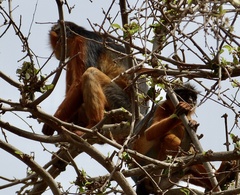
Temminck's red colobus, Piliocolobus badius temminckii Both subspecies are endangered. The western red colobus grows to a head-and-body length of 450 to 670 mm (18 to 26 in) with a tail of 520 to 800 mm (20 to 31 in), and a weight of between 5 and 11 kg (11 and 24 lb). It has red or chestnut-brown head and limbs and black, slatey-grey or dark brown upper parts. It does not have long fringes of hair, or tufts of hair on the tail. Compared to monkeys in the genus Colobus, the nostrils are V-shaped, the digits are long and the big toe is short. Wikipedia →

Sounds

Call1:12

Senegal · 2025

© Frank Lambert · XC1031639 · CC BY-NC-ND 4.0

Call0:55

Ivory Coast · 2023

© Étienne Leroy · XC960205 · CC BY-NC-SA 4.0

Recording0:23

Gambia · 2026

© monicaprieto · iNaturalist · CC BY-NC 4.0

Global Distribution

Parks Where Found

# Park Country Daily sighting probability
1 Niokolo-Koba National Park 🇸🇳 Senegal
~60%
2 Taï National Park 🇨🇮 Ivory Coast
~60%

Before you go

What are the chances of seeing a Western Red Colobus in Niokolo-Koba National Park?

Likely

About 60% of wildlife watchers report a Western Red Colobus sighting in Niokolo-Koba National Park on a given day, based on 25 verified sightings from GBIF citizen-science data from 2019 to 2026. It is the 9th most-seen of the 15 mammals we can rate there. Over three days the chance rises to about 90%, and over a week to over 90%, if each day is a fresh chance.

When is the best time to see a Western Red Colobus in Niokolo-Koba National Park?

January

In that month about 80% of wildlife watchers report a Western Red Colobus in Niokolo-Koba National Park on a given day, against about 10% in March, the lowest month. That is one of Niokolo-Koba National Park's driest months, with almost no rain against 300 mm in August. July to October have too few records to rate.

What time of day is best to see a Western Red Colobus?

Between 9 am and noon

Across all the parks we cover, that three-hour window holds the most Western Red Colobus sightings with a recorded time, and about 7 in 10 of them come between 6 am and 6 pm: it is a daytime animal.

Is Niokolo-Koba National Park the best place to see a Western Red Colobus?

Yes

Of the 2 parks where we can rate Western Red Colobus sightings, Niokolo-Koba National Park has the highest daily chance: about 60%. Next come Taï National Park (Ivory Coast, about 60%).

Which relatives of the Western Red Colobus live in Niokolo-Koba National Park?

Same family: Cercopithecidae

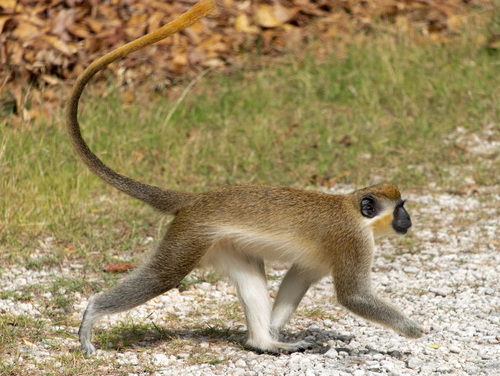
The closest relatives of the Western Red Colobus that you can see in Niokolo-Koba National Park (family Cercopithecidae, Old World Monkeys) are Green Monkey (about 80%) and Guinea Baboon (about 80%), with each one's daily chance of a sighting.

Where does the Western Red Colobus sighting chance come from?

GBIF citizen-science records

It is estimated from how often the Western Red Colobus is recorded against all the mammals logged in Niokolo-Koba National Park (25 verified sightings from 2019 to 2026), calibrated against known sighting rates. Figures are rounded to the nearest 10% because citizen-science data supports honest approximations, not decimals, and months with records from fewer than five people show "—". How it works.

← Back to Niokolo-Koba National Park