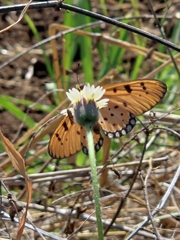
Tawny Coster

Tawny Coster

Acraea terpsicore

Daily sighting probability ~40% · Likely
at Nitmiluk National Park

In 3 days ~80% in a week >90%

21 Verified sightings at Nitmiluk National Park From 2019 to 2026
62 In all 6 parks
May Best month
☀️ Diurnal When it's spotted

About the Tawny Coster

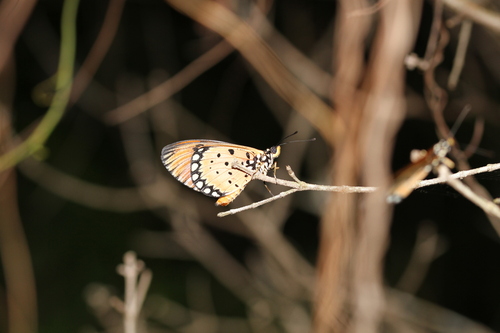
Acraea terpsicore, the tawny coster, is a small, 53–64 millimetres (2.1–2.5 in), leathery-winged butterfly common in grassland and scrub habitats. It belongs to the Nymphalidae or brush-footed butterfly family. It has a weak fluttery flight. It is avoided by most insect predators. This species and the yellow coster (Acraea issoria) are the only two Indian representatives of the predominantly African tribe Acraeini. It is found in India, Sri Lanka, Indonesia, Maldives to Myanmar, Thailand, Laos, Cambodia, Vietnam, Bangladesh, Malaysia, Singapore, and recently Australia.

Pierre and Bernaud, in 1997, stated that they verified the type in the Linnean Society of London and considered A. violae the same species as A. terpsicore. Honey and Scoble, in 2001, argued that both specimens in the Linnean Society are later additions by James Edward Smith (botanist) who, in 1784, purchased Linnaeus specimens, bringing them to London.

In the absence of authentic syntypes, the identity of terpsicore... Wikipedia →
Global Distribution

Parks Where Found

# Park Country Daily sighting probability
1 Nitmiluk National Park 🇦🇺 Australia
~40%
2 Bandhavgarh National Park 🇮🇳 India
~30%
3 Ranthambore National Park 🇮🇳 India
~20%
4 Kakadu National Park 🇦🇺 Australia
~20%
5 Chitwan National Park 🇳🇵 Nepal
~20%
6 Khao Yai National Park 🇹🇭 Thailand
~10%

Cities Where Found

# City Country Daily sighting probability
1 Puducherry 🇮🇳 India
~50%
2 Yogyakarta 🇮🇩 Indonesia
~40%
3 Rajkot 🇮🇳 India
~40%
4 Chennai 🇮🇳 India
~40%
5 Durg 🇮🇳 India
~40%
6 Dehradun 🇮🇳 India
~40%
7 Jabalpur 🇮🇳 India
~40%
8 Johor Bahru 🇲🇾 Malaysia
~40%
9 Thiruvananthapuram 🇮🇳 India
~40%
10 Vadodara 🇮🇳 India
~40%

Before you go

What are the chances of seeing a Tawny Coster in Nitmiluk National Park?

Likely

About 40% of wildlife watchers report a Tawny Coster sighting in Nitmiluk National Park on a given day, based on 21 verified sightings from GBIF citizen-science data from 2019 to 2026. It is the 5th most-seen of the 17 insects we can rate there. Over three days the chance rises to about 80%, and over a week to over 90%, if each day is a fresh chance.

When is the best time to see a Tawny Coster in Nitmiluk National Park?

May

In that month about 70% of wildlife watchers report a Tawny Coster in Nitmiluk National Park on a given day, against under 5% in July, the lowest month. That is one of Nitmiluk National Park's driest months, with almost no rain against 270 mm in January.

What time of day is best to see a Tawny Coster?

Between 10 am and 1 pm

Across all the parks we cover, that three-hour window holds the most Tawny Coster sightings with a recorded time, and about 9 in 10 of them come between 6 am and 6 pm: it is a daytime animal.

Is Nitmiluk National Park the best place to see a Tawny Coster?

Yes

Of the 6 parks where we can rate Tawny Coster sightings, Nitmiluk National Park has the highest daily chance: about 40%. Next come Bandhavgarh National Park (India, about 30%) and Ranthambore National Park (India, about 20%).

Which relatives of the Tawny Coster live in Nitmiluk National Park?

Same family: Nymphalidae

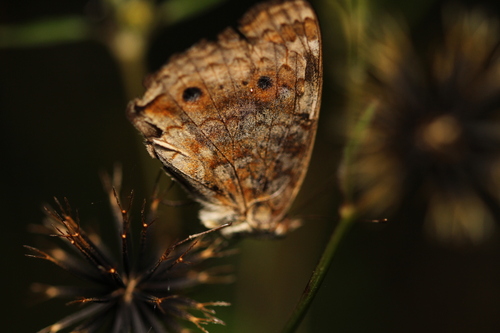
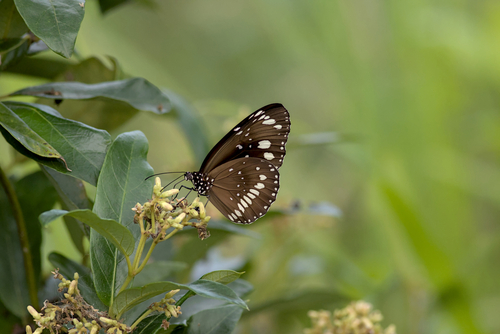
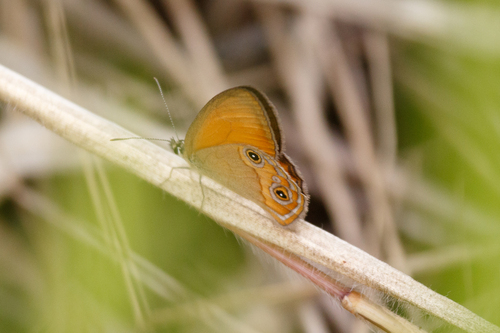
The closest relatives of the Tawny Coster that you can see in Nitmiluk National Park (family Nymphalidae, Brush-footed Butterflies) are Blue Pansy (about 40%), Australian Common Crow (about 40%) and Orange Ringlet (about 30%), with each one's daily chance of a sighting.

Where does the Tawny Coster sighting chance come from?

GBIF citizen-science records

It is estimated from how often the Tawny Coster is recorded against all the insects logged in Nitmiluk National Park (21 verified sightings from 2019 to 2026), calibrated against known sighting rates. Figures are rounded to the nearest 10% because citizen-science data supports honest approximations, not decimals, and months with records from fewer than five people show "—". How it works.

← Back to Nitmiluk National Park