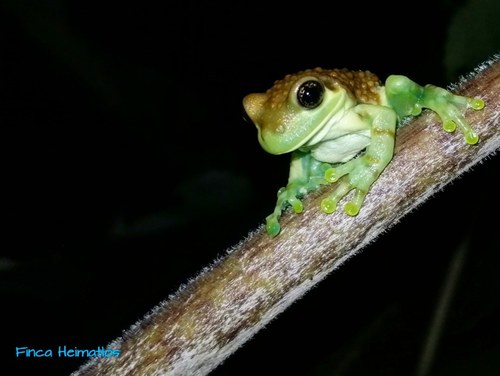
Sheep Frog

Sheep Frog

Hypopachus variolosus

Silhouette: Jose Carlos Arenas-Monroy · PhyloPic

LCLeast ConcernNTVUENCR
Daily sighting probability ~30% · Possible
at Palo Verde National Park

In 3 days ~70% in a week ~90%

21 Verified sightings at Palo Verde National Park From 2019 to 2026
187 In all 4 parks
September Best month
🌙 Nocturnal When it's spotted

About the Sheep Frog

The northern sheep frog (Hypopachus variolosus) is native to Central America, Mexico, and extreme south Texas, United States. It occurs in the lowlands from Sonora, Mexico, to northern Costa Rica on the Pacific coast, and south Texas to Honduras on the Gulf of Mexico and Caribbean coasts. The sheep frog inhabits semiarid thornscrub, savannas, pasturelands, and open woodlands, as well as more humid, moist forest in the canyons, basins, foothills, and lower elevations of mountains slopes. It is a fossorial, burrowing frog that is seldom seen on the surface except at night after heavy rains when they emerge to breed. The sheep frog gets its name from its distinctive call that resembles a sheep's bleat. It is a diet specialist primarily feeding on termites and ants.

The sheep frog is a small, stout frog with short legs, ranging about 2.5-3.8 cm, with females growing larger than the males. The dorsal color ranges from tan, to reddish-tan, to various shades of brown with irregular black flecks or spots, which may be extensive on some individuals, or absent on others. An orange, red, or yellowish mid-dorsal stripe, running from the snout to the vent is present on some specimens, but may by absent, vague, or fragmented on others. It is a common species in some areas of its range, but it is uncommon in the US and listed as a threatened species in the state of Texas. Wikipedia →

Sounds

Advertisement call0:40

Mexico · 2025

Daniel Montoya Ferrer · XC1032786 · CC0

Advertisement call0:05

Mexico · 2017

© Chris Harrison · XC893995 · CC BY-NC-SA 4.0

Recording0:09

Mexico · 2023

© fabrice82 · iNaturalist · CC BY-NC 4.0

Global Distribution

Parks Where Found

# Park Country Daily sighting probability
1 Santa Rosa National Park 🇨🇷 Costa Rica
~70%
2 Palo Verde National Park 🇨🇷 Costa Rica
~30%
3 Calakmul Biosphere Reserve 🇲🇽 Mexico
~30%
4 Tikal National Park 🇬🇹 Guatemala
~20%

Before you go

What are the chances of seeing a Sheep Frog in Palo Verde National Park?

Possible

About 30% of wildlife watchers report a Sheep Frog sighting in Palo Verde National Park on a given day, based on 21 verified sightings from GBIF citizen-science data from 2019 to 2026. It is the 6th most-seen of the 12 amphibians we can rate there. Over three days the chance rises to about 70%, and over a week to about 90%, if each day is a fresh chance.

When is the best time to see a Sheep Frog in Palo Verde National Park?

September

In that month about 70% of wildlife watchers report a Sheep Frog in Palo Verde National Park on a given day, against under 5% in January–April, August and November, the lowest months. That is one of Palo Verde National Park's wettest months, with about 360 mm of rain against almost none in February.

What time of day is best to see a Sheep Frog?

Between 7 and 10 pm

Across all the parks we cover, that three-hour window holds the most Sheep Frog sightings with a recorded time, and about 8 in 10 of them come between 6 pm and 6 am: it is mostly seen at night.

Is Palo Verde National Park the best place to see a Sheep Frog?

2nd of 4

Of the 4 parks where we can rate Sheep Frog sightings, Palo Verde National Park ranks 2nd at about 30%. The best odds are in Santa Rosa National Park (Costa Rica, about 70%). All parks ranked.

Which relatives of the Sheep Frog live in Palo Verde National Park?

Same order: Anura

The closest relatives of the Sheep Frog that you can see in Palo Verde National Park (order Anura, Frogs and Toads) are Stauffer's Tree Frog (about 50%), Mexican Smilisca (about 50%) and Giant Marine Toad (about 50%), with each one's daily chance of a sighting.

Where does the Sheep Frog sighting chance come from?

GBIF citizen-science records

It is estimated from how often the Sheep Frog is recorded against all the amphibians logged in Palo Verde National Park (21 verified sightings from 2019 to 2026), calibrated against known sighting rates. Figures are rounded to the nearest 10% because citizen-science data supports honest approximations, not decimals, and months with records from fewer than five people show "—". How it works.

← Back to Palo Verde National Park