
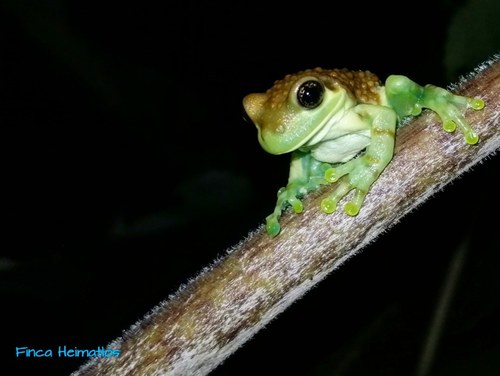
Mexican Smilisca

Mexican Smilisca

Smilisca baudinii

Silhouette: Dmitry Bogdanov (vectorized by T. Michael Keesey) · PhyloPic

LCLeast ConcernNTVUENCR
Daily sighting probability ~50% · Likely
at Palo Verde National Park

In 3 days ~80% in a week >90%

61 Verified sightings at Palo Verde National Park From 2019 to 2026
525 In all 20 parks
June Best month
☀️🌙 Day & Night When it's spotted

About the Mexican Smilisca

The common Mexican tree frog (Smilisca baudinii) is a nocturnal species of tree frog whose native range extends from the Sonoran Desert and the Lower Rio Grande Valley of Texas south to Costa Rica. Common names include Mexican tree frog, Baudin's tree frog and Van Vliet's frog. They are usually found within lightly forested areas near permanent sources of water.

The common Mexican tree frog is generally brown-grey in color, with darker brown, irregular blotching. Its underside is typically a lighter grey or white. Its legs have distinctive dark banding. The species has numerous synonymous classifications due to disjunct populations, and was mistakenly redescribed on several occasions by field researchers.

The common Mexican tree frog is considered to be a threatened species in the US state of Texas. It has only been reported in a few counties, and no estimates of its actual population count have been made. Amphibian Species of the World: Smilisca baudinii

Davidson College department of biology: Smilisca baudinii Data related to Common Mexican tree frog at Wikispecies Media related to Smilisca... Wikipedia →

Sounds

Advertisement call0:10

Costa Rica · 2013

© Albert Lastukhin · XC1101611 · CC BY-NC-ND 4.0

Advertisement call0:13

United States · 2011

© Chris Harrison · XC890463 · CC BY-NC-SA 4.0

Recording0:12

United States · 2020

© jugbayjs · iNaturalist · CC BY-NC 4.0

Global Distribution

Parks Where Found

# Park Country Daily sighting probability
1 Pico Bonito National Park 🇭🇳 Honduras
~60%
2 Santa Rosa National Park 🇨🇷 Costa Rica
~50%
3 Palo Verde National Park 🇨🇷 Costa Rica
~50%
4 Ostional Wildlife Refuge 🇨🇷 Costa Rica
~40%
5 Biotopo Cerro Cahuí 🇬🇹 Guatemala
~40%
6 Calakmul Biosphere Reserve 🇲🇽 Mexico
~30%
7 Arrecifes de Cozumel National Park 🇲🇽 Mexico
~30%
8 Cabo Blanco Absolute Nature Reserve 🇨🇷 Costa Rica
~30%
9 Lago de Yojoa 🇭🇳 Honduras
~30%
10 Montes Azules Biosphere Reserve 🇲🇽 Mexico
~30%
11 Cusuco National Park 🇭🇳 Honduras
~30%
12 Masaya Volcano National Park 🇳🇮 Nicaragua
~30%
13 Las Baulas Marine National Park 🇨🇷 Costa Rica
~30%
14 Cerro Azul Meámbar National Park 🇭🇳 Honduras
~30%
15 Tenorio Volcano National Park 🇨🇷 Costa Rica
~20%
16 Sian Ka'an Biosphere Reserve 🇲🇽 Mexico
~20%
17 Ría Lagartos Biosphere Reserve 🇲🇽 Mexico
~20%
18 Cañón del Sumidero National Park 🇲🇽 Mexico
~10%
19 Cumbres de Monterrey National Park 🇲🇽 Mexico
~10%
20 Arenal Volcano National Park 🇨🇷 Costa Rica
~10%

Cities Where Found

# City Country Daily sighting probability
1 Managua 🇳🇮 Nicaragua
~20%
2 Tegucigalpa 🇭🇳 Honduras
~20%
3 San Pedro Sula 🇭🇳 Honduras
~20%
4 San Salvador 🇸🇻 El Salvador
~10%
5 Monterrey 🇲🇽 México
<5%

Zoos & Centres Where Found

# Zoo / Centre Country
1 Zoológico Miguél Álvarez del Toro 🇲🇽 Mexico In captivity

Before you go

What are the chances of seeing a Mexican Smilisca in Palo Verde National Park?

Likely

About 50% of wildlife watchers report a Mexican Smilisca sighting in Palo Verde National Park on a given day, based on 61 verified sightings from GBIF citizen-science data from 2019 to 2026. It is the 2nd most-seen of the 12 amphibians we can rate there. Over three days the chance rises to about 80%, and over a week to over 90%, if each day is a fresh chance.

When is the best time to see a Mexican Smilisca in Palo Verde National Park?

June and October

In those months about 80% of wildlife watchers report a Mexican Smilisca in Palo Verde National Park on a given day, against under 5% in April and December–February, the lowest months. Those are among Palo Verde National Park's wettest months, with about 430 mm of rain a month against almost none in February.

What time of day is best to see a Mexican Smilisca?

Between 8 and 11 pm

Across all the parks we cover, that three-hour window holds the most Mexican Smilisca sightings with a recorded time, and about 6 in 10 of them come between 6 pm and 6 am: it is seen both by day and at night.

Is Palo Verde National Park the best place to see a Mexican Smilisca?

3rd of 20

Of the 20 parks where we can rate Mexican Smilisca sightings, Palo Verde National Park ranks 3rd at about 50%. The best odds are in Pico Bonito National Park (Honduras, about 60%) and Santa Rosa National Park (Costa Rica, about 50%). All parks ranked.

Which relatives of the Mexican Smilisca live in Palo Verde National Park?

Same family: Hylidae

The closest relatives of the Mexican Smilisca that you can see in Palo Verde National Park (family Hylidae, Hylid Tree Frogs) are Stauffer's Tree Frog (about 50%), Yellow Treefrog (about 40%) and Milk Frog (about 30%), with each one's daily chance of a sighting.

Where does the Mexican Smilisca sighting chance come from?

GBIF citizen-science records

It is estimated from how often the Mexican Smilisca is recorded against all the amphibians logged in Palo Verde National Park (61 verified sightings from 2019 to 2026), calibrated against known sighting rates. Figures are rounded to the nearest 10% because citizen-science data supports honest approximations, not decimals, and months with records from fewer than five people show "—". How it works.

← Back to Palo Verde National Park