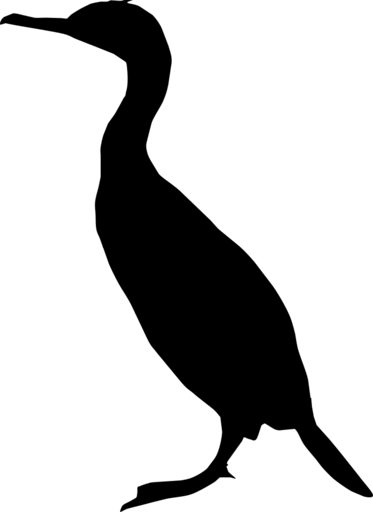
Guanay Cormorant

Guanay Cormorant

Leucocarbo bougainvilliorum

Silhouette: Juan Carlos Jerí · PhyloPic

LCNTNear ThreatenedVUENCR
Daily sighting probability ~50% · Likely
at Paracas National Reserve

In 3 days ~80% in a week >90%

522 Verified sightings at Paracas National Reserve From 2019 to 2026
635 In all 3 parks
July Best month
☀️ Diurnal When it's spotted

About the Guanay Cormorant

The guanay cormorant or guanay shag (Leucocarbo bougainvilliorum) is a member of the cormorant family found on the Pacific coast of Peru and northern Chile. After breeding it spreads south to southern parts of Chile and north to Ecuador, and has also been recorded as far north as Panama and Colombia, probably a result of mass dispersal due to food shortage in El Niño years. Its major habitats include shallow seawater and rocky shores. A former population on the Patagonian Atlantic coast of Argentina appears to be extinct.

Most taxonomic authorities, including the International Ornithologists' Union, place this species in the genus Leucocarbo. In the past, it was usually placed in a broad circumscription of the genus Phalacrocorax, and some authors still follow this. The scientific name commemorates the French naval officers Louis Antoine de Bougainville and his son Hyacinthe de Bougainville; the species epithet was corrected from the original bougainvillii to the plural spelling bougainvilliorum ("of the Bougainvilles") in 2020 to reflect this dual honoring.

The guanay cormorant is similar in plumage to the rock shag Leucocarbo magellanicus, but is...

Wikipedia →

Global Distribution

Parks Where Found

# Park Country Daily sighting probability
1 Paracas National Reserve 🇵🇪 Peru
~50%
2 Pan de Azúcar National Park 🇨🇱 Chile
~20%
3 Machalilla National Park 🇪🇨 Ecuador
~10%

Cities Where Found

# City Country Daily sighting probability
1 Lima 🇵🇪 Peru
~10%

Zoos & Centres Where Found

# Zoo / Centre Country
1 Walsrode World Bird Park 🇩🇪 Germany In captivity

Before you go

What are the chances of seeing a Guanay Cormorant in Paracas National Reserve?

Likely

About 50% of wildlife watchers report a Guanay Cormorant sighting in Paracas National Reserve on a given day, based on 522 verified sightings from GBIF citizen-science data from 2019 to 2026. It is the 18th most-seen of the 84 birds we can rate there. Over three days the chance rises to about 80%, and over a week to over 90%, if each day is a fresh chance.

When is the best time to see a Guanay Cormorant in Paracas National Reserve?

May to July

In those months about 60% of wildlife watchers report a Guanay Cormorant in Paracas National Reserve on a given day, against about 40% in January–April and September–November, the lowest months.

What time of day is best to see a Guanay Cormorant?

Between 9 am and noon

Across all the parks we cover, that three-hour window holds the most Guanay Cormorant sightings with a recorded time, and about 9 in 10 of them come between 6 am and 6 pm: it is a daytime animal.

Is Paracas National Reserve the best place to see a Guanay Cormorant?

Yes

Of the 3 parks where we can rate Guanay Cormorant sightings, Paracas National Reserve has the highest daily chance: about 50%. Next come Pan de Azúcar National Park (Chile, about 20%) and Machalilla National Park (Ecuador, about 10%).

Which relatives of the Guanay Cormorant live in Paracas National Reserve?

Same family: Phalacrocoracidae

The closest relatives of the Guanay Cormorant that you can see in Paracas National Reserve (family Phalacrocoracidae, Cormorants and Shags) are Bigua cormorant (about 80%) and Red-legged Cormorant (about 40%), with each one's daily chance of a sighting.

Where does the Guanay Cormorant sighting chance come from?

GBIF citizen-science records

It is estimated from how often the Guanay Cormorant is recorded against all the birds logged in Paracas National Reserve (522 verified sightings from 2019 to 2026), calibrated against known sighting rates. Figures are rounded to the nearest 10% because citizen-science data supports honest approximations, not decimals, and months with records from fewer than five people show "—". How it works.

← Back to Paracas National Reserve