“After a night sleeping out under the stars at the Mare Bai waterhole, with an alert ranger team standing guard and Habte adding water to the expedition’s symbolic calabash, we fly by helicopter over Pendjari, spotting lots of wildlife and, in the distance, a military camp close to the border with Burkina Faso.”
Pendjari National Park
🇧🇯 Benin
Pendjari National Park lies in north-western Benin, adjoining the Arli National Park in Burkina Faso. Named for the Pendjari River, the national park is known for its wildlife and is home to some of the last populations of big game like the African forest elephant, lion, hippopotamus, African buffalo, and various antelopes in West Africa. The park is also famous for its richness in birds.
The park covers an area of 2,755 km2 and is part of the WAP Complex, a large protected area in Benin, Burkina Faso and Niger. Hills and cliffs in the Atakora range are visible from the park. In March 2009, the park was tentatively nominated for UNESCO's World Heritage Site program, and in July 2017, it was officially inscribed as a UNESCO World Heritage Site as part of a transnational extension of the WAP Complex.

11.234° N 1.520° E
🦜 Nature
⭐ Iconic Species
📊 Most Spotted
⭐ Iconic Species
📊 Most Spotted
📊 Most Spotted
📊 Most Spotted
Recent sightings in Pendjari National Park
LIVEiNaturalistSighting Calendar
How many species you'd see in a dayavg 9.5 year-round
Sighting Zones
Warmer areas are where all species together are recorded most often.
-
Mare Bali Observation Post
-
11.135° N, 1.535° E
Essentials
Climate
Wallace's Line Score
How good is this park for seeing wildlife?Biodiversity
GoodHow rich is the wildlife?
Sighting
ExcellentHow likely to see animals?
Experience
GoodHow easy and pleasant is the visit?
What visitors say
Your review
“Obviously the GPS didn’t work properly. „Great!“ Hopefully the cheetahs know as well that the Confluence lies just behind the borders of the Parc National de la Pendjari… and hopefully the border officials don’t discover our Toyota in the middle of nowhere.”
Before you go
What animals can you see in Pendjari National Park?
851 species
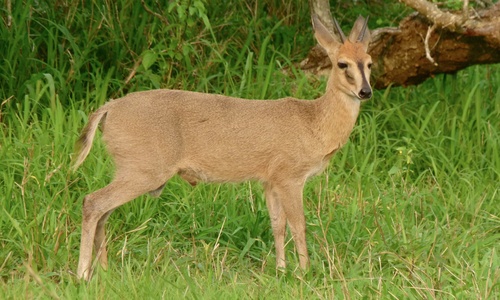
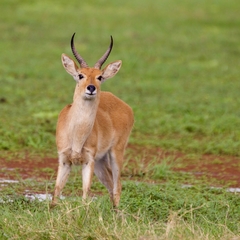
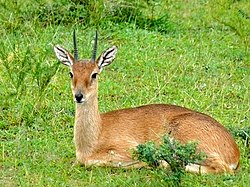
Pendjari National Park has 851 recorded vertebrate species. The ones wildlife watchers report most often on a given day are Roan Antelope (about 70%), Kob (about 70%), African Buffalo (about 70%), Common Warthog (about 70%) and Hartebeest (about 60%). Among birds, the most-seen is Grey Heron (about 40%); among reptiles, West African Crocodile (about 40%).
When is the best time to visit Pendjari National Park for wildlife?
March to May
In those months the park's 12 most-seen species average about 60% on a given day, against about 20% in September. Those are among Pendjari National Park's driest months, with about 20 mm of rain a month against 190 mm in August.
Can you see a Lion in Pendjari National Park?
Yes
About 60% of wildlife watchers report a Lion sighting in Pendjari National Park on a given day, based on 114 verified sightings from GBIF citizen-science data from 2019 to 2026. The best time is January (about 80%).
Can you see a Roan Antelope in Pendjari National Park?
Yes
About 70% of wildlife watchers report a Roan Antelope sighting in Pendjari National Park on a given day, based on 104 verified sightings from GBIF citizen-science data from 2019 to 2026. The best time is April–June and December (about 80%).
Can you see a Kob in Pendjari National Park?
Yes
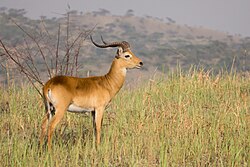
About 70% of wildlife watchers report a Kob sighting in Pendjari National Park on a given day, based on 178 verified sightings from GBIF citizen-science data from 2019 to 2026. The best time is February, May–July and October–December (about 80%).
Can you see an African Buffalo in Pendjari National Park?
Yes
About 70% of wildlife watchers report an African Buffalo sighting in Pendjari National Park on a given day, based on 129 verified sightings from GBIF citizen-science data from 2019 to 2026. The best time is March and April (about 80%).
Is Pendjari National Park good for wildlife watching?
4.3 out of 5
On the Wallace's Line Score, Pendjari National Park rates 4.3/5: 78th of 340 parks worldwide and 45th in Africa. 15 of its species are reported by about 40% or more of wildlife watchers on a given day.