Marabou Stork

Marabou Stork

Leptoptilos crumenifer

Silhouette: Mike Keesey (vectorization) and Vaibhavcho (photography) ยท PhyloPic

LCLeast ConcernNTVUENCR
Daily sighting probability ~30% ยท Possible
at Pendjari National Park

In 3 days ~60% in a week ~90%

9 Verified sightings at Pendjari National Park From 2019 to 2026
15,473 In all 40 parks
November Best month
โ˜€๏ธ Diurnal When it's spotted

About the Marabou Stork

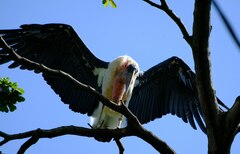
The marabou stork (Leptoptilos crumenifer) is a large wading bird in the stork family Ciconiidae native to sub-Saharan Africa. It breeds in both wet and arid habitats, often near human habitation, especially landfill sites. It is sometimes called the "undertaker bird" due to its shape from behind: cloak-like wings and back, skinny white legs, and sometimes a large white mass of "hair". It has often been credited with the largest wingspan of any land bird, with an average of 2.6 metres (8.5 ft) and some recorded examples of up to 3.2 metres (10 ft).

The marabou stork was formally described in 1831 by the French naturalist Renรฉ Lesson. He placed it in the stork genus Ciconia and coined the binomial name Ciconia crumenifera. He specified that locality as Senegal. The species epithet means "carrying a purse around the neck". The species is now placed with the lesser adjutant and the greater adjutant in the genus Leptoptilos that Lesson had introduced at the same time he described the marabou stork. The species is monotypic: no subspecies are recognised.

The common name marabou is thought to be derived from the Arabic word murฤbit meaning quiet or hermit-like. The species...

Wikipedia โ†’

Sounds

Wingflap and strange sound0:04

Ethiopia ยท 2019

ยฉ Aladdin ยท XC512519 ยท CC BY-NC-SA 4.0

Call0:49

Ethiopia ยท 2015

ยฉ Peter Boesman ยท XC300423 ยท CC BY-NC-ND 4.0

Call1:02

Ethiopia ยท 2015

ยฉ Andrew Spencer ยท XC278218 ยท CC BY-NC-ND 4.0

Global Distribution

Parks Where Found

# Park Country Daily sighting probability
1 Lake Nakuru National Park ๐Ÿ‡ฐ๐Ÿ‡ช Kenya
~70%
2 Nairobi National Park ๐Ÿ‡ฐ๐Ÿ‡ช Kenya
~50%
3 Serengeti National Park ๐Ÿ‡น๐Ÿ‡ฟ Tanzania
~50%
4 Masai Mara National Reserve ๐Ÿ‡ฐ๐Ÿ‡ช Kenya
~50%
5 Ngorongoro Conservation Area ๐Ÿ‡น๐Ÿ‡ฟ Tanzania
~50%
6 Chobe National Park ๐Ÿ‡ง๐Ÿ‡ผ Botswana
~40%
7 Queen Elizabeth National Park ๐Ÿ‡บ๐Ÿ‡ฌ Uganda
~40%
8 Samburu National Reserve ๐Ÿ‡ฐ๐Ÿ‡ช Kenya
~40%
9 Mikumi National Park ๐Ÿ‡น๐Ÿ‡ฟ Tanzania
~40%
10 Lower Zambezi National Park ๐Ÿ‡ฟ๐Ÿ‡ฒ Zambia
~30%
11 Tsavo West National Park ๐Ÿ‡ฐ๐Ÿ‡ช Kenya
~30%
12 Awash National Park ๐Ÿ‡ช๐Ÿ‡น Ethiopia
~30%
13 Moremi Game Reserve ๐Ÿ‡ง๐Ÿ‡ผ Botswana
~30%
14 Murchison Falls National Park ๐Ÿ‡บ๐Ÿ‡ฌ Uganda
~30%
15 Gonarezhou National Park ๐Ÿ‡ฟ๐Ÿ‡ผ Zimbabwe
~30%
16 Liwonde National Park ๐Ÿ‡ฒ๐Ÿ‡ผ Malawi
~30%
17 Tsavo East National Park ๐Ÿ‡ฐ๐Ÿ‡ช Kenya
~30%
18 Amboseli National Park ๐Ÿ‡ฐ๐Ÿ‡ช Kenya
~30%
19 Mana Pools National Park ๐Ÿ‡ฟ๐Ÿ‡ผ Zimbabwe
~30%
20 Pendjari National Park ๐Ÿ‡ง๐Ÿ‡ฏ Benin
~30%
21 Tarangire National Park ๐Ÿ‡น๐Ÿ‡ฟ Tanzania
~30%
22 Hwange National Park ๐Ÿ‡ฟ๐Ÿ‡ผ Zimbabwe
~30%
23 Lake Manyara National Park ๐Ÿ‡น๐Ÿ‡ฟ Tanzania
~30%
24 South Luangwa National Park ๐Ÿ‡ฟ๐Ÿ‡ฒ Zambia
~30%
25 Gorongosa National Park ๐Ÿ‡ฒ๐Ÿ‡ฟ Mozambique
~30%
26 Kafue National Park ๐Ÿ‡ฟ๐Ÿ‡ฒ Zambia
~20%
27 Kruger National Park ๐Ÿ‡ฟ๐Ÿ‡ฆ South Africa
~20%
28 Etosha National Park ๐Ÿ‡ณ๐Ÿ‡ฆ Namibia
~20%
29 Ruaha National Park ๐Ÿ‡น๐Ÿ‡ฟ Tanzania
~10%
30 Pilanesberg National Park ๐Ÿ‡ฟ๐Ÿ‡ฆ South Africa
~10%
31 Arusha National Park ๐Ÿ‡น๐Ÿ‡ฟ Tanzania
~10%
32 Kidepo Valley National Park ๐Ÿ‡บ๐Ÿ‡ฌ Uganda
~10%
33 Lake Mburo National Park ๐Ÿ‡บ๐Ÿ‡ฌ Uganda
~10%
34 Virunga National Park ๐Ÿ‡จ๐Ÿ‡ฉ Democratic Republic of the Congo
~10%
35 Akagera National Park ๐Ÿ‡ท๐Ÿ‡ผ Rwanda
~10%
36 uMkhuze Game Reserve ๐Ÿ‡ฟ๐Ÿ‡ฆ South Africa
<5%
37 Hluhluwe-Imfolozi Park ๐Ÿ‡ฟ๐Ÿ‡ฆ South Africa
<5%
38 Semuliki National Park ๐Ÿ‡บ๐Ÿ‡ฌ Uganda
<5%
39 Kibale National Park ๐Ÿ‡บ๐Ÿ‡ฌ Uganda
<5%
40 Bwindi Impenetrable National Park ๐Ÿ‡บ๐Ÿ‡ฌ Uganda
<5%

Cities Where Found

# City Country Daily sighting probability
1 Kampala ๐Ÿ‡บ๐Ÿ‡ฌ Uganda
~60%
2 Nairobi ๐Ÿ‡ฐ๐Ÿ‡ช Kenya
~30%
3 Addis Ababa ๐Ÿ‡ช๐Ÿ‡น Ethiopia
~20%
4 N'Djamena ๐Ÿ‡น๐Ÿ‡ฉ Chad
~10%
5 Kigali ๐Ÿ‡ท๐Ÿ‡ผ Rwanda
<5%
6 Harare ๐Ÿ‡ฟ๐Ÿ‡ผ Zimbabwe
<5%

Zoos & Centres Where Found

# Zoo / Centre Country
1 Disney's Animal Kingdom ๐Ÿ‡บ๐Ÿ‡ธ United States In captivity
2 Busch Gardens Tampa ๐Ÿ‡บ๐Ÿ‡ธ United States In captivity
3 San Diego Zoo ๐Ÿ‡บ๐Ÿ‡ธ United States In captivity
4 Moscow Zoo ๐Ÿ‡ท๐Ÿ‡บ Russia In captivity
5 Pairi Daiza ๐Ÿ‡ง๐Ÿ‡ช Belgium In captivity
6 Prague Zoo ๐Ÿ‡จ๐Ÿ‡ฟ Czechia In captivity
7 ZooParc de Beauval ๐Ÿ‡ซ๐Ÿ‡ท France In captivity
8 Cleveland Metroparks Zoo ๐Ÿ‡บ๐Ÿ‡ธ United States In captivity
9 California Academy of Sciences ๐Ÿ‡บ๐Ÿ‡ธ United States In captivity
10 Dvลฏr Krรกlovรฉ Zoo ๐Ÿ‡จ๐Ÿ‡ฟ Czechia In captivity
11 Paris Zoological Park ๐Ÿ‡ซ๐Ÿ‡ท France In captivity
12 Rรฉserve africaine de Sigean ๐Ÿ‡ซ๐Ÿ‡ท France In captivity
13 Jihlava Zoo ๐Ÿ‡จ๐Ÿ‡ฟ Czechia In captivity
14 Parc des oiseaux ๐Ÿ‡ซ๐Ÿ‡ท France In captivity
15 Zoo Hluboka ๐Ÿ‡จ๐Ÿ‡ฟ Czechia In captivity
16 Abilene Zoological Gardens ๐Ÿ‡บ๐Ÿ‡ธ United States In captivity
17 Yekaterinburg Zoo ๐Ÿ‡ท๐Ÿ‡บ Russia In captivity
18 Aquarium du palais de la Porte Dorรฉe ๐Ÿ‡ซ๐Ÿ‡ท France In captivity
19 Silver Springs ๐Ÿ‡บ๐Ÿ‡ธ United States In captivity
20 Zoo Miami ๐Ÿ‡บ๐Ÿ‡ธ United States In captivity
21 San Diego Zoo Safari Park ๐Ÿ‡บ๐Ÿ‡ธ United States In captivity
22 Whipsnade Zoo ๐Ÿ‡ฌ๐Ÿ‡ง United Kingdom In captivity
23 Al Ain Zoo ๐Ÿ‡ฆ๐Ÿ‡ช United Arab Emirates In captivity
24 Safaripark Beekse Bergen ๐Ÿ‡ณ๐Ÿ‡ฑ Netherlands In captivity
25 African Lion Safari ๐Ÿ‡จ๐Ÿ‡ฆ Canada In captivity
26 Toronto Zoo ๐Ÿ‡จ๐Ÿ‡ฆ Canada In captivity
27 Minnesota Zoo ๐Ÿ‡บ๐Ÿ‡ธ United States In captivity
28 Living Desert Zoo and Gardens ๐Ÿ‡บ๐Ÿ‡ธ United States In captivity
29 Poznaล„ Nowe Zoo ๐Ÿ‡ต๐Ÿ‡ฑ Poland In captivity
30 Bronx Zoo ๐Ÿ‡บ๐Ÿ‡ธ United States In captivity
31 Haute Touche Zoological Park ๐Ÿ‡ซ๐Ÿ‡ท France In captivity
32 Parc du Belvรฉdรจre ๐Ÿ‡น๐Ÿ‡ณ Tunisia In captivity
33 Badoca Safari Park ๐Ÿ‡ต๐Ÿ‡น Portugal In captivity
34 Ramat Gan Safari ๐Ÿ‡ฎ๐Ÿ‡ฑ Israel In captivity
35 Tallinn Zoo ๐Ÿ‡ช๐Ÿ‡ช Estonia In captivity
36 Chimelong Safari Park ๐Ÿ‡จ๐Ÿ‡ณ China In captivity
37 Baton Rouge Zoo ๐Ÿ‡บ๐Ÿ‡ธ United States In captivity
38 Parc zoologique de Montpellier ๐Ÿ‡ซ๐Ÿ‡ท France In captivity
39 Beijing Zoo ๐Ÿ‡จ๐Ÿ‡ณ China In captivity
40 Sedgwick County Zoo ๐Ÿ‡บ๐Ÿ‡ธ United States In captivity
41 Shenzhen Safari Park ๐Ÿ‡จ๐Ÿ‡ณ China In captivity
42 Safari World ๐Ÿ‡น๐Ÿ‡ญ Thailand In captivity
43 Zoo and Botanical Garden of Branfรฉrรฉ ๐Ÿ‡ซ๐Ÿ‡ท France In captivity
44 Johannesburg Zoo ๐Ÿ‡ฟ๐Ÿ‡ฆ South Africa In captivity
45 Phoenix Zoo ๐Ÿ‡บ๐Ÿ‡ธ United States In captivity
46 Jacksonville Zoo and Gardens ๐Ÿ‡บ๐Ÿ‡ธ United States In captivity
47 Greater Vancouver Zoo ๐Ÿ‡จ๐Ÿ‡ฆ Canada In captivity
48 Silesian Zoological Garden ๐Ÿ‡ต๐Ÿ‡ฑ Poland In captivity
49 Kano Zoo ๐Ÿ‡ณ๐Ÿ‡ฌ Nigeria In captivity
50 Rostock Zoo ๐Ÿ‡ฉ๐Ÿ‡ช Germany In captivity

Before you go

What are the chances of seeing a Marabou Stork in Pendjari National Park?

Possible

About 30% of wildlife watchers report a Marabou Stork sighting in Pendjari National Park on a given day, based on 9 verified sightings from GBIF citizen-science data from 2019 to 2026. It is the 6th most-seen of the 15 birds we can rate there. Over three days the chance rises to about 60%, and over a week to about 90%, if each day is a fresh chance.

When is the best time to see a Marabou Stork in Pendjari National Park?

Marchโ€“April and November

In those months about 40% of wildlife watchers report a Marabou Stork in Pendjari National Park on a given day, against under 5% in February and May, the lowest months. Those are among Pendjari National Park's driest months, with about 5 mm of rain a month against 190 mm in August.

What time of day is best to see a Marabou Stork?

Between 2 and 5 pm

Across all the parks we cover, that three-hour window holds the most Marabou Stork sightings with a recorded time, and about 9 in 10 of them come between 6 am and 6 pm: it is a daytime animal.

Which relatives of the Marabou Stork live in Pendjari National Park?

Same family: Ciconiidae

The closest relatives of the Marabou Stork that you can see in Pendjari National Park (family Ciconiidae, Storks) are Saddle-billed Stork (about 30%) and African Woolly-necked Stork (about 20%), with each one's daily chance of a sighting.

Where does the Marabou Stork sighting chance come from?

GBIF citizen-science records

It is estimated from how often the Marabou Stork is recorded against all the birds logged in Pendjari National Park (9 verified sightings from 2019 to 2026), calibrated against known sighting rates. Figures are rounded to the nearest 10% because citizen-science data supports honest approximations, not decimals, and months with records from fewer than five people show "โ€”". How it works.

โ† Back to Pendjari National Park

