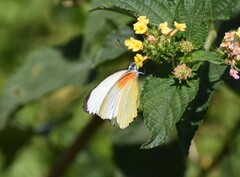
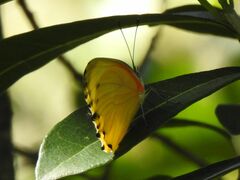
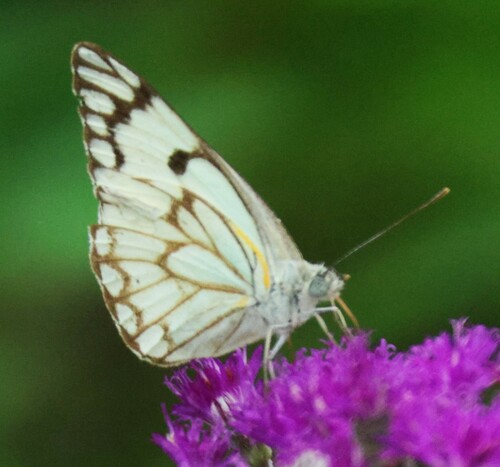
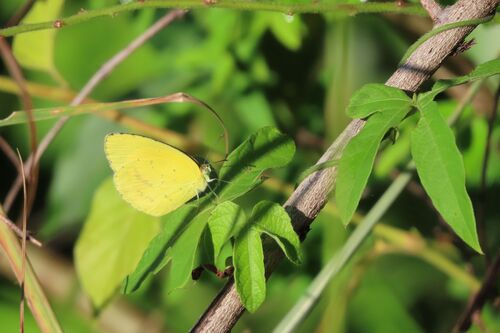
Eastern Dotted Border

Eastern Dotted Border

Mylothris agathina

Daily sighting probability ~10% · With luck
at Pilanesberg National Park

In 3 days ~30% in a week ~60%

12 Verified sightings at Pilanesberg National Park From 2019 to 2026
851 In all 12 parks
April Best month
☀️ Diurnal When it's spotted

About the Eastern Dotted Border

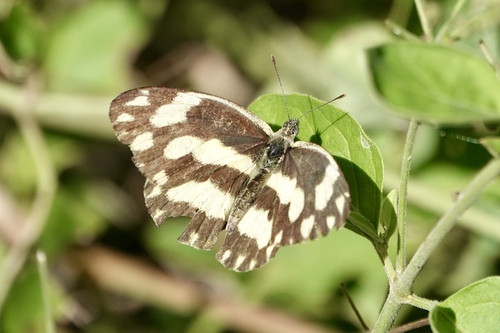
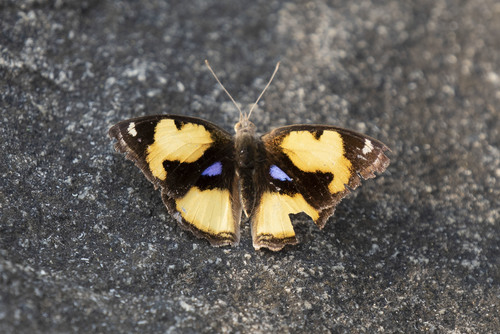
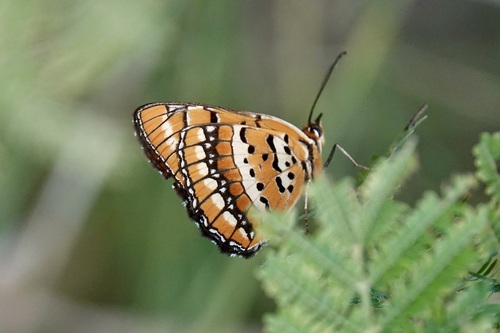
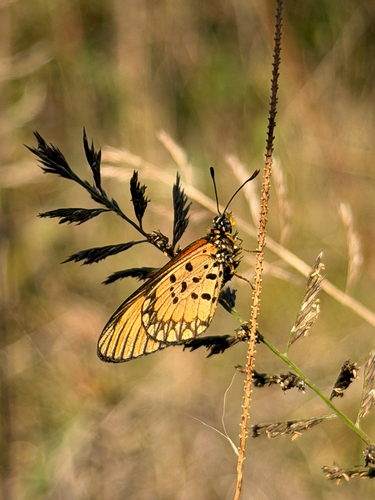
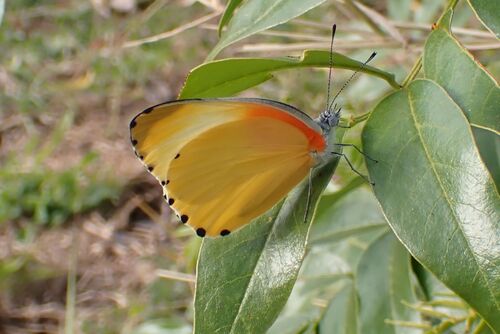
Mylothris agathina, the eastern dotted border or common dotted border, is a butterfly of the family Pieridae. It is native to sub-Saharan Africa, particularly East Africa and southern Africa. In South Africa its range has spread westwards around the coast in the late 20th century, and it now occurs north of Cape Town to somewhat beyond Saldanha.

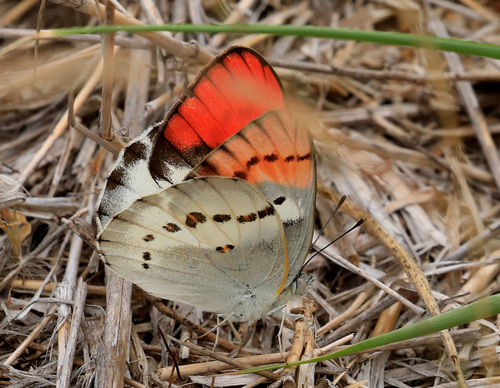
The common dotted border have bright white wings with shades of yellow, with black dots along the wing margins. The wingspan is 50–60 millimetres (2.0–2.4 in) for males and 52–65 mm (2.0–2.6 in) for females. The slow-flying adults are on wing year-round, with peaks in October and from late February to April.

Mylothris agathina is commonly found in sub-Saharan Africa, particularly in savannas, forests, grasslands, open woodlands and bushveld areas. They are often spotted in suburban gardens, especially at the top of trees. They prefer areas with abundant flowering plants and males often mudpuddle. They rely on nectar as a food source such as the Natal Blue Haze (Tetraselago natalensis), which is a great nectar plant found in the threatened grasslands of KwaZulu-Natal (KZN).

These grasslands are often located near... Wikipedia →
Global Distribution

Parks Where Found

# Park Country Daily sighting probability
1 Waterberg Plateau Park 🇳🇦 Namibia
~60%
2 De Hoop Nature Reserve 🇿🇦 South Africa
~30%
3 Gonarezhou National Park 🇿🇼 Zimbabwe
~30%
4 uMkhuze Game Reserve 🇿🇦 South Africa
~20%
5 Garden Route National Park 🇿🇦 South Africa
~20%
6 iSimangaliso Wetland Park 🇿🇦 South Africa
~20%
7 Table Mountain National Park 🇿🇦 South Africa
~20%
8 West Coast National Park 🇿🇦 South Africa
~20%
9 Hluhluwe-Imfolozi Park 🇿🇦 South Africa
~10%
10 Pilanesberg National Park 🇿🇦 South Africa
~10%
11 Kruger National Park 🇿🇦 South Africa
~10%
12 Chobe National Park 🇧🇼 Botswana
~10%

Cities Where Found

# City Country Daily sighting probability
1 Dar es-Salaam 🇹🇿 Tanzania
~20%
2 Lusaka 🇿🇲 Zambia
~20%
3 Kampala 🇺🇬 Uganda
~10%
4 Durban 🇿🇦 South Africa
~10%
5 Pretoria 🇿🇦 South Africa
~10%
6 Harare 🇿🇼 Zimbabwe
~10%
7 Nairobi 🇰🇪 Kenya
~10%
8 Cape Town 🇿🇦 South Africa
~10%
9 Johannesburg 🇿🇦 South Africa
~10%

Before you go

What are the chances of seeing an Eastern Dotted Border in Pilanesberg National Park?

With luck

About 10% of wildlife watchers report an Eastern Dotted Border sighting in Pilanesberg National Park on a given day, based on 12 verified sightings from GBIF citizen-science data from 2019 to 2026. It is the 15th most-seen of the 39 insects we can rate there. Over three days the chance rises to about 30%, and over a week to about 60%, if each day is a fresh chance.

When is the best time to see an Eastern Dotted Border in Pilanesberg National Park?

April

In that month about 30% of wildlife watchers report an Eastern Dotted Border in Pilanesberg National Park on a given day, against under 5% in January, May–June and August–November, the lowest months.

What time of day is best to see an Eastern Dotted Border?

Between 10 am and 1 pm

Across all the parks we cover, that three-hour window holds the most Eastern Dotted Border sightings with a recorded time, and nearly all of them come between 6 am and 6 pm: it is a daytime animal.

Which relatives of the Eastern Dotted Border live in Pilanesberg National Park?

Same family: Pieridae

The closest relatives of the Eastern Dotted Border that you can see in Pilanesberg National Park (family Pieridae, Whites, Yellows, and Sulphurs) are Pioneer White (about 20%), Broad-Bordered Grass Yellow (about 10%) and Zebra White (about 10%), with each one's daily chance of a sighting.

Where does the Eastern Dotted Border sighting chance come from?

GBIF citizen-science records

It is estimated from how often the Eastern Dotted Border is recorded against all the insects logged in Pilanesberg National Park (12 verified sightings from 2019 to 2026), calibrated against known sighting rates. Figures are rounded to the nearest 10% because citizen-science data supports honest approximations, not decimals, and months with records from fewer than five people show "—". How it works.

← Back to Pilanesberg National Park