About the American White-winged Scoter
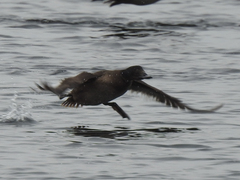
The white-winged scoter (Melanitta deglandi) is a large sea duck. The genus name is derived from Ancient Greek melas "black" and netta "duck". The species name commemorates French ornithologist Côme-Damien Degland. The white-winged scoter is one of three North American scoter species and the largest species of scoter. Females range from 950 to 1,950 g (2.09 to 4.30 lb) and 48 to 56 cm (19 to 22 in), averaging 1,180 g (2.60 lb) and 52.3 cm (20.6 in). The male ranges from 1,360 to 2,128 g (2.998 to 4.691 lb) and from 53 to 60 cm (21 to 24 in), averaging 1,380 g (3.04 lb) and 55 cm (22 in). The white-winged scoter has a wingspan of 31.5 in (80 cm). This species is characterized by its bulky shape and large bill, which is feathered at the gape unlike the blocky bill base of the surf scoter. The white secondary flight feathers by which the species is named is visible in flight, but may be concealed when swimming.
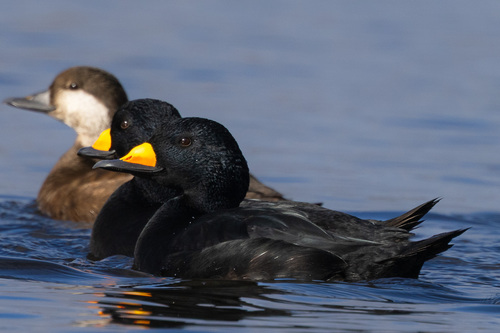
The male is all black, except for white around the eye and a white speculum. The bill is orange and red with a large black knob at the base. It takes three years for definitive (adult) plumage to be attained – second-year males resemble adult males but exhibit... Wikipedia →