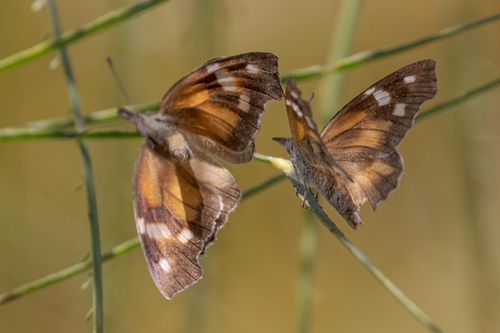
Evergreen Bagworm Moth

Evergreen Bagworm Moth

Thyridopteryx ephemeraeformis

Daily sighting probability ~10% · With luck
at Point Pelee National Park

In 3 days ~20% in a week ~40%

7 Verified sightings at Point Pelee National Park From 2019 to 2026
21 In all 2 parks
December Best month
☀️ Diurnal When it's spotted

About the Evergreen Bagworm Moth

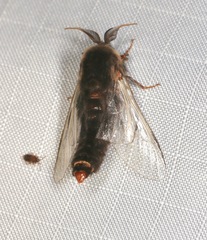
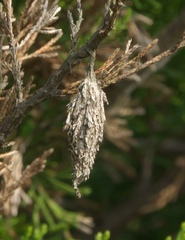
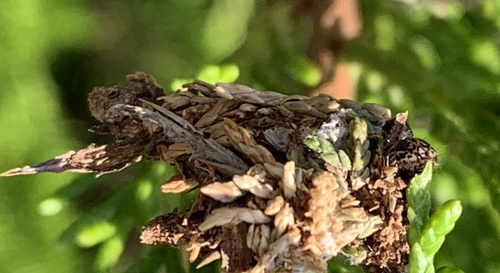
The evergreen bagworm (Thyridopteryx ephemeraeformis), commonly known as bagworm, eastern bagworm, common bagworm, common basket worm, or North American bagworm, is a moth that spins its cocoon in its larval life, decorating it with bits of plant material from the trees on which it feeds.

The evergreen bagworm's case grows to over 6 cm, tapered and open on both ends. Newborn larvae are blackish and turn brown to tan as they grow, mottled with black. The heads and thorax develop a yellow tint as they grow to a total length of 24 to 32 mm. Adult males resemble bees, having a 25 mm wingspan with transparent wings (thuris window + pterux wing) and black furry bodies. Adult females are maggot-like with yellowish-white soft bodies 19 to 23 mm long and small tufts of hair near the end of the abdomen. The cream-colored eggs are 0.75 mm in diameter.

The evergreen bagworm thrives in the eastern United States as far west as Nebraska, north into New England, and bordering the Gulf of Mexico south throughout Texas. It has been found in other countries, such as South Africa, Croatia, and in the north-east of Iran. Large populations in forested areas are rare. With scarce predators in urban areas, evergreen bagworms often thrive in urban habitats. When disturbed, the larva retracts its head into its case and closes the front opening. Mature larvae may remain in the host tree or drag their case nearby before attaching themselves for the pupa stage.

The diet of larvae consists of leaves and buds of trees. Arborvitae and red cedar are favored host trees. Cypress, juniper, pine, spruce, apple, birch, black locust, elm, maple, poplar, oak, sycamore, willow, and over 100 other species can also be eaten.

Bagworms are commonly parasitized by ichneumonid wasps, notably Itoplectis conquisitor. Predators include vespid wasps and hornets. Woodpeckers and sapsuckers can feed on the larvae from their cases. Eggs hatch from early April to early June (earlier in the south), and larvae emerge from the carcass of their mother in her case. Newborn larvae emerge from the bottom of the hanging case and drop down on a strand of silk. The wind often blows the larva to nearby plants, beginning its new case from silk and fecal material before adding leaves and twigs from its host. When mature in mid-August, the larva wraps silk around a branch, hangs from it, and pupates head down. The silk is so strong that it can strangle and kill the branch it hangs from over several years as the branch grows. Adult males transform into moths in four weeks to seek out females for mating. Wikipedia →
Global Distribution

Parks Where Found

# Park Country Daily sighting probability
1 Shenandoah National Park 🇺🇸 United States
~10%
2 Point Pelee National Park 🇨🇦 Canada
~10%

Cities Where Found

# City Country Daily sighting probability
1 Detroit 🇺🇸 United States
~10%
2 Chicago 🇺🇸 United States
~10%
3 Philadelphia 🇺🇸 United States
~10%
4 Boston 🇺🇸 United States
~10%
5 Baltimore 🇺🇸 United States
~10%
6 Washington 🇺🇸 United States
~10%
7 New York City 🇺🇸 United States
~10%
8 Dallas 🇺🇸 United States
<5%
9 Austin 🇺🇸 United States
<5%
10 Mexico City 🇲🇽 México
<5%

Before you go

What are the chances of seeing an Evergreen Bagworm Moth in Point Pelee National Park?

With luck

About 10% of wildlife watchers report an Evergreen Bagworm Moth sighting in Point Pelee National Park on a given day, based on 7 verified sightings from GBIF citizen-science data from 2019 to 2026. It is the 130th most-seen of the 196 insects we can rate there. Over three days the chance rises to about 20%, and over a week to about 40%, if each day is a fresh chance.

When is the best time to see an Evergreen Bagworm Moth in Point Pelee National Park?

October and December

In those months about 20% of wildlife watchers report an Evergreen Bagworm Moth in Point Pelee National Park on a given day, against under 5% in January–April, June–August and November, the lowest months.

What time of day is best to see an Evergreen Bagworm Moth?

Between 1 and 4 pm

Across all the parks we cover, that three-hour window holds the most Evergreen Bagworm Moth sightings with a recorded time, and about 8 in 10 of them come between 6 am and 6 pm: it is a daytime animal.

Is Point Pelee National Park the best place to see an Evergreen Bagworm Moth?

Among the best

Of the 2 parks where we can rate Evergreen Bagworm Moth sightings, Point Pelee National Park ranks 2nd at about 10%, level with the leaders once rounded. The best odds are in Shenandoah National Park (United States, about 10%).

Which relatives of the Evergreen Bagworm Moth live in Point Pelee National Park?

Same order: Lepidoptera

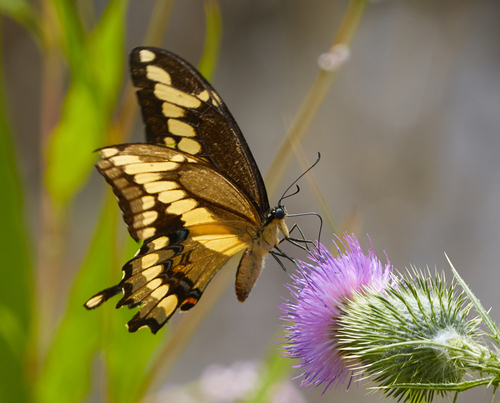
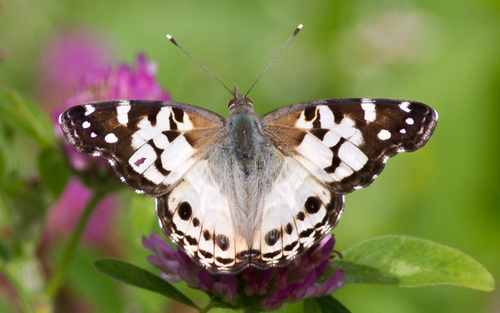
The closest relatives of the Evergreen Bagworm Moth that you can see in Point Pelee National Park (order Lepidoptera, Butterflies and Moths) are Red Admiral (about 40%), Hackberry Emperor (about 40%) and Eastern Giant Swallowtail (about 30%), with each one's daily chance of a sighting.

Where does the Evergreen Bagworm Moth sighting chance come from?

GBIF citizen-science records

It is estimated from how often the Evergreen Bagworm Moth is recorded against all the insects logged in Point Pelee National Park (7 verified sightings from 2019 to 2026), calibrated against known sighting rates. Figures are rounded to the nearest 10% because citizen-science data supports honest approximations, not decimals, and months with records from fewer than five people show "—". How it works.

← Back to Point Pelee National Park