


Eastern Giant Swallowtail

Eastern Giant Swallowtail

Papilio cresphontes

Daily sighting probability ~30% · Possible
at Point Pelee National Park

In 3 days ~70% in a week >90%

129 Verified sightings at Point Pelee National Park From 2019 to 2026
252 In all 3 parks
August Best month
☀️ Diurnal When it's spotted

About the Eastern Giant Swallowtail

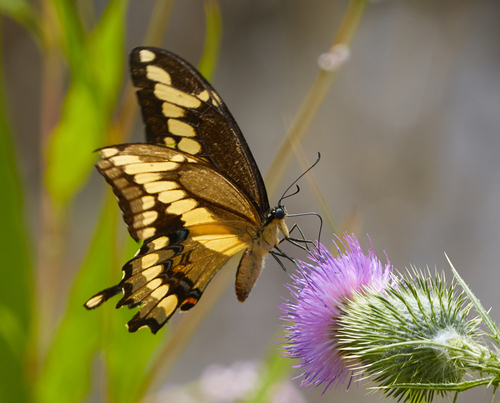
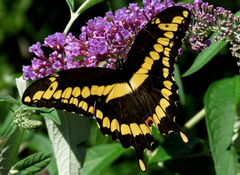
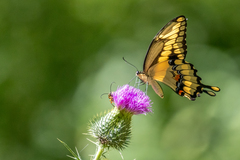
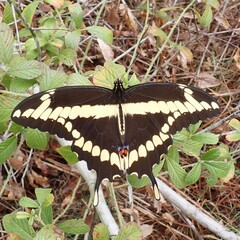
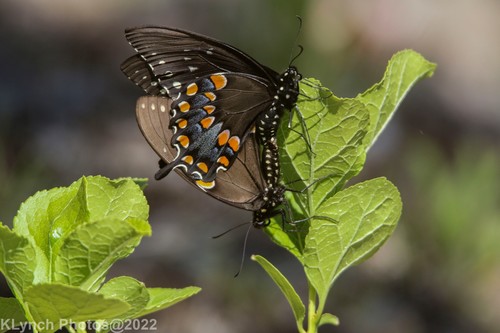
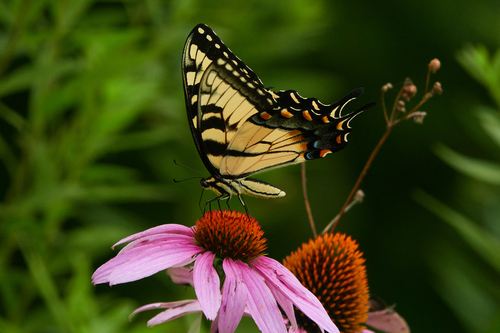
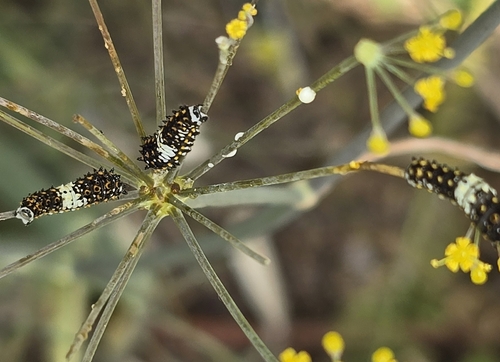
The eastern giant swallowtail (Papilio cresphontes) is the largest butterfly in North America. It is abundant through many parts of eastern North America; populations from western North America and down into Panama are now (as of 2014) considered to belong to a different species, Papilio rumiko. Though it is often valued in gardens for its striking appearance, its larval stage can be a serious pest to citrus farms, which has earned its caterpillars the names orange dog or orange puppy. The eastern giant swallowtail caterpillars possess remarkable camouflage from predators by closely resembling bird droppings. They use this, along with their osmeteria, to defend against predators such as wasps, flies, and vertebrates.

The eastern giant swallowtail is common across the United States, reaching as far north as southern New England and southern Canada. South of the United States, it is found in parts of Mexico and also found in Jamaica and Cuba. The species was historically considered to occur in the western United States and into South America, but now those populations are treated as a separate species, the western giant swallowtail (Papilio rumiko), based largely... Wikipedia →

Global Distribution

Parks Where Found

# Park Country Daily sighting probability
1 Point Pelee National Park 🇨🇦 Canada
~30%
2 Everglades National Park 🇺🇸 United States
~20%
3 Merritt Island National Wildlife Refuge 🇺🇸 United States
~10%

Cities Where Found

# City Country Daily sighting probability
1 Miami 🇺🇸 United States
~20%
2 Montreal 🇨🇦 Canada
~10%
3 Houston 🇺🇸 United States
~10%
4 Detroit 🇺🇸 United States
~10%
5 Orlando 🇺🇸 United States
~10%
6 Dallas 🇺🇸 United States
~10%
7 Toronto 🇨🇦 Canada
~10%
8 Austin 🇺🇸 United States
<5%
9 Minneapolis [Saint Paul] 🇺🇸 United States
<5%
10 Chicago 🇺🇸 United States
<5%

Before you go

What are the chances of seeing an Eastern Giant Swallowtail in Point Pelee National Park?

Possible

About 30% of wildlife watchers report an Eastern Giant Swallowtail sighting in Point Pelee National Park on a given day, based on 129 verified sightings from GBIF citizen-science data from 2019 to 2026. It is the 3rd most-seen of the 196 insects we can rate there. Over three days the chance rises to about 70%, and over a week to over 90%, if each day is a fresh chance.

When is the best time to see an Eastern Giant Swallowtail in Point Pelee National Park?

August

In that month about 70% of wildlife watchers report an Eastern Giant Swallowtail in Point Pelee National Park on a given day, against under 5% in February–April and November–December, the lowest months.

What time of day is best to see an Eastern Giant Swallowtail?

Between 9 am and noon

Across all the parks we cover, that three-hour window holds the most Eastern Giant Swallowtail sightings with a recorded time, and about 9 in 10 of them come between 6 am and 6 pm: it is a daytime animal.

Is Point Pelee National Park the best place to see an Eastern Giant Swallowtail?

Yes

Of the 3 parks where we can rate Eastern Giant Swallowtail sightings, Point Pelee National Park has the highest daily chance: about 30%. Next come Everglades National Park (United States, about 20%) and Merritt Island National Wildlife Refuge (United States, about 10%).

Which relatives of the Eastern Giant Swallowtail live in Point Pelee National Park?

Same genus: Papilio

The closest relatives of the Eastern Giant Swallowtail that you can see in Point Pelee National Park (genus Papilio, Common Swallowtails) are Spicebush Swallowtail (about 30%), Eastern Tiger Swallowtail (about 20%) and Black Swallowtail (about 10%), with each one's daily chance of a sighting.

Where does the Eastern Giant Swallowtail sighting chance come from?

GBIF citizen-science records

It is estimated from how often the Eastern Giant Swallowtail is recorded against all the insects logged in Point Pelee National Park (129 verified sightings from 2019 to 2026), calibrated against known sighting rates. Figures are rounded to the nearest 10% because citizen-science data supports honest approximations, not decimals, and months with records from fewer than five people show "—". How it works.

← Back to Point Pelee National Park