Hump-Backed Beewolf

Hump-Backed Beewolf

Philanthus gibbosus

Daily sighting probability ~10% · With luck
at Point Pelee National Park

In 3 days ~20% in a week ~40%

5 Verified sightings at Point Pelee National Park From 2019 to 2026
17 In all 2 parks
July Best month
☀️ Diurnal When it's spotted

About the Hump-Backed Beewolf

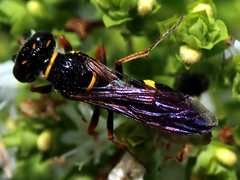
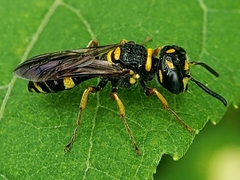
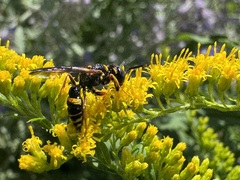
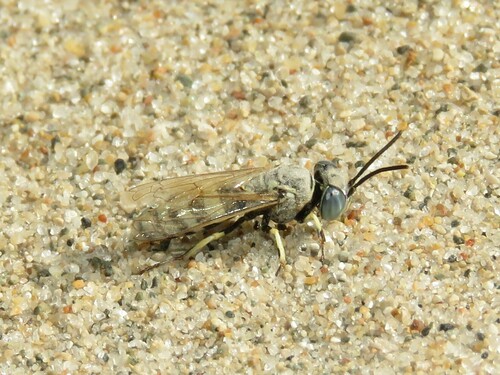
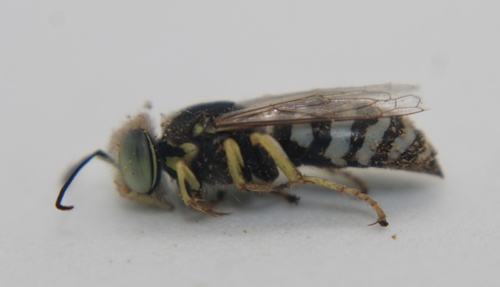
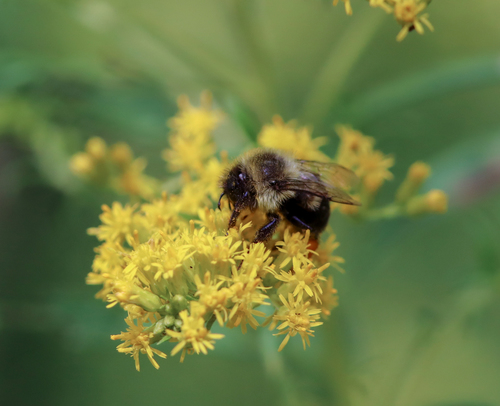
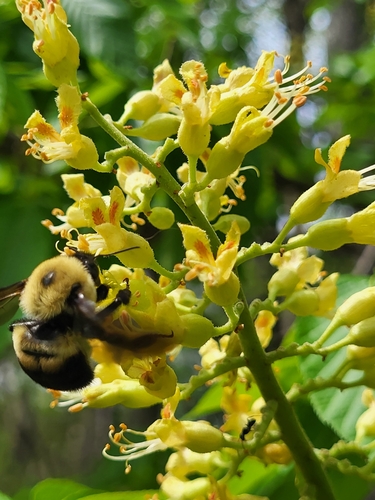
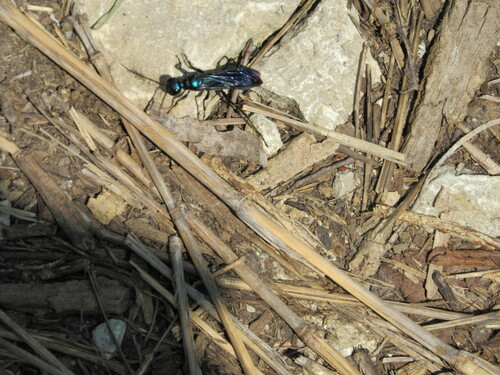
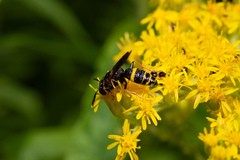
Philanthus gibbosus, the hump-backed beewolf, is a species of bee-hunting wasp and is the most common and widespread beewolf in North America. P. gibbosus is of the order Hymenoptera and the genus Philanthus. It is native to the Midwestern United States and the western Appalachians. P. gibbosus are often observed to visit flowers and other plants in search of insect prey to feed their young. The prey that P. gibbosus catches is then coated in a layer of pollen and fed to the young wasps.

Philanthus gibbosus is a member of the family Philanthidae of wasps within the order Hymenoptera. Molecular phylogeny revealed that bees, clade Anthophila, came from within the family Crabronidae sensu lato, meaning the family was paraphyletic. As a result, this species's subfamily, Philanthinae, was elevated to family status as Philanthidae.

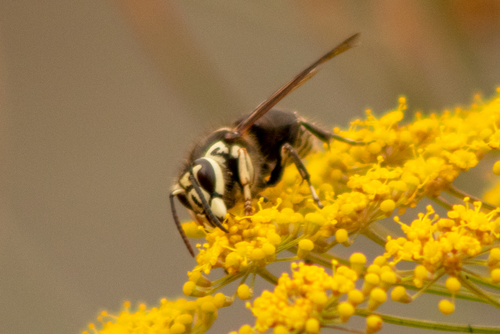
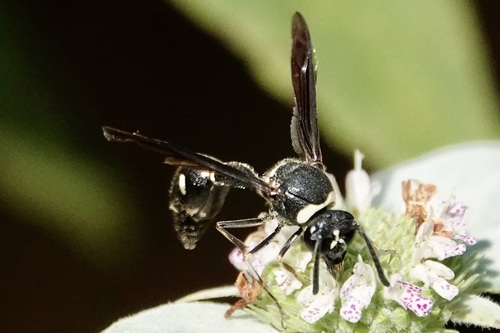
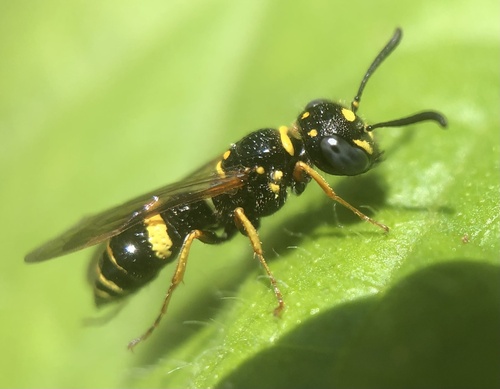
The genus Philanthus contains about 135 other species in addition to P. gibbosus. Philanthus gibbosus is a small and robust wasp that is about 10–12 mm in length. P. gibbosus has an especially broad head and a coat of chitin that is shiny black with yellow spots on the head and yellow stripes on... Wikipedia →
Global Distribution

Parks Where Found

# Park Country Daily sighting probability
1 Point Pelee National Park 🇨🇦 Canada
~10%
2 Great Smoky Mountains National Park 🇺🇸 United States
~10%

Cities Where Found

# City Country Daily sighting probability
1 Boston 🇺🇸 United States
~10%
2 Minneapolis [Saint Paul] 🇺🇸 United States
~10%
3 Toronto 🇨🇦 Canada
~10%
4 New York City 🇺🇸 United States
~10%
5 Washington 🇺🇸 United States
~10%
6 Detroit 🇺🇸 United States
~10%
7 Salt Lake City 🇺🇸 United States
~10%
8 Portland 🇺🇸 United States
~10%
9 Philadelphia 🇺🇸 United States
~10%
10 Montreal 🇨🇦 Canada
~10%

Before you go

What are the chances of seeing a Hump-Backed Beewolf in Point Pelee National Park?

With luck

About 10% of wildlife watchers report a Hump-Backed Beewolf sighting in Point Pelee National Park on a given day, based on 5 verified sightings from GBIF citizen-science data from 2019 to 2026. It is the 167th most-seen of the 196 insects we can rate there. Over three days the chance rises to about 20%, and over a week to about 40%, if each day is a fresh chance.

When is the best time to see a Hump-Backed Beewolf in Point Pelee National Park?

June to September

In those months about 10% of wildlife watchers report a Hump-Backed Beewolf in Point Pelee National Park on a given day, against under 5% in October to May, the lowest months.

What time of day is best to see a Hump-Backed Beewolf?

Between noon and 3 pm

Across all the parks we cover, that three-hour window holds the most Hump-Backed Beewolf sightings with a recorded time, and about 9 in 10 of them come between 6 am and 6 pm: it is a daytime animal.

Is Point Pelee National Park the best place to see a Hump-Backed Beewolf?

Yes

Of the 2 parks where we can rate Hump-Backed Beewolf sightings, Point Pelee National Park has the highest daily chance: about 10%. Next come Great Smoky Mountains National Park (United States, about 10%).

Which relatives of the Hump-Backed Beewolf live in Point Pelee National Park?

Same family: Crabronidae

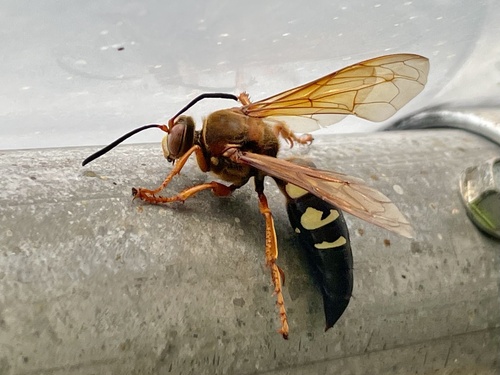
The closest relatives of the Hump-Backed Beewolf that you can see in Point Pelee National Park (family Crabronidae, Square-headed Wasps, Sand Wasps, and Allies) are Eastern Cicada-Killer Wasp (about 10%), Microbembex monodonta (about 10%) and American Sand Wasp (about 10%), with each one's daily chance of a sighting.

Where does the Hump-Backed Beewolf sighting chance come from?

GBIF citizen-science records

It is estimated from how often the Hump-Backed Beewolf is recorded against all the insects logged in Point Pelee National Park (5 verified sightings from 2019 to 2026), calibrated against known sighting rates. Figures are rounded to the nearest 10% because citizen-science data supports honest approximations, not decimals, and months with records from fewer than five people show "—". How it works.

← Back to Point Pelee National Park