Dew Moth
Daily sighting probability <5% · Rare
at Pyrénées National Park

In 3 days ~10% in a week ~30%

12 Verified sightings at Pyrénées National Park From 2019 to 2026
45 In all 4 parks
August Best month
☀️🌙 Day & Night When it's spotted

About the Dew Moth

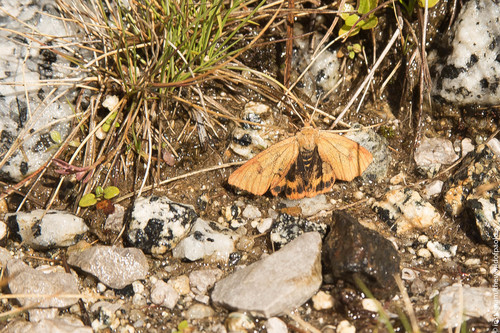
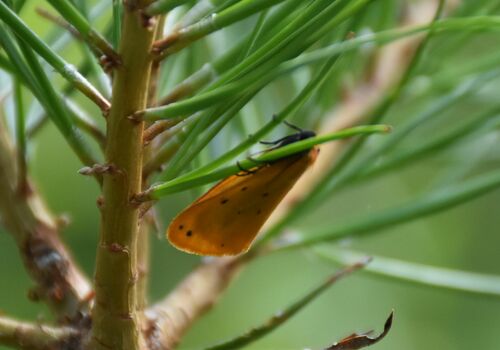
Setina irrorella, the dew moth, is a moth of the family Erebidae. The species was first described by Carl Linnaeus in his 1758 10th edition of Systema Naturae. It is found in the Palearctic from Ireland and the Isle of Man, then through Europe and east to northern and central Asia to the Pacific Ocean (Siberia, Kamchatka, Chukotka northern Mongolia). It is missing in the high north and parts of the Mediterranean region. It is found also in the limestone Alps up to 2,000 meters above sea level.

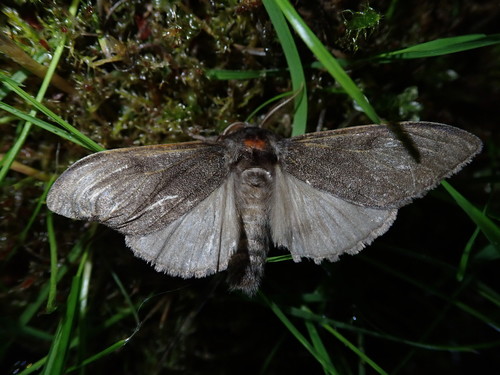
The wingspan is 27–33 mm. The length of the forewings is 11–18 mm. Light yellow, 3 transverse lines of minute black dots traverse the forewing, hindwing mostly with only one dot in the apex. Beneath, the forewing is glossy sooty grey with the exception of a rather irregular yellow outer margin. Among typical specimens there are found various aberrations, e.g. ab. signata Borkh., in which the middle rows of spots are united by streaks; ab. fumosa Sandb., with strongly brownish ground colour, described from the north, but also found in Germany.

The species also varies strongly geographically: flavicans Bdv., from the Mediterranean and Anterior Asia, has... Wikipedia →
Global Distribution

Parks Where Found

# Park Country Daily sighting probability
1 Mercantour National Park 🇫🇷 France
~10%
2 Vanoise National Park 🇫🇷 France
~10%
3 Pyrénées National Park 🇫🇷 France
<5%
4 Cévennes National Park 🇫🇷 France
<5%

Before you go

What are the chances of seeing a Dew Moth in Pyrénées National Park?

Rare

Under 5% of wildlife watchers report a Dew Moth sighting in Pyrénées National Park on a given day, based on 12 verified sightings from GBIF citizen-science data from 2019 to 2026. It is the 657th most-seen of the 1277 insects we can rate there. Over three days the chance rises to about 10%, and over a week to about 30%, if each day is a fresh chance.

When is the best time to see a Dew Moth in Pyrénées National Park?

July and August

In those months about 10% of wildlife watchers report a Dew Moth in Pyrénées National Park on a given day, against under 5% in September to June, the lowest months.

What time of day is best to see a Dew Moth?

Between 11 pm and 2 am

Across all the parks we cover, that three-hour window holds the most Dew Moth sightings with a recorded time, and about 6 in 10 of them come between 6 pm and 6 am: it is seen both by day and at night.

Is Pyrénées National Park the best place to see a Dew Moth?

3rd of 4

Of the 4 parks where we can rate Dew Moth sightings, Pyrénées National Park ranks 3rd at under 5%. The best odds are in Mercantour National Park (France, about 10%) and Vanoise National Park (France, about 10%).

Which relatives of the Dew Moth live in Pyrénées National Park?

Same family: Erebidae

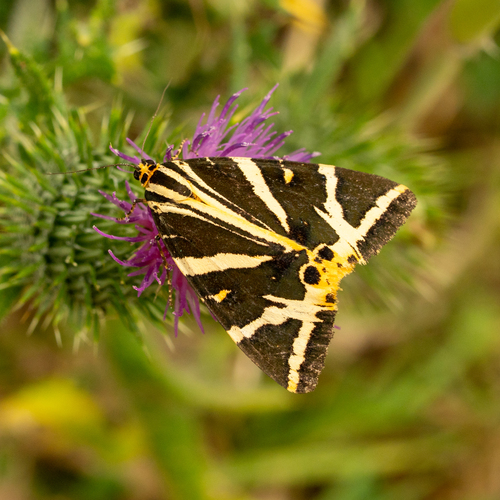
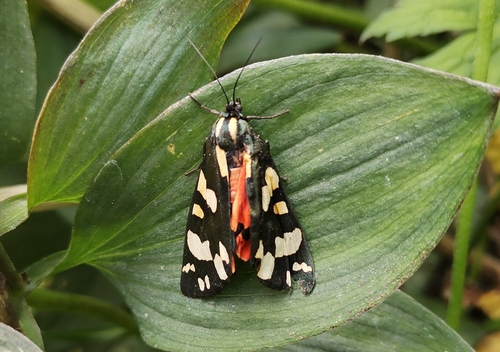
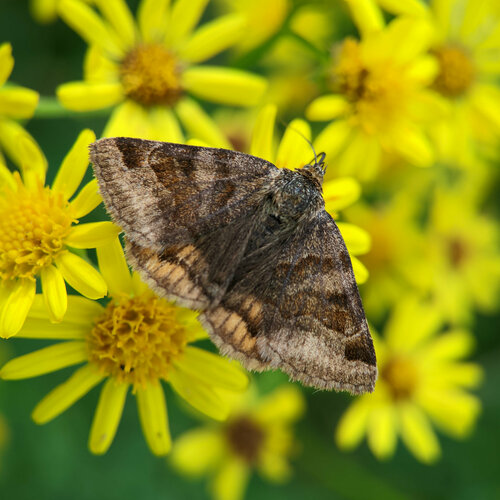
The closest relatives of the Dew Moth that you can see in Pyrénées National Park (family Erebidae, Underwing, Tiger, Tussock, and Allied Moths) are Jersey Tiger (about 20%), Scarlet Tiger (about 20%) and Burnet Companion (about 10%), with each one's daily chance of a sighting.

Where does the Dew Moth sighting chance come from?

GBIF citizen-science records

It is estimated from how often the Dew Moth is recorded against all the insects logged in Pyrénées National Park (12 verified sightings from 2019 to 2026), calibrated against known sighting rates. Figures are rounded to the nearest 10% because citizen-science data supports honest approximations, not decimals, and months with records from fewer than five people show "—". How it works.

← Back to Pyrénées National Park