Libelloides longicornis

Libelloides longicornis

Libelloides longicornis

Daily sighting probability <5% · Rare
at Pyrénées National Park

In 3 days ~10% in a week ~20%

8 Verified sightings at Pyrénées National Park From 2019 to 2026
56 In all 5 parks
July Best month
☀️ Diurnal When it's spotted

About the Libelloides longicornis

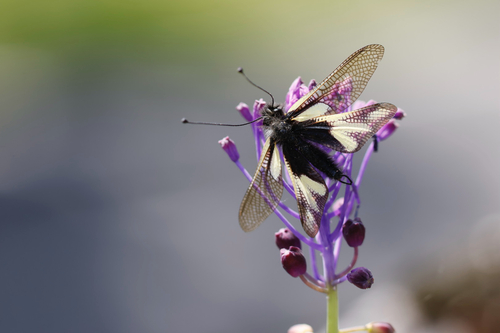
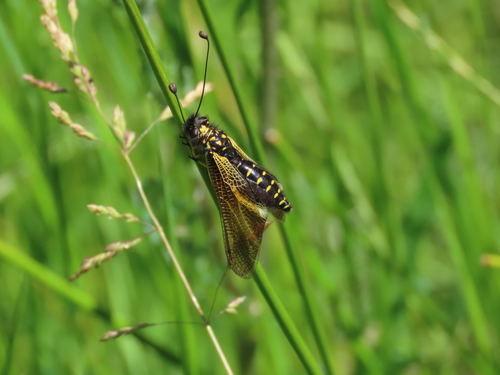
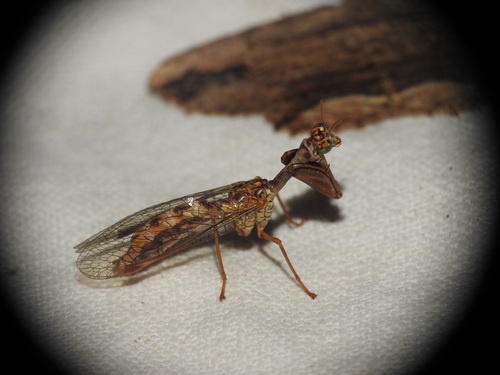
Libelloides longicornis, common name black yellow owlfly, is an owlfly species belonging to the family Ascalaphidae, subfamily Ascalaphinae. This species is present in South Western Europe (France, Germany, Italy, Portugal, Spain and Switzerland). These insects mainly occur in the sunny meadows at rather high elevation.

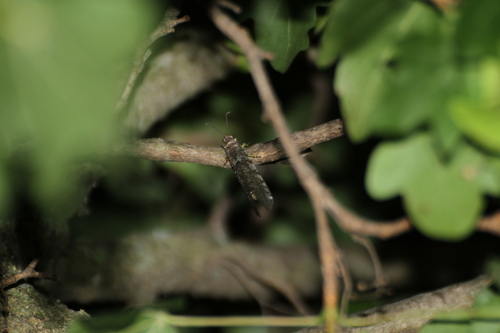
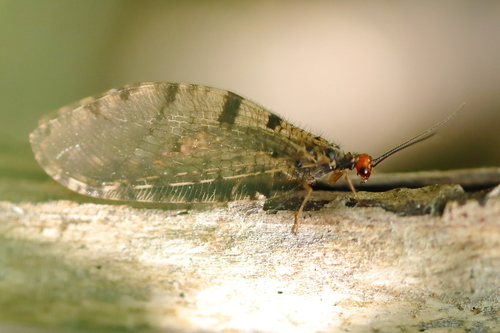
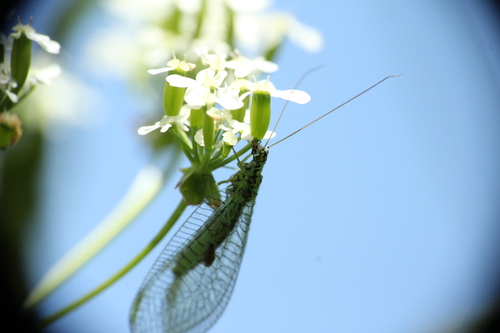
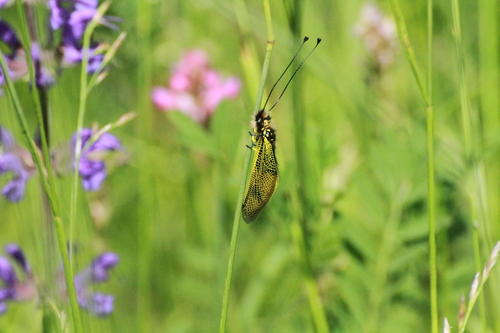
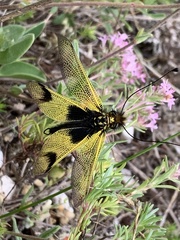
Libelloides longicornis can reach a length of 25–30 mm (0.98–1.18 in) and a wingspan of 38–58 mm (1.5–2.3 in). The body of these large owlflies is black, quite hairy, with some yellow markings. Also the head is black, with large compound eyes. The long sturdy black antennae are clubbed.

The wings do not have scales, are partly transparent and show a network of translucent lemon yellow ribs. In the fore wings appears a small basal dark spot reaching the base of the wings. The hind wings have a characteristic squared dark area towards the apex and a dark triangular sickle-shaped spot pointing to the wing tip.

The wings are usually held spread in sunny areas, as in dragonflies, but when they are at rest they fold their roof-shaped wings over their abdomen. This species is rather similar to Libelloides coccajus, but in Libelloides... Wikipedia →
Global Distribution

Parks Where Found

# Park Country Daily sighting probability
1 Sierra Nevada National Park 🇪🇸 Spain
~10%
2 Mercantour National Park 🇫🇷 France
~10%
3 Sierra de Guadarrama National Park 🇪🇸 Spain
~10%
4 Cévennes National Park 🇫🇷 France
~10%
5 Pyrénées National Park 🇫🇷 France
<5%

Before you go

What are the chances of seeing a Libelloides longicornis in Pyrénées National Park?

Rare

Under 5% of wildlife watchers report a Libelloides longicornis sighting in Pyrénées National Park on a given day, based on 8 verified sightings from GBIF citizen-science data from 2019 to 2026. It is the 1026th most-seen of the 1277 insects we can rate there. Over three days the chance rises to about 10%, and over a week to about 20%, if each day is a fresh chance.

When is the best time to see a Libelloides longicornis in Pyrénées National Park?

Any time of year

In every month with enough records, under 5% of wildlife watchers report a Libelloides longicornis in Pyrénées National Park on a given day, so our monthly data shows no clear season.

What time of day is best to see a Libelloides longicornis?

Between 2 and 5 pm

Across all the parks we cover, that three-hour window holds the most Libelloides longicornis sightings with a recorded time, and about 9 in 10 of them come between 6 am and 6 pm: it is a daytime animal.

Which relatives of the Libelloides longicornis live in Pyrénées National Park?

Same genus: Libelloides

The closest relatives of the Libelloides longicornis that you can see in Pyrénées National Park (genus Libelloides) are Owly Sulphur (about 20%) and Libelloides hispanicus (about 10%), with each one's daily chance of a sighting.

Where does the Libelloides longicornis sighting chance come from?

GBIF citizen-science records

It is estimated from how often the Libelloides longicornis is recorded against all the insects logged in Pyrénées National Park (8 verified sightings from 2019 to 2026), calibrated against known sighting rates. Figures are rounded to the nearest 10% because citizen-science data supports honest approximations, not decimals, and months with records from fewer than five people show "—". How it works.

← Back to Pyrénées National Park