Locust Blowfly

Locust Blowfly

Stomorhina lunata

Daily sighting probability ~10% · With luck
at Pyrénées National Park

In 3 days ~20% in a week ~40%

34 Verified sightings at Pyrénées National Park From 2019 to 2026
69 In all 6 parks
December Best month
☀️ Diurnal When it's spotted

About the Locust Blowfly

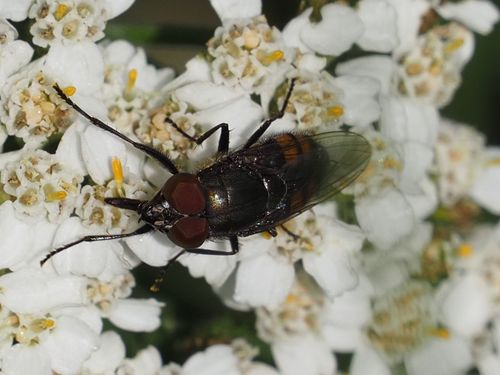
Stomorhina lunata is a species of fly in the family Rhiniidae first described by Johan Christian Fabricius in 1805. This species is present in most of Europe, the Afrotropical realm, the eastern Palearctic realm, the Near East and North Africa, the Indomalayan realm, and the Nearctic realm. These flies usually inhabit meadows.

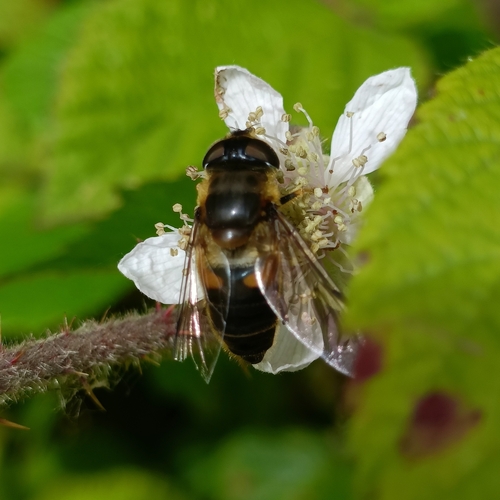
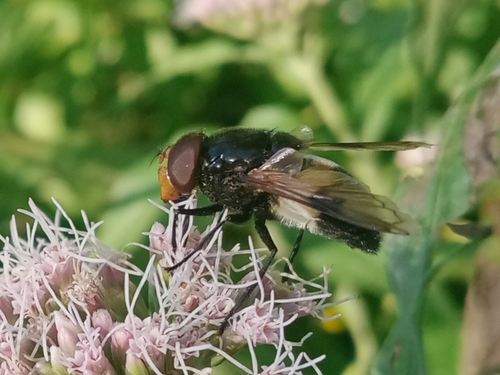
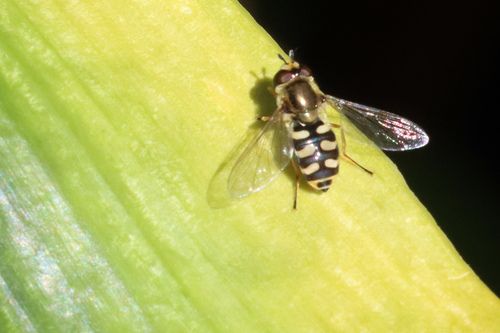
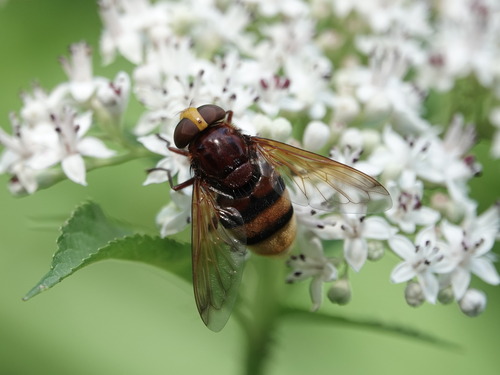
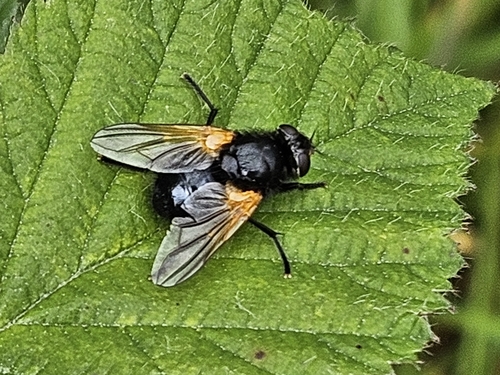
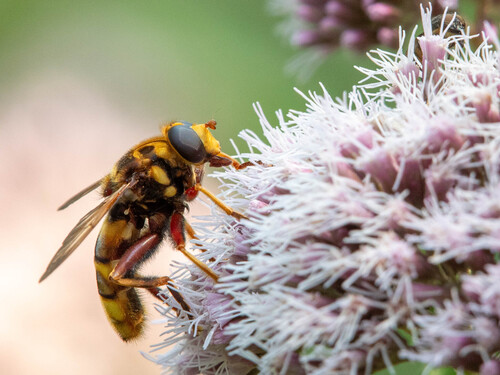
Stomorhina lunata can reach a length of 5–9 millimetres (0.20–0.35 in) and a wingspan of 13–16 millimetres (0.51–0.63 in). These distinctive, medium-sized blowflies are rather similar to the house flies, but they have a characteristic prominent proboscis, a longitudinally striped thorax and an abdomen with yellow and black bands. Males have large orange patches on the sides of tergites 3 and 4, while females only show grey dust patches.

This distinctively marked species is often misidentified because of the unusual band pattern in the abdomen, typical of hoverflies. Stomorhina lunata is an important egg predator of some major African agricultural pests, the South African brown locust (Locustana pardalina), the more widespread desert locust (Schistocerca gregaria), and the migratory locust (Locustana... Wikipedia →
Global Distribution

Parks Where Found

# Park Country Daily sighting probability
1 Sierra Nevada National Park 🇪🇸 Spain
~10%
2 Cévennes National Park 🇫🇷 France
~10%
3 Pyrénées National Park 🇫🇷 France
~10%
4 Sierra de Guadarrama National Park 🇪🇸 Spain
<5%
5 Wadden Sea National Park 🇩🇪 Germany
<5%
6 Table Mountain National Park 🇿🇦 South Africa
<5%

Cities Where Found

# City Country Daily sighting probability
1 Barcelona 🇪🇸 Spain
~10%
2 Lyon 🇫🇷 France
~10%
3 Cologne 🇩🇪 Germany
~10%
4 Brussels 🇧🇪 Belgium
~10%
5 Lisbon 🇵🇹 Portugal
<5%
6 Porto 🇵🇹 Portugal
<5%
7 Paris 🇫🇷 France
<5%
8 Birmingham 🇬🇧 United Kingdom
<5%
9 Madrid 🇪🇸 Spain
<5%
10 Munich 🇩🇪 Germany
<5%

Before you go

What are the chances of seeing a Locust Blowfly in Pyrénées National Park?

With luck

About 10% of wildlife watchers report a Locust Blowfly sighting in Pyrénées National Park on a given day, based on 34 verified sightings from GBIF citizen-science data from 2019 to 2026. It is the 312th most-seen of the 1277 insects we can rate there. Over three days the chance rises to about 20%, and over a week to about 40%, if each day is a fresh chance.

When is the best time to see a Locust Blowfly in Pyrénées National Park?

December

In that month about 30% of wildlife watchers report a Locust Blowfly in Pyrénées National Park on a given day, against under 5% in January–March, May and September, the lowest months.

What time of day is best to see a Locust Blowfly?

Between 10 am and 1 pm

Across all the parks we cover, that three-hour window holds the most Locust Blowfly sightings with a recorded time, and about 9 in 10 of them come between 6 am and 6 pm: it is a daytime animal.

Is Pyrénées National Park the best place to see a Locust Blowfly?

Among the best

Of the 6 parks where we can rate Locust Blowfly sightings, Pyrénées National Park ranks 3rd at about 10%, level with the leaders once rounded. The best odds are in Sierra Nevada National Park (Spain, about 10%) and Cévennes National Park (France, about 10%).

Which relatives of the Locust Blowfly live in Pyrénées National Park?

Same order: Diptera

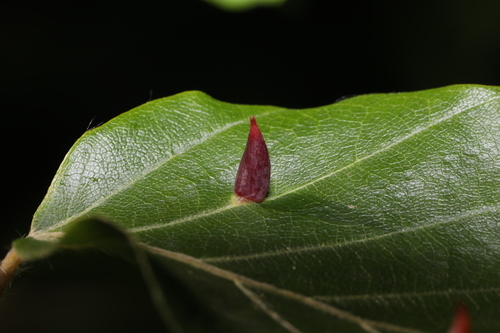
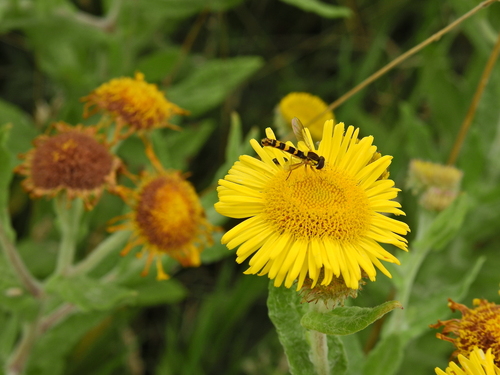
The closest relatives of the Locust Blowfly that you can see in Pyrénées National Park (order Diptera, Flies) are Common Drone Fly (about 10%), Tapered Drone Fly (about 10%) and Beech Gall Midge (about 10%), with each one's daily chance of a sighting.

Where does the Locust Blowfly sighting chance come from?

GBIF citizen-science records

It is estimated from how often the Locust Blowfly is recorded against all the insects logged in Pyrénées National Park (34 verified sightings from 2019 to 2026), calibrated against known sighting rates. Figures are rounded to the nearest 10% because citizen-science data supports honest approximations, not decimals, and months with records from fewer than five people show "—". How it works.

← Back to Pyrénées National Park