Orange Footman

Orange Footman

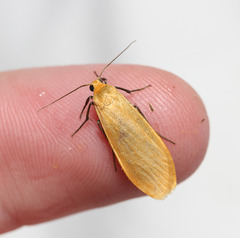
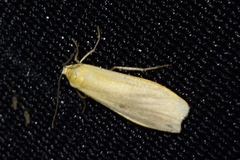
Wittia sororcula

Daily sighting probability ~10% · With luck
at Pyrénées National Park

In 3 days ~20% in a week ~40%

39 Verified sightings at Pyrénées National Park From 2019 to 2026
120 In all 3 parks
April Best month
☀️🌙 Day & Night When it's spotted

About the Orange Footman

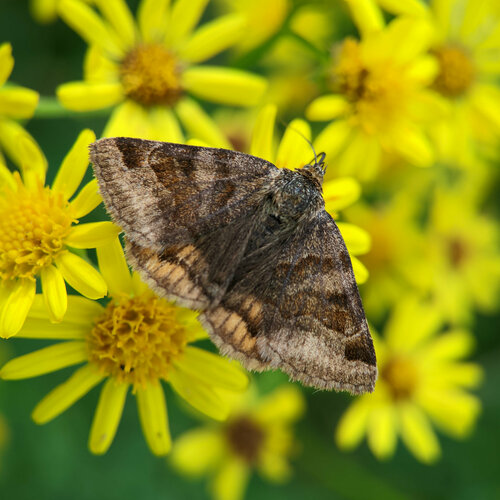
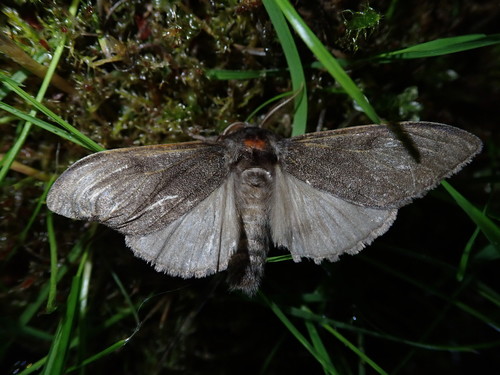
Wittia sororcula, the orange footman, is a species of moth in the family Erebidae. The species was first described by Johann Siegfried Hufnagel in 1766. It is found in Europe, Anatolia and further east across the Palearctic to southern Siberia and the Amur basin to China.

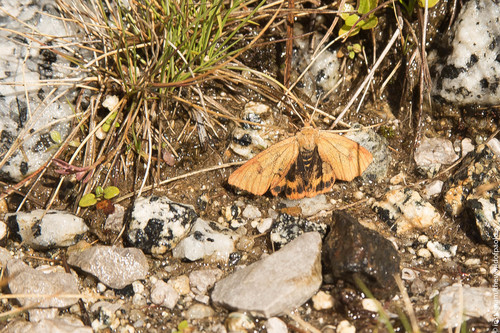
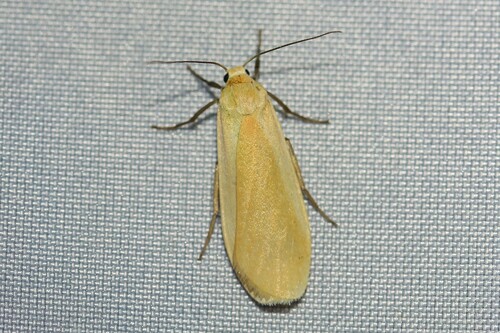
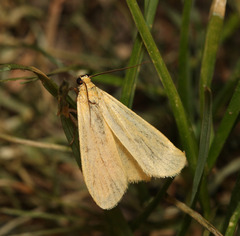
The wingspan is 27–30 millimetres (1.1–1.2 in). Forewing with the costa strongly convex and therefore the apical portion of the forewing considerably broader than in the forms of the luterella group. Head, thorax, end of abdomen and the forewing bright golden yellow, the hindwing of male but little paler; in the female both wings slightly paler orange yellow. In contradistinction to lutarella, the costal area of the hindwing above and beneath is never black.

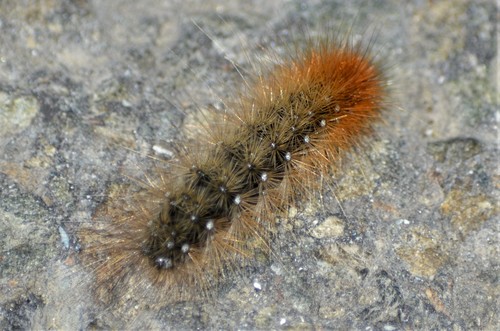
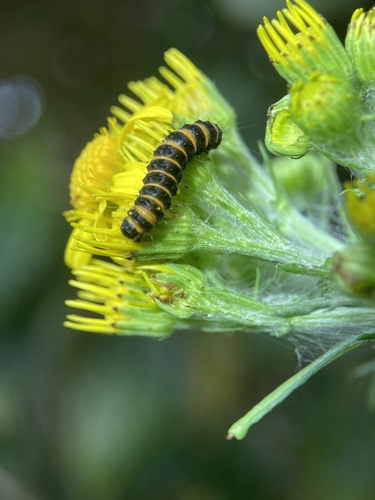
The orange footman was previously placed in the genus Eilema, but was transferred to the genus Wittia by Vladimir Viktorovitch Dubatolov in 2011. Wittia sororcula sororcula Wittia sororcula orientis (Daniel, 1954) The moth flies from April to June depending on the location. Larva blackish, with two yellow dorsal stripes with red dots and white spots. The... Wikipedia →
Global Distribution

Parks Where Found

# Park Country Daily sighting probability
1 Cévennes National Park 🇫🇷 France
~10%
2 Bavarian Forest National Park 🇩🇪 Germany
~10%
3 Pyrénées National Park 🇫🇷 France
~10%

Cities Where Found

# City Country Daily sighting probability
1 Porto 🇵🇹 Portugal
~10%
2 Essen 🇩🇪 Germany
~10%
3 Nizhny Novgorod 🇷🇺 Russia
<5%
4 Paris 🇫🇷 France
<5%
5 London 🇬🇧 United Kingdom
<5%
6 Birmingham 🇬🇧 United Kingdom
<5%
7 Berlin 🇩🇪 Germany
<5%
8 Barcelona 🇪🇸 Spain
<5%
9 Vienna 🇦🇹 Austria
<5%
10 Prague 🇨🇿 Czechia
<5%

Before you go

What are the chances of seeing an Orange Footman in Pyrénées National Park?

With luck

About 10% of wildlife watchers report an Orange Footman sighting in Pyrénées National Park on a given day, based on 39 verified sightings from GBIF citizen-science data from 2019 to 2026. It is the 260th most-seen of the 1277 insects we can rate there. Over three days the chance rises to about 20%, and over a week to about 40%, if each day is a fresh chance.

When is the best time to see an Orange Footman in Pyrénées National Park?

April

In that month about 20% of wildlife watchers report an Orange Footman in Pyrénées National Park on a given day, against under 5% in July and September–March, the lowest months.

What time of day is best to see an Orange Footman?

Between 10 pm and 1 am

Across all the parks we cover, that three-hour window holds the most Orange Footman sightings with a recorded time, and about 6 in 10 of them come between 6 pm and 6 am: it is seen both by day and at night.

Is Pyrénées National Park the best place to see an Orange Footman?

Among the best

Of the 3 parks where we can rate Orange Footman sightings, Pyrénées National Park ranks 3rd at about 10%, level with the leaders once rounded. The best odds are in Cévennes National Park (France, about 10%) and Bavarian Forest National Park (Germany, about 10%).

Which relatives of the Orange Footman live in Pyrénées National Park?

Same family: Erebidae

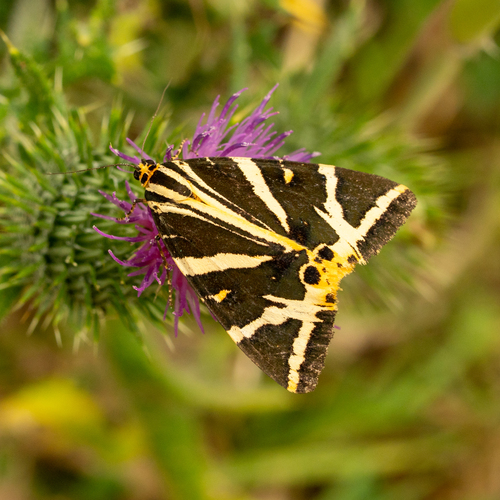
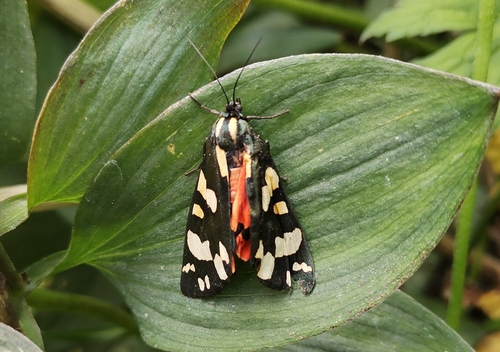
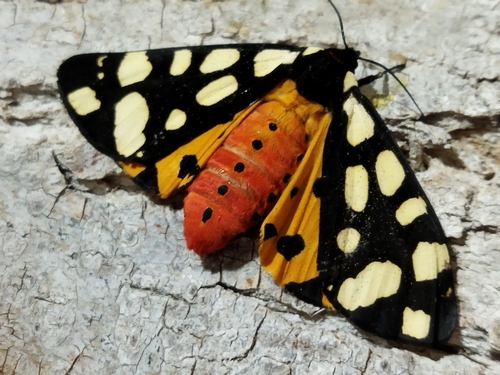
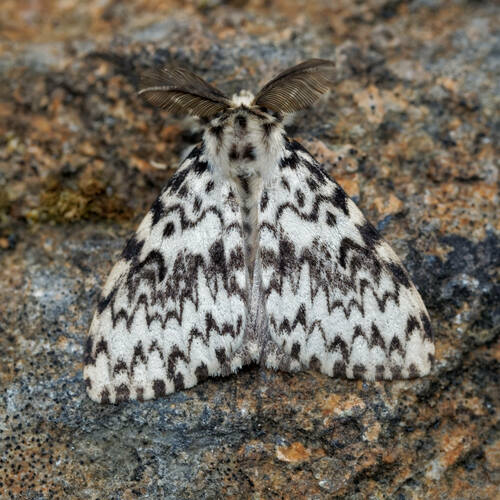
The closest relatives of the Orange Footman that you can see in Pyrénées National Park (family Erebidae, Underwing, Tiger, Tussock, and Allied Moths) are Jersey Tiger (about 20%), Scarlet Tiger (about 20%) and Burnet Companion (about 10%), with each one's daily chance of a sighting.

Where does the Orange Footman sighting chance come from?

GBIF citizen-science records

It is estimated from how often the Orange Footman is recorded against all the insects logged in Pyrénées National Park (39 verified sightings from 2019 to 2026), calibrated against known sighting rates. Figures are rounded to the nearest 10% because citizen-science data supports honest approximations, not decimals, and months with records from fewer than five people show "—". How it works.

← Back to Pyrénées National Park