




Completed



Spotless Starling
Sturnus unicolor
Silhouette: Gareth Monger · PhyloPic
- KingdomAnimalia (Animals)
- PhylumChordata (Chordates)
- ClassAves (Birds)
- OrderPasseriformes (Perching Birds)
- FamilySturnidae (Starlings)
- GenusSturnus (European and Spotless Starlings)
- SpeciesSturnus unicolor (Spotless Starling)
In 3 days <5%
9 Verified sightings at Pyrénées National Park From 2019 to 2026
9,295 In all 8 parks
March Best month
🌅 Crepuscular When it's spotted
About the Spotless Starling
The spotless starling (Sturnus unicolor) is a passerine bird in the starling family, Sturnidae. It is closely related to the common starling (S. vulgaris), but has a much more restricted range, confined to the Iberian Peninsula, Northwest Africa, southernmost France, and the islands of Sicily, Corsica and Sardinia. It is largely non-migratory.
Subsequent to the recent split of the genus Sturnus, this species and the common starling are the only species retained in the genus. Hybrids with the common starling are found occasionally where the breeding ranges overlap in southwestern France and northeastern Spain.
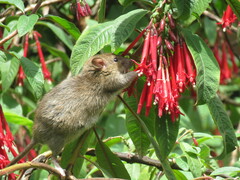
The adult spotless starling is very similar to the common starling, but marginally larger (21–23 cm length; 70–100 g weight), and has darker, oily-looking black plumage, slightly purple- or green-glossed in bright light, which is entirely spotless in spring and summer, and only with very small pale spots in winter plumage, formed by the pale tips of the feathers. It also differs in having conspicuously longer throat feathers (twice the length of those on common starlings), forming a shaggy "beard" which is particularly obvious when... Wikipedia →
Recent sightings of Spotless Starling in Pyrénées National Park
LIVEiNaturalistGlobal Distribution
Parks Where Found
| # | Park | Country | Daily sighting probability |
|---|---|---|---|
| 1 | Monfragüe National Park | 🇪🇸 Spain | |
| 2 | Doñana National Park | 🇪🇸 Spain | |
| 3 | Sierra de Guadarrama National Park | 🇪🇸 Spain | |
| 4 | Sierra Nevada National Park | 🇪🇸 Spain | |
| 5 | Ordesa y Monte Perdido National Park | 🇪🇸 Spain | |
| 6 | Aigüestortes National Park | 🇪🇸 Spain | |
| 7 | Picos de Europa National Park | 🇪🇸 Spain | |
| 8 | Pyrénées National Park | 🇫🇷 France |
Zoos & Centres Where Found
| # | Zoo / Centre | Country | |
|---|---|---|---|
| 1 | Zoo Koki (Parque zoológico y botánico) | 🇪🇸 Spain |
Closest Relatives at Pyrénées National Park





Before you go
What are the chances of seeing a Spotless Starling in Pyrénées National Park?
Rare
Under 5% of wildlife watchers report a Spotless Starling sighting in Pyrénées National Park on a given day, based on 9 verified sightings from GBIF citizen-science data from 2019 to 2026. It is the 156th most-seen of the 174 birds we can rate there. Over three days the chance rises to under 5%, if each day is a fresh chance.
When is the best time to see a Spotless Starling in Pyrénées National Park?
Any time of year
In every month with enough records, under 5% of wildlife watchers report a Spotless Starling in Pyrénées National Park on a given day, so our monthly data shows no clear season.
What time of day is best to see a Spotless Starling?
Between 7 and 10 am
Across all the parks we cover, that three-hour window holds the most Spotless Starling sightings with a recorded time, and about 7 in 10 of them come between 6 am and 6 pm: it is most active around dawn and dusk.
Is Pyrénées National Park the best place to see a Spotless Starling?
8th of 8
Of the 8 parks where we can rate Spotless Starling sightings, Pyrénées National Park ranks 8th at under 5%. The best odds are in Monfragüe National Park (Spain, about 60%), Doñana National Park (Spain, about 60%) and Sierra de Guadarrama National Park (Spain, about 50%). All parks ranked.
Where does the Spotless Starling sighting chance come from?
GBIF citizen-science records
It is estimated from how often the Spotless Starling is recorded against all the birds logged in Pyrénées National Park (9 verified sightings from 2019 to 2026), calibrated against known sighting rates. Figures are rounded to the nearest 10% because citizen-science data supports honest approximations, not decimals, and months with records from fewer than five people show "—". How it works.
