Piping Plover

Piping Plover

Charadrius melodus

Silhouette: Ferran Sayol · PhyloPic

LCNTNear ThreatenedVUENCR
Daily sighting probability <5% · Rare
at Ría Lagartos Biosphere Reserve

In 3 days ~10% in a week ~20%

26 Verified sightings at Ría Lagartos Biosphere Reserve From 2019 to 2026
1,243 In all 5 parks
September Best month
☀️ Diurnal When it's spotted

About the Piping Plover

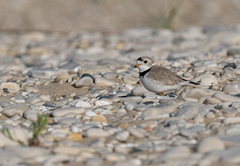
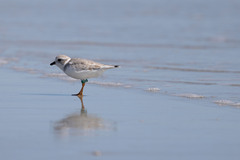
The piping plover (Charadrius melodus) is a small, sand-colored shorebird that nests and feeds along coastal sand and gravel beaches in North America. The adult has yellow-orange-red legs, a black band across the forehead from eye to eye, and a black stripe running along the breast line. This chest band is usually thicker in males during the breeding season, and it is the only reliable way to tell the sexes apart. The bird is difficult to see when it is standing still, as it blends well with open, sandy beach habitats. It typically runs in short, quick spurts and then stops.

There are two subspecies of piping plovers: the eastern population is known as Charadrius melodus melodus and the mid-west population is known as C. m. circumcinctus. The bird's name is derived from its plaintive bell-like whistles which are often heard before the bird is visible.

In 1986, the U.S. Fish & Wildlife Service listed the Great Lakes population as endangered and the Northern Great Plains and Atlantic populations as threatened. Intensive conservation efforts have yielded slow population growth, but only some populations have met the recovery goals set for them. The growth trend is expected to reverse if conservation efforts were stopped. Total population was estimated to be between 7600 and 8400 individuals in 2020.

Their breeding habitat includes beaches and sand flats on the Atlantic coast, the shores of the Great Lakes, and in the mid-west of Canada and the United States. They nest on sandy or gravel beaches or shoals. These shorebirds forage for food on beaches, usually by sight, moving across the beaches in short bursts. Generally, piping plovers will forage for food around the high tide wrack zone and along the water's edge. They eat mainly insects, marine worms, and crustaceans. Wikipedia →

Sounds

Call0:06

United States · 2022

© William Whitehead · XC738566 · CC BY-NC-ND 4.0

Song0:11

United States · 2017

© Nick Komar · XC369941 · CC BY-NC-SA 4.0

Flight call0:05

United States · 2015

© Paul Marvin · XC278886 · CC BY-NC-SA 4.0

Global Distribution

Parks Where Found

# Park Country Daily sighting probability
1 Padre Island National Seashore 🇺🇸 United States
~40%
2 Ría Lagartos Biosphere Reserve 🇲🇽 Mexico
<5%
3 Celestún Biosphere Reserve 🇲🇽 Mexico
<5%
4 Merritt Island National Wildlife Refuge 🇺🇸 United States
<5%
5 Everglades National Park 🇺🇸 United States
<5%

Cities Where Found

# City Country Daily sighting probability
1 Chicago 🇺🇸 United States
~10%
2 Boston 🇺🇸 United States
<5%
3 Havana 🇨🇺 Cuba
<5%
4 Miami 🇺🇸 United States
<5%
5 New York City 🇺🇸 United States
<5%
6 Toronto 🇨🇦 Canada
<5%
7 Denver 🇺🇸 United States
<5%

Zoos & Centres Where Found

# Zoo / Centre Country
1 New York Aquarium 🇺🇸 United States In captivity

Before you go

What are the chances of seeing a Piping Plover in Ría Lagartos Biosphere Reserve?

Rare

Under 5% of wildlife watchers report a Piping Plover sighting in Ría Lagartos Biosphere Reserve on a given day, based on 26 verified sightings from GBIF citizen-science data from 2019 to 2026. It is the 132nd most-seen of the 216 birds we can rate there. Over three days the chance rises to about 10%, and over a week to about 20%, if each day is a fresh chance.

When is the best time to see a Piping Plover in Ría Lagartos Biosphere Reserve?

February and September–October

In those months about 10% of wildlife watchers report a Piping Plover in Ría Lagartos Biosphere Reserve on a given day, against under 5% in March–August and November–January, the lowest months.

What time of day is best to see a Piping Plover?

Between 8 and 11 am

Across all the parks we cover, that three-hour window holds the most Piping Plover sightings with a recorded time, and about 9 in 10 of them come between 6 am and 6 pm: it is a daytime animal.

Is Ría Lagartos Biosphere Reserve the best place to see a Piping Plover?

2nd of 5

Of the 5 parks where we can rate Piping Plover sightings, Ría Lagartos Biosphere Reserve ranks 2nd at under 5%. The best odds are in Padre Island National Seashore (United States, about 40%).

Which relatives of the Piping Plover live in Ría Lagartos Biosphere Reserve?

Same genus: Charadrius

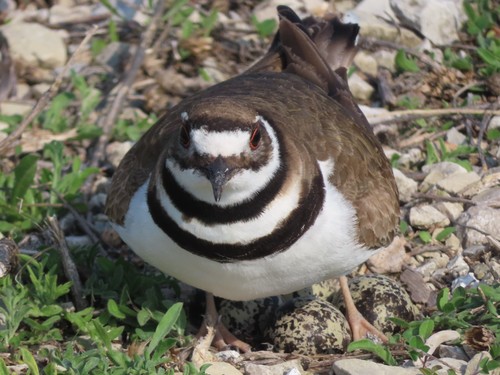
The closest relatives of the Piping Plover that you can see in Ría Lagartos Biosphere Reserve (genus Charadrius, Holarctic Ringed Plovers and Allies) are Semipalmated Plover (about 40%) and Killdeer (about 10%), with each one's daily chance of a sighting.

Where does the Piping Plover sighting chance come from?

GBIF citizen-science records

It is estimated from how often the Piping Plover is recorded against all the birds logged in Ría Lagartos Biosphere Reserve (26 verified sightings from 2019 to 2026), calibrated against known sighting rates. Figures are rounded to the nearest 10% because citizen-science data supports honest approximations, not decimals, and months with records from fewer than five people show "—". How it works.

← Back to Ría Lagartos Biosphere Reserve