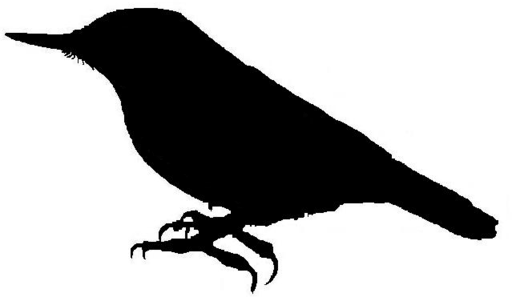
Chestnut-bellied Nuthatch

Chestnut-bellied Nuthatch

Sitta cinnamoventris

Silhouette: Alan and Elaine Wilson (Modified) · PhyloPic

LCLeast ConcernNTVUENCR
Daily sighting probability ~50% · Likely
at Royal Manas National Park

In 3 days ~90% in a week >90%

576 Verified sightings at Royal Manas National Park From 2019 to 2026
2,398 In all 7 parks
December Best month
☀️ Diurnal When it's spotted

About the Chestnut-bellied Nuthatch

The chestnut-bellied nuthatch (Sitta cinnamoventris) is a species of bird belonging to the family Sittidae. It is found in the Indian subcontinent occurring in the countries of India, Tibet, Bangladesh, Bhutan, and Nepal.

It is found in subtropical or tropical forest, that are dry or moist forests, and in montane and lowland forests. This species is very similar to the Burmese nuthatch but it has a heavier bill, the crown and mantle are of the same shade. The wing and tail markings show contrasting markings; silvery-edge to primaries, blackish inner webs to tertials and tail with large white spots in the tail. Rasmussen and Anderton (2005) established the chestnut-bellied nuthatch is different from the Indian nuthatch and the Burmese nuthatch. White on ear coverts does not extend into chin unlike in the Indian nuthatch. Race almorae of Nepal and NW Himalayas has paler underparts; race koelzi of the eastern Himalayas has the female darker than in other races. Resident from Murree Hills to the Uttaranchal foothills extending to the Assam Valley, Arunachal Pradesh into the Lushai Hills. Wikipedia →

Sounds

Song0:12

Thailand · 2015

© Ross Gallardy · XC295441 · CC BY-NC-SA 4.0

Call0:12

Nepal · 2023

© Greg Irving · XC845130 · CC BY-NC-SA 4.0

Song0:26

India · 2024

© Suniti Bhushan Datta · XC882038 · CC BY-NC-SA 4.0

Global Distribution

Parks Where Found

# Park Country Daily sighting probability
1 Royal Manas National Park 🇧🇹 Bhutan
~50%
2 Chitwan National Park 🇳🇵 Nepal
~40%
3 Jim Corbett National Park 🇮🇳 India
~20%
4 Royal Bardia National Park 🇳🇵 Nepal
~20%
5 Namdapha National Park 🇮🇳 India
~20%
6 Manas National Park 🇮🇳 India
~10%
7 Kaziranga National Park 🇮🇳 India
<5%

Cities Where Found

# City Country Daily sighting probability
1 Dehradun 🇮🇳 India
~20%
2 Kathmandu 🇳🇵 Nepal
~10%

Before you go

What are the chances of seeing a Chestnut-bellied Nuthatch in Royal Manas National Park?

Likely

About 50% of wildlife watchers report a Chestnut-bellied Nuthatch sighting in Royal Manas National Park on a given day, based on 576 verified sightings from GBIF citizen-science data from 2019 to 2026. It is the 12th most-seen of the 388 birds we can rate there. Over three days the chance rises to about 90%, and over a week to over 90%, if each day is a fresh chance.

When is the best time to see a Chestnut-bellied Nuthatch in Royal Manas National Park?

March, October and December

In those months about 60% of wildlife watchers report a Chestnut-bellied Nuthatch in Royal Manas National Park on a given day, against about 30% in January–February and July, the lowest months. Those are among Royal Manas National Park's driest months, with about 85 mm of rain a month against 930 mm in July. August and September have too few records to rate.

What time of day is best to see a Chestnut-bellied Nuthatch?

Between 8 and 11 am

Across all the parks we cover, that three-hour window holds the most Chestnut-bellied Nuthatch sightings with a recorded time, and about 9 in 10 of them come between 6 am and 6 pm: it is a daytime animal.

Is Royal Manas National Park the best place to see a Chestnut-bellied Nuthatch?

Yes

Of the 7 parks where we can rate Chestnut-bellied Nuthatch sightings, Royal Manas National Park has the highest daily chance: about 50%. Next come Chitwan National Park (Nepal, about 40%) and Jim Corbett National Park (India, about 20%). All parks ranked.

Where does the Chestnut-bellied Nuthatch sighting chance come from?

GBIF citizen-science records

It is estimated from how often the Chestnut-bellied Nuthatch is recorded against all the birds logged in Royal Manas National Park (576 verified sightings from 2019 to 2026), calibrated against known sighting rates. Figures are rounded to the nearest 10% because citizen-science data supports honest approximations, not decimals, and months with records from fewer than five people show "—". How it works.

← Back to Royal Manas National Park