Grey-throated Barbet

Grey-throated Barbet

Gymnobucco bonapartei

Silhouette: PhyloPic

LCLeast ConcernNTVUENCR
Daily sighting probability <5% · Rare
at Semuliki National Park

In 3 days ~10% in a week ~30%

17 Verified sightings at Semuliki National Park From 2019 to 2026
1,201 In all 6 parks
July Best month
☀️ Diurnal When it's spotted

About the Grey-throated Barbet

The grey-throated barbet (Gymnobucco bonapartei) is a species of bird in the Lybiidae family (African barbets). It is found in Angola, Cameroon, Central African Republic, Republic of the Congo, Democratic Republic of the Congo, Equatorial Guinea, Gabon, Kenya, Rwanda, South Sudan, Tanzania, and Uganda.

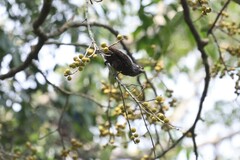
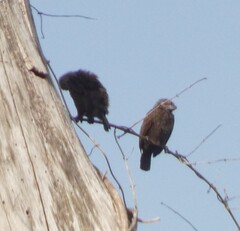
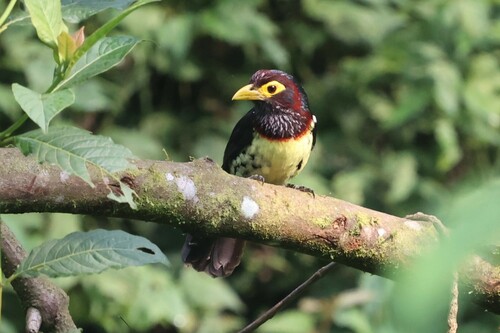
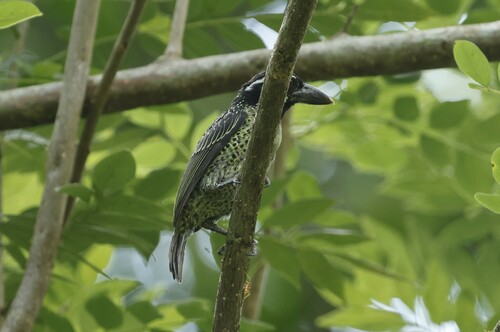
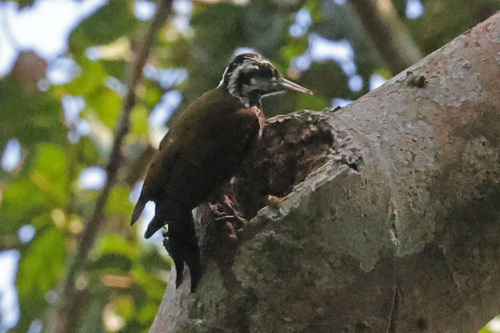
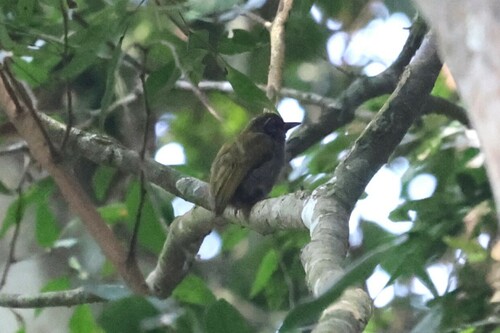
The Grey-throated Barbet is a dark, robust bird with a distinctive tuft of feathers on its forehead. Its eye color varies across its range, appearing pale in the eastern regions and dark in the west. This species is commonly observed in small groups, often around dead trees in humid forests and areas of secondary growth. It can be distinguished from the Naked-faced and Bristle-nosed Barbets by its mostly feathered head and dark bill. While Sladen's Barbet also has a dark bill, the Gray-throated Barbet is set apart by its feathered head.

Its vocalizations include nasal "squeaky toy" calls, sharp "peet" notes, and a dry rattle. It eats a diverse group of fruits, including Allophyllus, figs, and Musanga. Wikipedia →

Sounds

Call0:20

Gabon · 2024

© Étienne Leroy · XC877892 · CC BY-NC-SA 4.0

Begging call0:25

Uganda · 2025

© isaac kilusu · XC1015185 · CC BY-NC-SA 4.0

Call0:24

Kenya · 2018

© Frank Lambert · XC451955 · CC BY-NC-ND 4.0

Global Distribution

Parks Where Found

# Park Country Daily sighting probability
1 Bwindi Impenetrable National Park 🇺🇬 Uganda
~40%
2 Kibale National Park 🇺🇬 Uganda
~10%
3 Semuliki National Park 🇺🇬 Uganda
<5%
4 Nyungwe National Park 🇷🇼 Rwanda
<5%
5 Virunga National Park 🇨🇩 Democratic Republic of the Congo
<5%
6 Masai Mara National Reserve 🇰🇪 Kenya
<5%

Cities Where Found

# City Country Daily sighting probability
1 Yaoundé 🇨🇲 Cameroon
~20%

Before you go

What are the chances of seeing a Grey-throated Barbet in Semuliki National Park?

Rare

Under 5% of wildlife watchers report a Grey-throated Barbet sighting in Semuliki National Park on a given day, based on 17 verified sightings from GBIF citizen-science data from 2019 to 2026. It is the 189th most-seen of the 280 birds we can rate there. Over three days the chance rises to about 10%, and over a week to about 30%, if each day is a fresh chance.

When is the best time to see a Grey-throated Barbet in Semuliki National Park?

July, September and November

In those months about 10% of wildlife watchers report a Grey-throated Barbet in Semuliki National Park on a given day, against under 5% in August, October and December–June, the lowest months.

What time of day is best to see a Grey-throated Barbet?

Between 8 and 11 am

Across all the parks we cover, that three-hour window holds the most Grey-throated Barbet sightings with a recorded time, and about 9 in 10 of them come between 6 am and 6 pm: it is a daytime animal.

Is Semuliki National Park the best place to see a Grey-throated Barbet?

3rd of 6

Of the 6 parks where we can rate Grey-throated Barbet sightings, Semuliki National Park ranks 3rd at under 5%. The best odds are in Bwindi Impenetrable National Park (Uganda, about 40%) and Kibale National Park (Uganda, about 10%).

Which relatives of the Grey-throated Barbet live in Semuliki National Park?

Same family: Lybiidae

The closest relatives of the Grey-throated Barbet that you can see in Semuliki National Park (family Lybiidae, African Barbets) are Yellow-Billed Barbet (about 40%), Yellow-throated Tinkerbird (about 40%) and Speckled Tinkerbird (about 40%), with each one's daily chance of a sighting.

Where does the Grey-throated Barbet sighting chance come from?

GBIF citizen-science records

It is estimated from how often the Grey-throated Barbet is recorded against all the birds logged in Semuliki National Park (17 verified sightings from 2019 to 2026), calibrated against known sighting rates. Figures are rounded to the nearest 10% because citizen-science data supports honest approximations, not decimals, and months with records from fewer than five people show "—". How it works.

← Back to Semuliki National Park