Mantled Guereza

Mantled Guereza

Colobus guereza

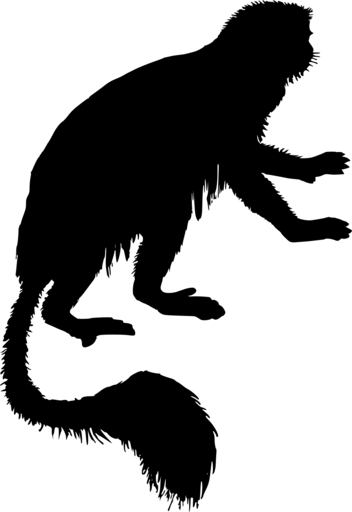
Silhouette: Yan Wong from drawing in The Century Dictionary (1911) · PhyloPic

LCLeast ConcernNTVUENCR
Daily sighting probability ~70% · Very likely
at Semuliki National Park

In 3 days >90%

9 Verified sightings at Semuliki National Park From 2019 to 2026
356 In all 9 parks
June Best month
☀️ Diurnal When it's spotted

About the Mantled Guereza

The mantled guereza (Colobus guereza), also known simply as the guereza, historically the eastern black-and-white colobus, and Abyssinian black-and-white colobus, is a black-and-white colobus, a type of Old World monkey. It is native to much of west central and east Africa, including Cameroon, Equatorial Guinea, Nigeria, Ethiopia, Kenya, Tanzania, Uganda and Chad. The species consists of several subspecies that differ in appearance. It has a distinctive appearance, which is alluded to in its name; the long white fringes of hair that run along each side of its black trunk are known as a mantle. Its face is framed with white hair and it has a large white tail tuft.

The mantled guereza is diurnal and arboreal, found in both deciduous and evergreen forests. It is an adaptable species that can cope with habitat disturbance and prefers secondary forest close to rivers or lakes. Although previously thought to eat only leaves, it also eats seeds, fruits, and arthropods. It is able to digest plant material with a high fibre content with its specialised stomach and may only eat from a few plant species at a time. It is preyed on by birds of prey and some mammals, such as the common chimpanzee and the leopard.

The mantled guereza lives in social groups of three to fifteen individuals. These groups normally include a dominant male, several females, and the offspring of the females. It has a polygynous mating system and copulation is initiated with vocal communication. After a gestation period of just over five months, infants are born with pink skin and white fur, which darkens to the adult coloration by three to four months. The mantled guereza is well known for its dawn chorus, the males' "roar" is a method of long-distance communication that reinforces territorial boundaries. It also makes other vocalization and uses body postures, movements, and facial expressions to communicate.

The mantled guereza is listed as Least Concern by the International Union for Conservation of Nature (IUCN) because it is widespread – although it is locally threatened in some areas, the decline is not great enough to list it in a higher category of threat. However, one subspecies found in Kenya is listed as Endangered. It can survive well in degraded forests and in some areas it is more common in logged areas than unlogged ones. The mantled guereza is also threatened by hunting for bushmeat and for its skin. Wikipedia →

Sounds

Call0:20

Ethiopia · 2025

© Olivier Matgen · XC1055838 · CC BY-NC-SA 4.0

Call0:08

Kenya · 2022

© Lars Lachmann · XC1045484 · CC BY-NC-SA 4.0

Recording1:02

Congo - Kinshasa · 2017

© Mathias D'haen · iNaturalist · CC BY-NC 4.0

Global Distribution

Parks Where Found

# Park Country Daily sighting probability
1 Kibale National Park 🇺🇬 Uganda
~70%
2 Aberdare National Park 🇰🇪 Kenya
~70%
3 Semuliki National Park 🇺🇬 Uganda
~70%
4 Bwindi Impenetrable National Park 🇺🇬 Uganda
~60%
5 Bale Mountains National Park 🇪🇹 Ethiopia
~60%
6 Murchison Falls National Park 🇺🇬 Uganda
~50%
7 Odzala-Kokoua National Park 🇨🇬 Republic of the Congo
~40%
8 Lake Nakuru National Park 🇰🇪 Kenya
~40%
9 Queen Elizabeth National Park 🇺🇬 Uganda
~40%

Cities Where Found

# City Country Daily sighting probability
1 Kampala 🇺🇬 Uganda
~60%
2 Nairobi 🇰🇪 Kenya
~20%

Zoos & Centres Where Found

# Zoo / Centre Country
1 Pairi Daiza 🇧🇪 Belgium In captivity
2 Prague Zoo 🇨🇿 Czechia In captivity
3 ZooParc de Beauval 🇫🇷 France In captivity
4 Skansen 🇸🇪 Sweden In captivity
5 Cincinnati Zoo and Botanical Garden 🇺🇸 United States In captivity
6 Dresden Zoo 🇩🇪 Germany In captivity
7 Antwerp Zoo 🇧🇪 Belgium In captivity
8 Zoo Pilsen 🇨🇿 Czechia In captivity
9 Fota Wildlife Park 🇮🇪 Ireland In captivity
10 Zoo de Maubeuge 🇫🇷 France In captivity
11 San Diego Zoo Safari Park 🇺🇸 United States In captivity
12 Binder Park Zoo 🇺🇸 United States In captivity
13 Minnesota Zoo 🇺🇸 United States In captivity
14 Safari West 🇺🇸 United States In captivity
15 Columbus Zoo and Aquarium 🇺🇸 United States In captivity
16 Bronx Zoo 🇺🇸 United States In captivity
17 Ramat Gan Safari 🇮🇱 Israel In captivity
18 Baton Rouge Zoo 🇺🇸 United States In captivity
19 Sedgwick County Zoo 🇺🇸 United States In captivity
20 Omaha’s Henry Doorly Zoo and Aquarium 🇺🇸 United States In captivity
21 Milwaukee County Zoo 🇺🇸 United States In captivity
22 Nanjing Hongshan Forest Zoo 🇨🇳 China In captivity
23 Safari World 🇹🇭 Thailand In captivity
24 Cheyenne Mountain Zoo 🇺🇸 United States In captivity
25 Cotswold Wildlife Park 🇬🇧 United Kingdom In captivity
26 Toledo Zoo 🇺🇸 United States In captivity
27 Silesian Zoological Garden 🇵🇱 Poland In captivity
28 Wildlife World Zoo 🇺🇸 United States In captivity
29 Selwo Aventura 🇪🇸 Spain In captivity
30 Louisville Zoo 🇺🇸 United States In captivity
31 Bojnice Zoo 🇸🇰 Slovakia In captivity
32 Audubon Zoo 🇺🇸 United States In captivity
33 Safari de Peaugres Circuit Auto 🇫🇷 France In captivity
34 Granby Zoo 🇨🇦 Canada In captivity
35 Saint Louis Zoo 🇺🇸 United States In captivity
36 Caldwell Zoo 🇺🇸 United States In captivity
37 Woodland Park Zoo 🇺🇸 United States In captivity
38 Calgary Zoo 🇨🇦 Canada In captivity
39 Night Safari 🇸🇬 Singapore In captivity
40 Tanganyika Wildlife Park 🇺🇸 United States In captivity
41 Twycross Zoo 🇬🇧 United Kingdom In captivity
42 无锡动物园 🇨🇳 China In captivity
43 Dickerson Park Zoo 🇺🇸 United States In captivity
44 Fort Worth Zoo 🇺🇸 United States In captivity
45 National Zoo & Aquarium 🇦🇺 Australia In captivity
46 Oregon Zoo 🇺🇸 United States In captivity
47 Lisbon Zoo 🇵🇹 Portugal In captivity
48 Memphis Zoo 🇺🇸 United States In captivity
49 Kunming Zoo 🇨🇳 China In captivity
50 Aloha Safari Park 🇺🇸 United States In captivity

Before you go

What are the chances of seeing a Mantled Guereza in Semuliki National Park?

Very likely

About 70% of wildlife watchers report a Mantled Guereza sighting in Semuliki National Park on a given day, based on 9 verified sightings from GBIF citizen-science data from 2019 to 2026. It is the 2nd most-seen of the 7 mammals we can rate there. Over three days the chance rises to over 90%, if each day is a fresh chance.

When is the best time to see a Mantled Guereza in Semuliki National Park?

February and June–July

In those months about 80% of wildlife watchers report a Mantled Guereza in Semuliki National Park on a given day, against about 30% in April, the lowest month. March, May, August–September and December have too few records to rate.

What time of day is best to see a Mantled Guereza?

Between 3 and 6 pm

Across all the parks we cover, that three-hour window holds the most Mantled Guereza sightings with a recorded time, and about 8 in 10 of them come between 6 am and 6 pm: it is a daytime animal.

Is Semuliki National Park the best place to see a Mantled Guereza?

Among the best

Of the 9 parks where we can rate Mantled Guereza sightings, Semuliki National Park ranks 3rd at about 70%, level with the leaders once rounded. The best odds are in Kibale National Park (Uganda, about 70%) and Aberdare National Park (Kenya, about 70%). All parks ranked.

Where does the Mantled Guereza sighting chance come from?

GBIF citizen-science records

It is estimated from how often the Mantled Guereza is recorded against all the mammals logged in Semuliki National Park (9 verified sightings from 2019 to 2026), calibrated against known sighting rates. Figures are rounded to the nearest 10% because citizen-science data supports honest approximations, not decimals, and months with records from fewer than five people show "—". How it works.

← Back to Semuliki National Park