Amazon Lava Lizard

Amazon Lava Lizard

Tropidurus torquatus

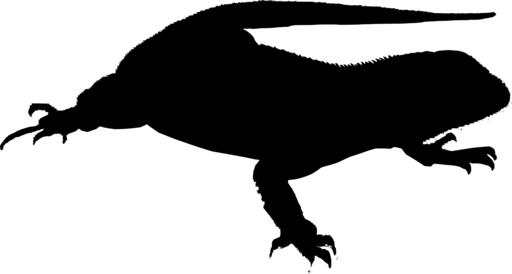
Silhouette: Heitor Campos de Sousa · PhyloPic

LCLeast ConcernNTVUENCR
Daily sighting probability ~30% · Possible
at Serra dos Órgãos National Park

In 3 days ~70% in a week ~90%

17 Verified sightings at Serra dos Órgãos National Park From 2019 to 2026
192 In all 2 parks
June Best month
☀️ Diurnal When it's spotted

About the Amazon Lava Lizard

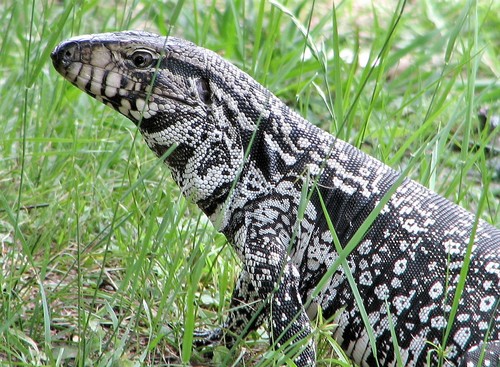
Tropidurus torquatus is a species of lizard in the family Tropiduridae, the Neotropical ground lizards. Its common name is Amazon lava lizard. The species is endemic to South America. There are no subspecies. The specific name, torquatus, is Latin meaning "adorned with a neck chain or collar".

Native to South America, Tropidurus torquatus is found in Argentina, Bolivia, Brazil, Colombia, French Guiana, Guyana, and Suriname. It is one of the most widely distributed species of the genus Tropidurus. Tropidurus torquatus is a medium-sized lizard with a relatively large head. Its scales are overlapping. The reproductively mature female ranges from 7 to 10 cm (2.8 to 3.9 in) snout-to-vent length (SVL). One sample of adult males had a mean SVL of 8.68 cm (3.42 in), while another found a mean SVL of 11 to 12 cm (4.3 to 4.7 in).

Tropidurus torquatus lives mainly in open habitat types, especially restinga, part of the Atlantic Forest biome. It may occupy disturbed and degraded restinga. It is also known from the Abrolhos Archipelago, indicating that it can colonize offshore islands. It lives in the Cerrado. It may be found... Wikipedia →

Global Distribution

Parks Where Found

# Park Country Daily sighting probability
1 Tijuca National Park 🇧🇷 Brazil
~30%
2 Serra dos Órgãos National Park 🇧🇷 Brazil
~30%

Cities Where Found

# City Country Daily sighting probability
1 Rio de Janeiro 🇧🇷 Brazil
~40%
2 Niterói 🇧🇷 Brazil
~40%
3 Vitória 🇧🇷 Brazil
~30%
4 Brasilia 🇧🇷 Brazil
~30%
5 Belo Horizonte 🇧🇷 Brazil
~20%
6 Campinas 🇧🇷 Brazil
~10%
7 São Paulo 🇧🇷 Brazil
~10%

Closest Relatives at Serra dos Órgãos National Park

No species of the same family or order lives in Serra dos Órgãos National Park, so these are its closest relatives here: other reptiles.

Before you go

What are the chances of seeing an Amazon Lava Lizard in Serra dos Órgãos National Park?

Possible

About 30% of wildlife watchers report an Amazon Lava Lizard sighting in Serra dos Órgãos National Park on a given day, based on 17 verified sightings from GBIF citizen-science data from 2019 to 2026. It is the 2nd most-seen of the 14 reptiles we can rate there. Over three days the chance rises to about 70%, and over a week to about 90%, if each day is a fresh chance.

When is the best time to see an Amazon Lava Lizard in Serra dos Órgãos National Park?

June and November

In those months about 50% of wildlife watchers report an Amazon Lava Lizard in Serra dos Órgãos National Park on a given day, against under 5% in April and July–September, the lowest months.

What time of day is best to see an Amazon Lava Lizard?

Between 10 am and 1 pm

Across all the parks we cover, that three-hour window holds the most Amazon Lava Lizard sightings with a recorded time, and about 9 in 10 of them come between 6 am and 6 pm: it is a daytime animal.

Is Serra dos Órgãos National Park the best place to see an Amazon Lava Lizard?

Among the best

Of the 2 parks where we can rate Amazon Lava Lizard sightings, Serra dos Órgãos National Park ranks 2nd at about 30%, level with the leaders once rounded. The best odds are in Tijuca National Park (Brazil, about 30%).

Where does the Amazon Lava Lizard sighting chance come from?

GBIF citizen-science records

It is estimated from how often the Amazon Lava Lizard is recorded against all the reptiles logged in Serra dos Órgãos National Park (17 verified sightings from 2019 to 2026), calibrated against known sighting rates. Figures are rounded to the nearest 10% because citizen-science data supports honest approximations, not decimals, and months with records from fewer than five people show "—". How it works.

← Back to Serra dos Órgãos National Park