Black-Shouldered Drone Fly

Black-Shouldered Drone Fly

Eristalis dimidiata

Daily sighting probability ~10% · With luck
at Shenandoah National Park

In 3 days ~20% in a week ~40%

18 Verified sightings at Shenandoah National Park From 2019 to 2026
174 In all 5 parks
October Best month
☀️ Diurnal When it's spotted

About the Black-Shouldered Drone Fly

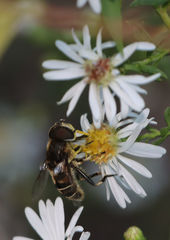
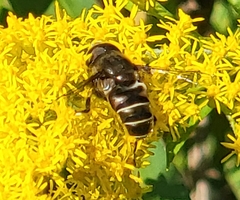
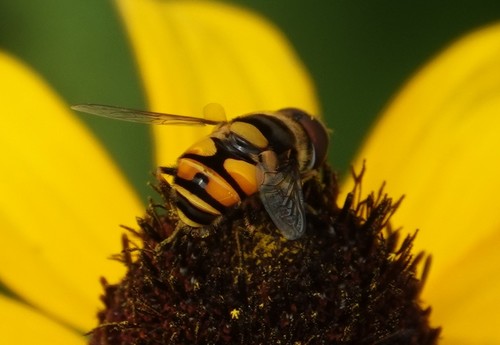
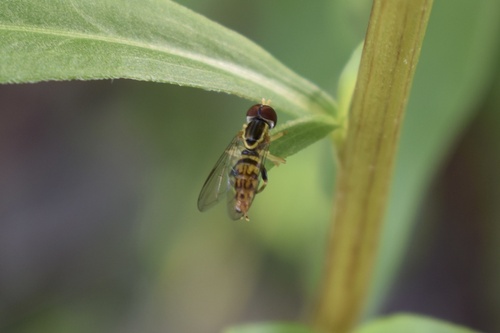
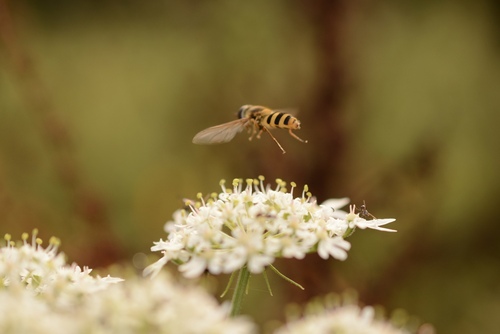
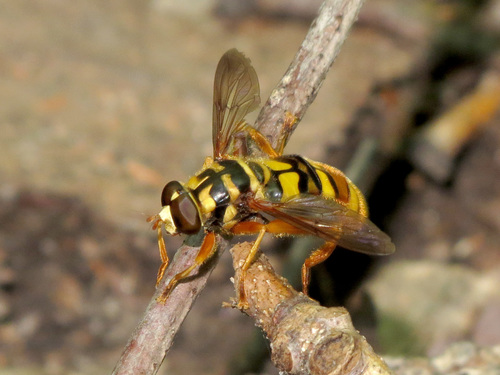
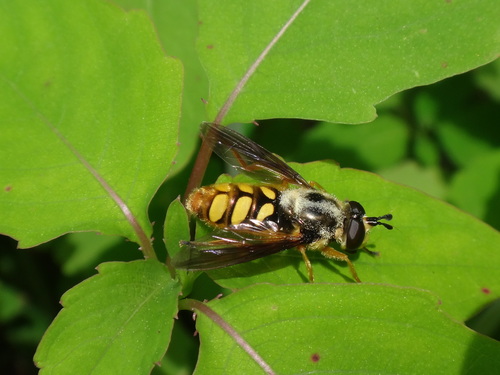
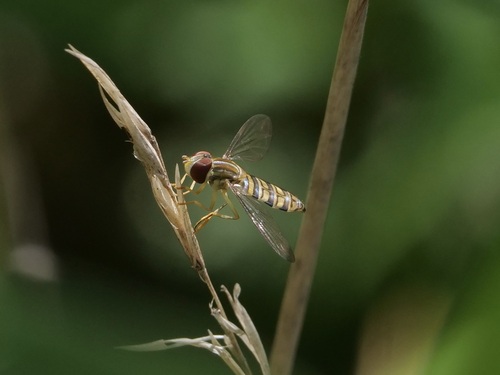
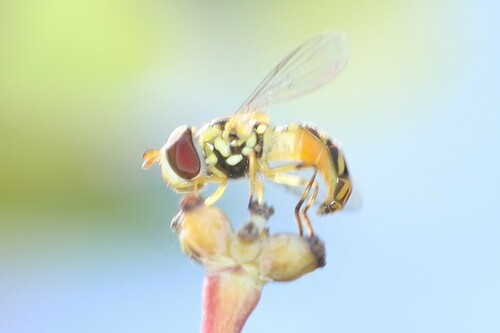
Eristalis dimidiata, the black-shouldered drone fly, is a species of hoverfly native to much of Canada and the eastern and northern United States. It flies year-round in southern areas and from late March to mid-November further north. It is one of the earliest hoverflies to fly in the spring, and as such likely overwinters as an adult. It lives primarily in forests.

Hoverflies get their names from the ability to remain nearly motionless while in flight. The adults are also known as flower flies as they are commonly found on and around flowers, from which they get both energy-giving nectar and protein-rich pollen. The larvae are aquatic filter-feeders of the rat-tailed type.

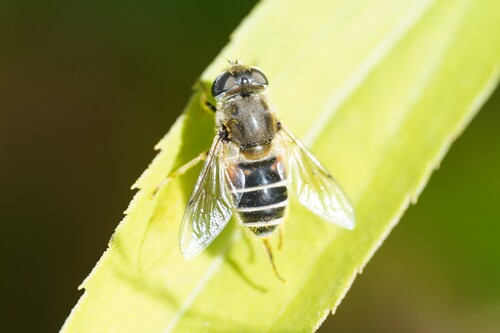
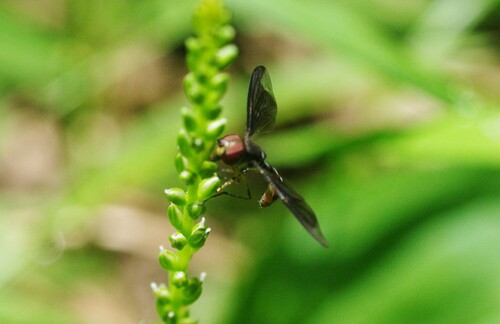
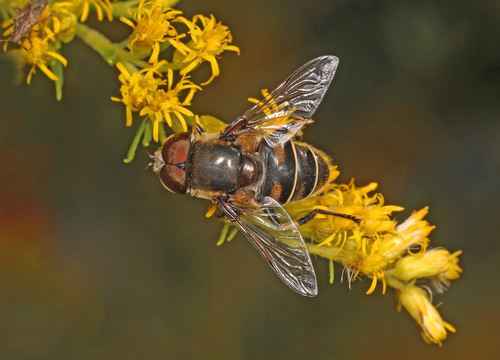
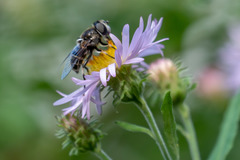
Black-shouldered drone flies have opaque, infuscated humeral cells (at the base of their wings), with the rest of the wing entirely hyaline (transparent), except for possibly a diffuse medial spot on the wing. Their hind tarsi are entirely black. Overall, much of the fly is black, though the wings are mostly transparent and the posterior margins of the abdominal segments are white. Their pterostigma are dark brown and distinct. They have one to six short bristles on the dorsus (back) of their arista... Wikipedia →
Global Distribution

Parks Where Found

# Park Country Daily sighting probability
1 Isle Royale National Park 🇺🇸 United States
~30%
2 Acadia National Park 🇺🇸 United States
~20%
3 Point Pelee National Park 🇨🇦 Canada
~10%
4 Shenandoah National Park 🇺🇸 United States
~10%
5 Great Smoky Mountains National Park 🇺🇸 United States
~10%

Cities Where Found

# City Country Daily sighting probability
1 Minneapolis [Saint Paul] 🇺🇸 United States
~10%
2 Boston 🇺🇸 United States
~10%
3 New York City 🇺🇸 United States
~10%
4 Chicago 🇺🇸 United States
~10%
5 Washington 🇺🇸 United States
~10%
6 Toronto 🇨🇦 Canada
~10%
7 Montreal 🇨🇦 Canada
~10%
8 Philadelphia 🇺🇸 United States
<5%
9 Edmonton 🇨🇦 Canada
<5%
10 Baltimore 🇺🇸 United States
<5%

Before you go

What are the chances of seeing a Black-Shouldered Drone Fly in Shenandoah National Park?

With luck

About 10% of wildlife watchers report a Black-Shouldered Drone Fly sighting in Shenandoah National Park on a given day, based on 18 verified sightings from GBIF citizen-science data from 2019 to 2026. It is the 201st most-seen of the 723 insects we can rate there. Over three days the chance rises to about 20%, and over a week to about 40%, if each day is a fresh chance.

When is the best time to see a Black-Shouldered Drone Fly in Shenandoah National Park?

October

In that month about 20% of wildlife watchers report a Black-Shouldered Drone Fly in Shenandoah National Park on a given day, against under 5% in June–August and November–March, the lowest months.

What time of day is best to see a Black-Shouldered Drone Fly?

Between noon and 3 pm

Across all the parks we cover, that three-hour window holds the most Black-Shouldered Drone Fly sightings with a recorded time, and nearly all of them come between 6 am and 6 pm: it is a daytime animal.

Is Shenandoah National Park the best place to see a Black-Shouldered Drone Fly?

4th of 5

Of the 5 parks where we can rate Black-Shouldered Drone Fly sightings, Shenandoah National Park ranks 4th at about 10%. The best odds are in Isle Royale National Park (United States, about 30%), Acadia National Park (United States, about 20%) and Point Pelee National Park (Canada, about 10%).

Which relatives of the Black-Shouldered Drone Fly live in Shenandoah National Park?

Same genus: Eristalis

The closest relatives of the Black-Shouldered Drone Fly that you can see in Shenandoah National Park (genus Eristalis, Drone Flies) are Common Drone Fly (about 20%), Transverse-Banded Flower Fly (about 10%) and Eurasian Drone Fly (about 10%), with each one's daily chance of a sighting.

Where does the Black-Shouldered Drone Fly sighting chance come from?

GBIF citizen-science records

It is estimated from how often the Black-Shouldered Drone Fly is recorded against all the insects logged in Shenandoah National Park (18 verified sightings from 2019 to 2026), calibrated against known sighting rates. Figures are rounded to the nearest 10% because citizen-science data supports honest approximations, not decimals, and months with records from fewer than five people show "—". How it works.

← Back to Shenandoah National Park