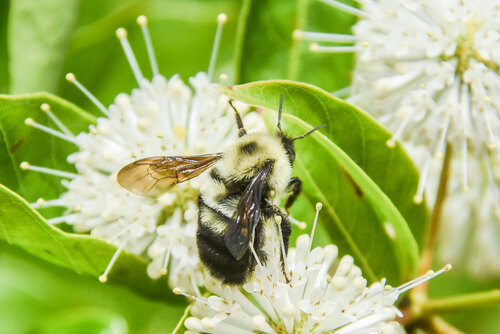
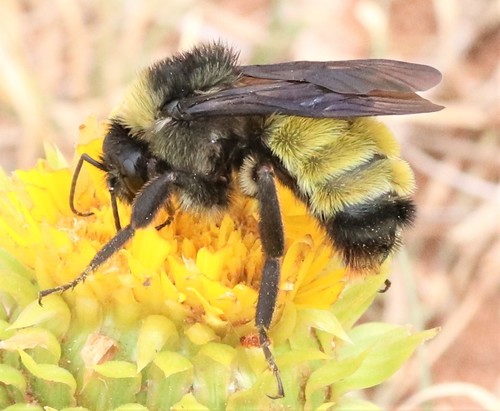
Eastern Carpenter Bee

Eastern Carpenter Bee

Xylocopa virginica

Daily sighting probability ~20% · Possible
at Shenandoah National Park

In 3 days ~50% in a week ~80%

115 Verified sightings at Shenandoah National Park From 2019 to 2026
1,045 In all 7 parks
April Best month
☀️ Diurnal When it's spotted

About the Eastern Carpenter Bee

Xylocopa virginica, sometimes referred to as the eastern carpenter bee, is a species of bee that extends through the eastern United States and into Canada. It is sympatric with Xylocopa micans in much of southeastern United States. It nests in various types of wood and eats pollen and nectar.

In X. virginica, dominant females do not focus solely on egg-laying, as in other bee species considered to have "queens". Instead, dominant X. virginica females are responsible for a full gamut of activities including reproduction, foraging, and nest construction, whereas subordinate bees may engage in little activity outside of guarding the nest.

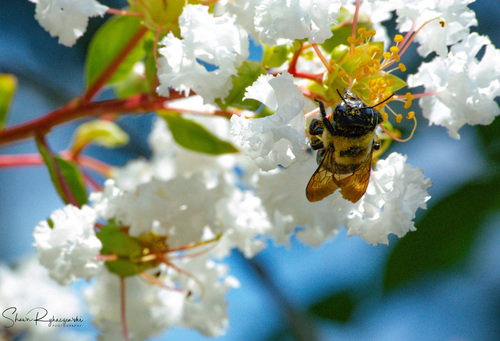
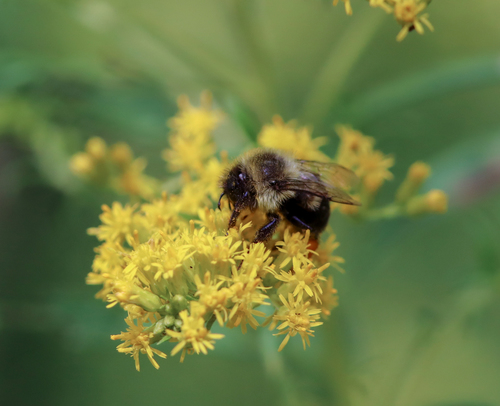
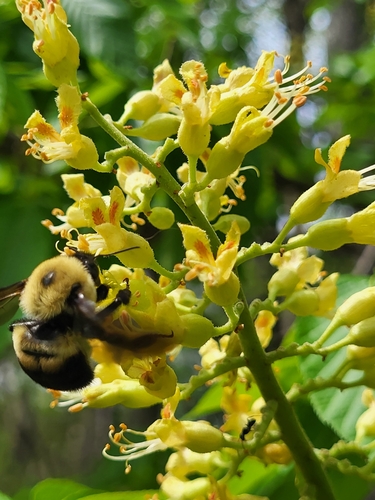
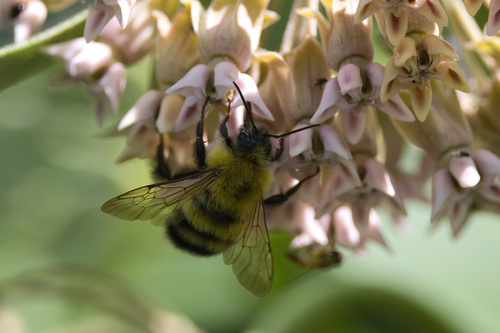
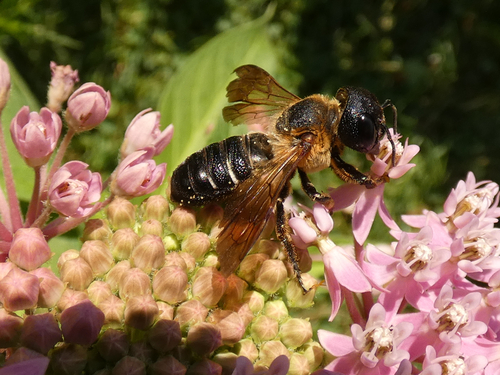
The bee is similar in size to bumblebees, but has a glossy, mostly black body with a slight metallic purple tint. X. virginica males and females have generally the same mass, but can be differentiated visually by the male's longer body and the female's wider head. The males also have a white spot on their face. Additionally, the males have larger thoracic volumes for given masses. Females of different social standing can also be told apart based on morphology. Primary females are larger than secondary or tertiary... Wikipedia →

Global Distribution

Parks Where Found

# Park Country Daily sighting probability
1 Great Smoky Mountains National Park 🇺🇸 United States
~30%
2 Shenandoah National Park 🇺🇸 United States
~20%
3 Merritt Island National Wildlife Refuge 🇺🇸 United States
~20%
4 Everglades National Park 🇺🇸 United States
~10%
5 Congaree National Park 🇺🇸 United States
~10%
6 Big Cypress National Preserve 🇺🇸 United States
~10%
7 Point Pelee National Park 🇨🇦 Canada
~10%

Cities Where Found

# City Country Daily sighting probability
1 Washington 🇺🇸 United States
~30%
2 Philadelphia 🇺🇸 United States
~30%
3 Boston 🇺🇸 United States
~30%
4 Baltimore 🇺🇸 United States
~30%
5 Detroit 🇺🇸 United States
~20%
6 Houston 🇺🇸 United States
~20%
7 New York City 🇺🇸 United States
~20%
8 Toronto 🇨🇦 Canada
~20%
9 Dallas 🇺🇸 United States
~10%
10 Chicago 🇺🇸 United States
~10%

Before you go

What are the chances of seeing an Eastern Carpenter Bee in Shenandoah National Park?

Possible

About 20% of wildlife watchers report an Eastern Carpenter Bee sighting in Shenandoah National Park on a given day, based on 115 verified sightings from GBIF citizen-science data from 2019 to 2026. It is the 21st most-seen of the 723 insects we can rate there. Over three days the chance rises to about 50%, and over a week to about 80%, if each day is a fresh chance.

When is the best time to see an Eastern Carpenter Bee in Shenandoah National Park?

March–April and August–September

In those months about 30% of wildlife watchers report an Eastern Carpenter Bee in Shenandoah National Park on a given day, against under 5% in November to February, the lowest months.

What time of day is best to see an Eastern Carpenter Bee?

Between noon and 3 pm

Across all the parks we cover, that three-hour window holds the most Eastern Carpenter Bee sightings with a recorded time, and nearly all of them come between 6 am and 6 pm: it is a daytime animal.

Is Shenandoah National Park the best place to see an Eastern Carpenter Bee?

2nd of 7

Of the 7 parks where we can rate Eastern Carpenter Bee sightings, Shenandoah National Park ranks 2nd at about 20%. The best odds are in Great Smoky Mountains National Park (United States, about 30%).

Which relatives of the Eastern Carpenter Bee live in Shenandoah National Park?

Same family: Apidae

The closest relatives of the Eastern Carpenter Bee that you can see in Shenandoah National Park (family Apidae, Honey Bees, Bumble Bees, and Allies) are Common Eastern Bumble Bee (about 40%), Brown-Belted Bumble Bee (about 20%) and Perplexing Bumble Bee (about 10%), with each one's daily chance of a sighting.

Where does the Eastern Carpenter Bee sighting chance come from?

GBIF citizen-science records

It is estimated from how often the Eastern Carpenter Bee is recorded against all the insects logged in Shenandoah National Park (115 verified sightings from 2019 to 2026), calibrated against known sighting rates. Figures are rounded to the nearest 10% because citizen-science data supports honest approximations, not decimals, and months with records from fewer than five people show "—". How it works.

← Back to Shenandoah National Park