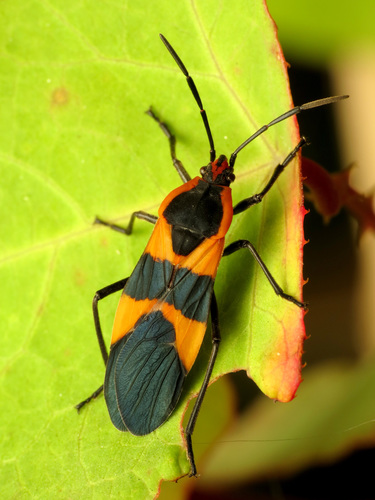
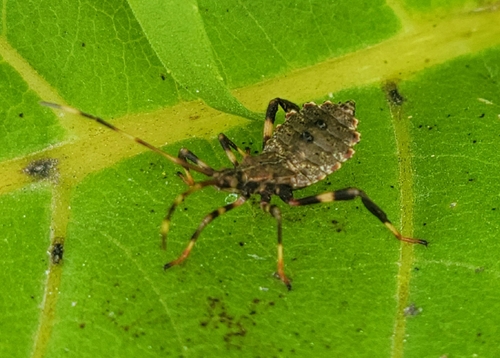
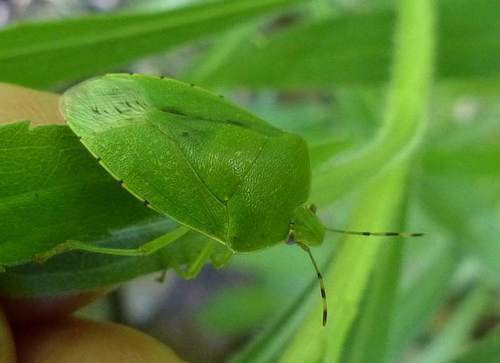
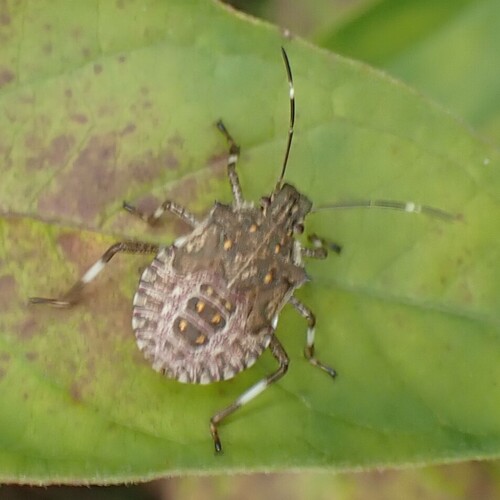
Four-Lined Plant Bug

Four-Lined Plant Bug

Poecilocapsus lineatus

Daily sighting probability ~10% · With luck
at Shenandoah National Park

In 3 days ~20% in a week ~30%

12 Verified sightings at Shenandoah National Park From 2019 to 2026
23 In all 2 parks
May Best month
☀️ Diurnal When it's spotted

About the Four-Lined Plant Bug

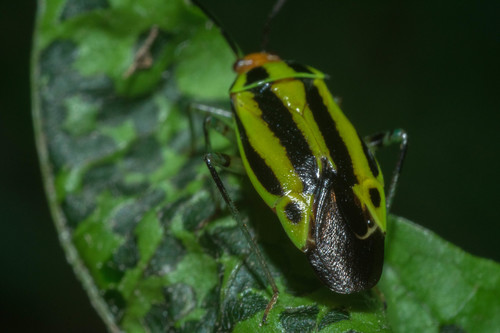
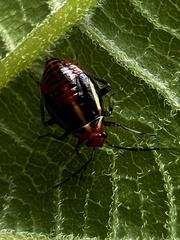
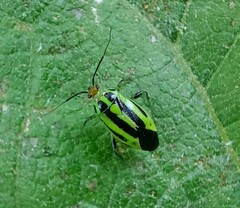
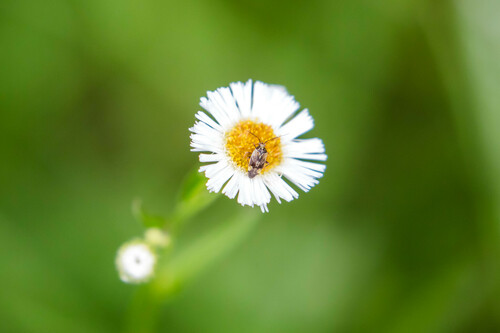
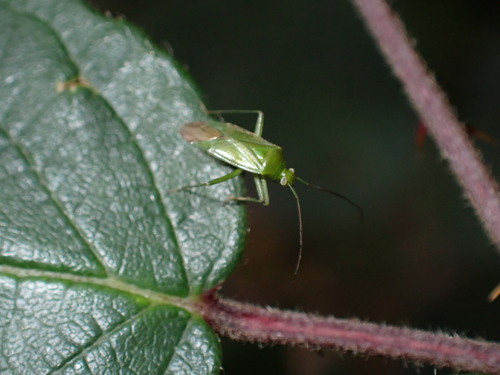
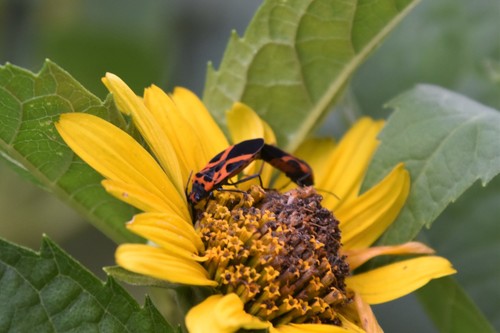
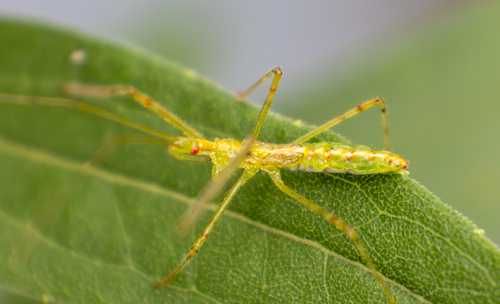
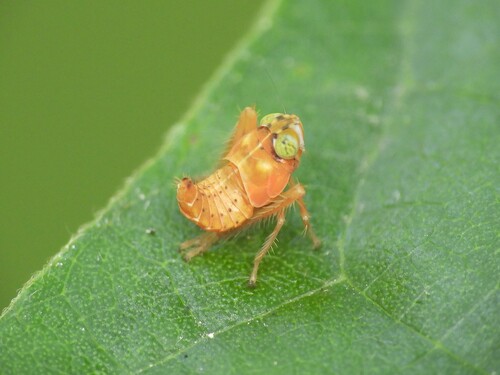
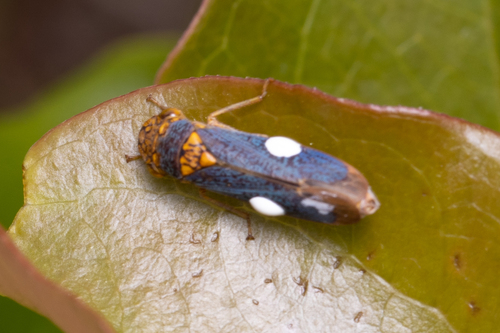
Poecilocapsus lineatus, commonly known as the fourlined plant bug, is a species of true bug (Hemiptera) in the family Miridae. This species is native to the United States and Canada. The adults are about 7–7.5 millimetres (0.28–0.30 in) in length and 3.5 millimetres (0.14 in) in width. Adults have four distinct black lines against a background color ranging from green to yellow, with an orange head and prominent, dark red eyes. Nymphs grow rapidly through five instars, with wing pads growing at each molt. Nymphs are a bright red color with black markings, except for the last instar which is bright orange.

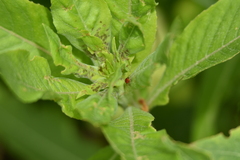
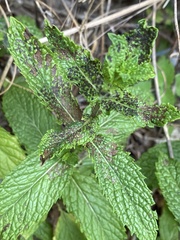
This species has a wide host range, but shows strong preference for plants in the mint and composite families (Lamiaceae and Asteraceae). Various herbaceous perennials and shrubs in these families are favored for reproduction and account for the majority of damage observed in the landscape and garden, although vegetables are also sometimes damaged. Both nymphs and adults feed on leaves creating the water-soaked patches of leaf tissues that may later dry up or fall out to produce tiny holes.

This species has only one generation per... Wikipedia →

Global Distribution

Parks Where Found

# Park Country Daily sighting probability
1 Shenandoah National Park 🇺🇸 United States
~10%
2 Great Smoky Mountains National Park 🇺🇸 United States
~10%

Cities Where Found

# City Country Daily sighting probability
1 Minneapolis [Saint Paul] 🇺🇸 United States
~10%
2 Detroit 🇺🇸 United States
~10%
3 Austin 🇺🇸 United States
~10%
4 Washington 🇺🇸 United States
~10%
5 Dallas 🇺🇸 United States
~10%
6 Chicago 🇺🇸 United States
~10%
7 Toronto 🇨🇦 Canada
~10%
8 Baltimore 🇺🇸 United States
~10%
9 Boston 🇺🇸 United States
~10%
10 Philadelphia 🇺🇸 United States
<5%

Before you go

What are the chances of seeing a Four-Lined Plant Bug in Shenandoah National Park?

With luck

About 10% of wildlife watchers report a Four-Lined Plant Bug sighting in Shenandoah National Park on a given day, based on 12 verified sightings from GBIF citizen-science data from 2019 to 2026. It is the 406th most-seen of the 723 insects we can rate there. Over three days the chance rises to about 20%, and over a week to about 30%, if each day is a fresh chance.

When is the best time to see a Four-Lined Plant Bug in Shenandoah National Park?

May and June

In those months about 10% of wildlife watchers report a Four-Lined Plant Bug in Shenandoah National Park on a given day, against under 5% in July to April, the lowest months.

What time of day is best to see a Four-Lined Plant Bug?

Between 9 am and noon

Across all the parks we cover, that three-hour window holds the most Four-Lined Plant Bug sightings with a recorded time, and about 8 in 10 of them come between 6 am and 6 pm: it is a daytime animal.

Is Shenandoah National Park the best place to see a Four-Lined Plant Bug?

Yes

Of the 2 parks where we can rate Four-Lined Plant Bug sightings, Shenandoah National Park has the highest daily chance: about 10%. Next come Great Smoky Mountains National Park (United States, about 10%).

Which relatives of the Four-Lined Plant Bug live in Shenandoah National Park?

Same family: Miridae

The closest relatives of the Four-Lined Plant Bug that you can see in Shenandoah National Park (family Miridae, Plant Bugs) are North American Tarnished Plant Bug (about 10%) and Common Green Capsid (about 10%), with each one's daily chance of a sighting.

Where does the Four-Lined Plant Bug sighting chance come from?

GBIF citizen-science records

It is estimated from how often the Four-Lined Plant Bug is recorded against all the insects logged in Shenandoah National Park (12 verified sightings from 2019 to 2026), calibrated against known sighting rates. Figures are rounded to the nearest 10% because citizen-science data supports honest approximations, not decimals, and months with records from fewer than five people show "—". How it works.

← Back to Shenandoah National Park