Elongated Bean Weevil

Elongated Bean Weevil

Lixus pulverulentus

Daily sighting probability ~20% · Possible
at Sierra Nevada National Park

In 3 days ~40% in a week ~70%

14 Verified sightings at Sierra Nevada National Park From 2019 to 2026
38 In all 4 parks
April Best month
☀️ Diurnal When it's spotted

About the Elongated Bean Weevil

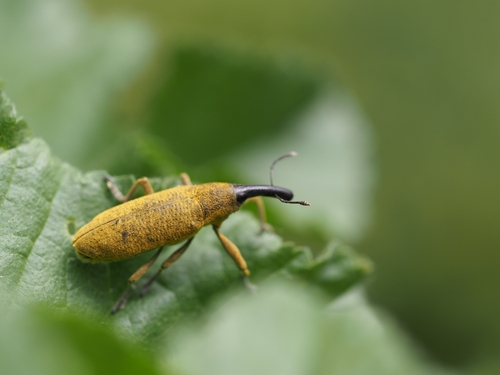
Lixus pulverulentus is a species of weevil belonging to the family Curculionidae. It is commonly known as the elongated bean weevil. The species was scientifically described in 1763 by Giovanni Antonio Scopoli as Curculio pulverulentus Scopoli, 1763.

This widespread, but quite rare species can be found in southern and central Europe (including the Iberian Peninsula), from Iran to Asia Minor and in the Mediterranean Basin, including North Africa and the Middle East Hastings Country Park produced the last British records of this species and it is now considered to no longer breed in Britain.

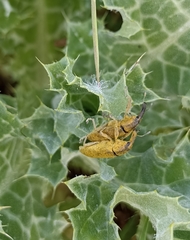
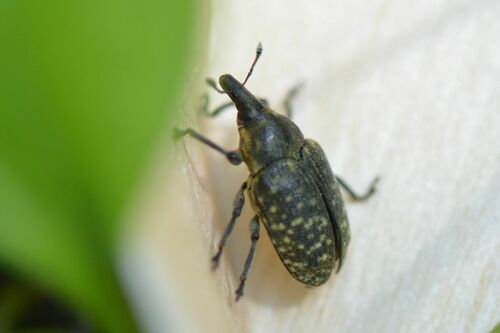
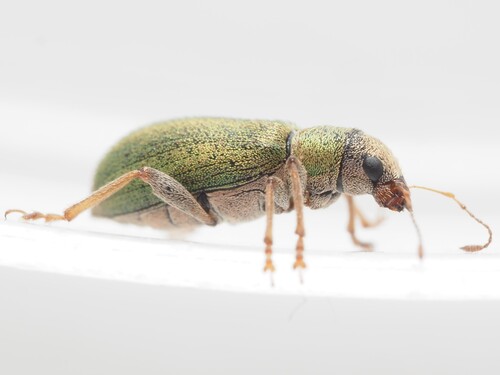
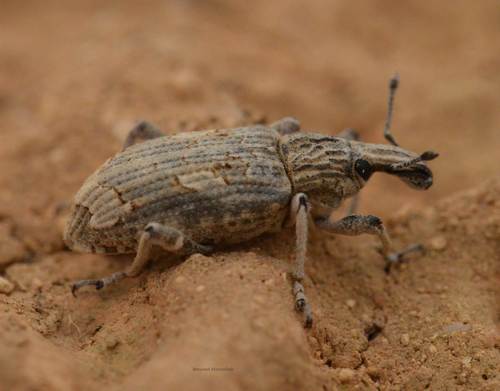
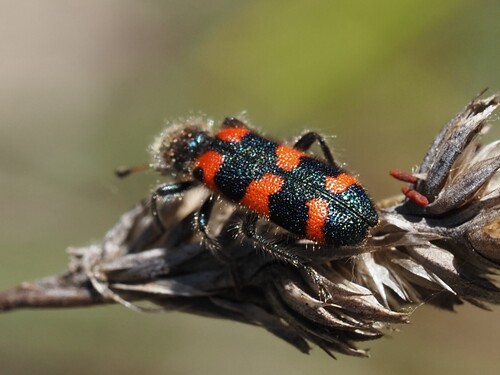
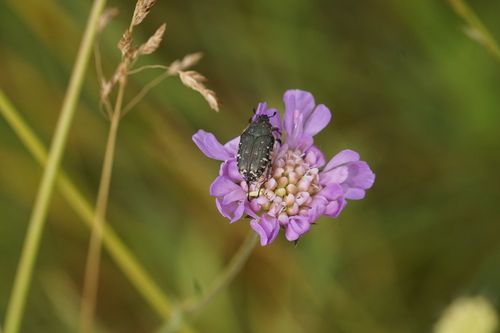
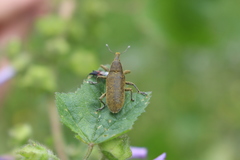
Lixus pulverulentus can reach a body length of about 10.5–17.5 mm (0.41–0.69 in). These rather long weevils have a narrow, elongated body. The conically shaped pronotum is hardly granular. They are dusted yellowish to brownish.

The beetles appear in April. They are mainly seen in May and June. Larvae of these polyphagous beetles mainly develop in the stems of Malvaceae, Asteraceae, and Fabaceae (Alcea rosea, Malva pusilla, Malva sylvestris. Malva thuringiaca.Cirsium arvense, Cirsium palustre, Cirsium serrulatum, Carduus acanthoides, Silybum marianum... Wikipedia →
Global Distribution

Parks Where Found

# Park Country Daily sighting probability
1 Sierra Nevada National Park 🇪🇸 Spain
~20%
2 Doñana National Park 🇪🇸 Spain
~10%
3 Fertő-Hanság National Park 🇭🇺 Hungary
~10%
4 Cévennes National Park 🇫🇷 France
~10%

Cities Where Found

# City Country Daily sighting probability
1 Izmir 🇹🇷 Turkey
~30%
2 Algiers 🇩🇿 Algeria
~20%
3 Athens 🇬🇷 Greece
~10%
4 Tel Aviv 🇮🇱 Israel
~10%
5 Istanbul 🇹🇷 Turkey
~10%
6 Lisbon 🇵🇹 Portugal
~10%
7 Jerusalem 🇮🇱 Israel
~10%
8 Barcelona 🇪🇸 Spain
~10%
9 Valencia 🇪🇸 Spain
~10%
10 Lyon 🇫🇷 France
<5%

Before you go

What are the chances of seeing an Elongated Bean Weevil in Sierra Nevada National Park?

Possible

About 20% of wildlife watchers report an Elongated Bean Weevil sighting in Sierra Nevada National Park on a given day, based on 14 verified sightings from GBIF citizen-science data from 2019 to 2026. It is the 113th most-seen of the 479 insects we can rate there. Over three days the chance rises to about 40%, and over a week to about 70%, if each day is a fresh chance.

When is the best time to see an Elongated Bean Weevil in Sierra Nevada National Park?

April

In that month about 30% of wildlife watchers report an Elongated Bean Weevil in Sierra Nevada National Park on a given day, against under 5% in October to February, the lowest months.

What time of day is best to see an Elongated Bean Weevil?

Between 11 am and 2 pm

Across all the parks we cover, that three-hour window holds the most Elongated Bean Weevil sightings with a recorded time, and about 8 in 10 of them come between 6 am and 6 pm: it is a daytime animal.

Is Sierra Nevada National Park the best place to see an Elongated Bean Weevil?

Yes

Of the 4 parks where we can rate Elongated Bean Weevil sightings, Sierra Nevada National Park has the highest daily chance: about 20%. Next come Doñana National Park (Spain, about 10%) and Fertő-Hanság National Park (Hungary, about 10%).

Which relatives of the Elongated Bean Weevil live in Sierra Nevada National Park?

Same family: Curculionidae

The closest relatives of the Elongated Bean Weevil that you can see in Sierra Nevada National Park (family Curculionidae, True Weevils) are Turbine Cylindrical Weevil (about 10%), Pachyrhinus lethierryi (about 10%) and Rhytideres plicatus (about 10%), with each one's daily chance of a sighting.

Where does the Elongated Bean Weevil sighting chance come from?

GBIF citizen-science records

It is estimated from how often the Elongated Bean Weevil is recorded against all the insects logged in Sierra Nevada National Park (14 verified sightings from 2019 to 2026), calibrated against known sighting rates. Figures are rounded to the nearest 10% because citizen-science data supports honest approximations, not decimals, and months with records from fewer than five people show "—". How it works.

← Back to Sierra Nevada National Park