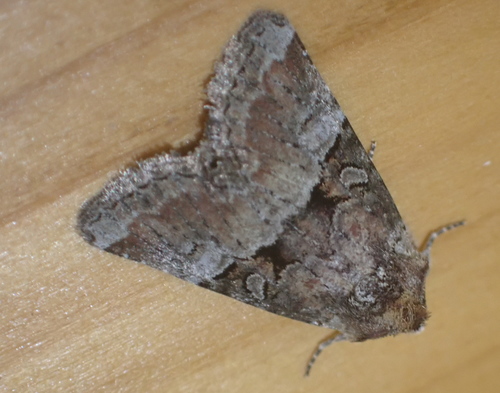
Pale Shoulder

Pale Shoulder

Acontia lucida

Daily sighting probability ~10% · With luck
at Sierra Nevada National Park

In 3 days ~30% in a week ~60%

11 Verified sightings at Sierra Nevada National Park From 2019 to 2026
67 In all 5 parks
September Best month
☀️🌙 Day & Night When it's spotted

About the Pale Shoulder

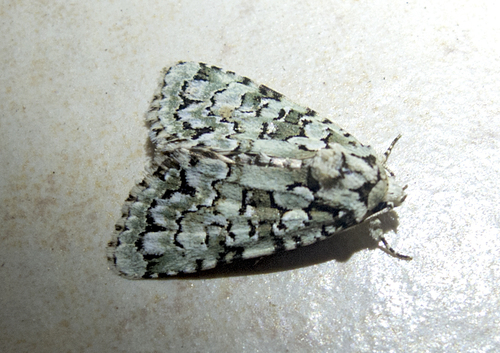
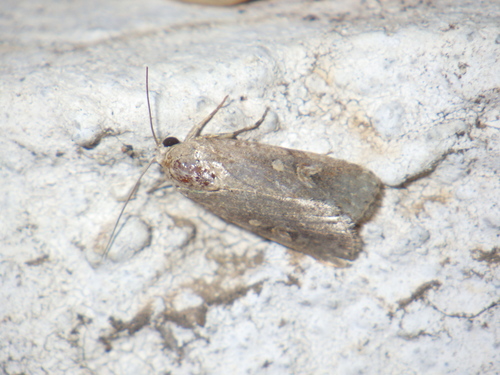
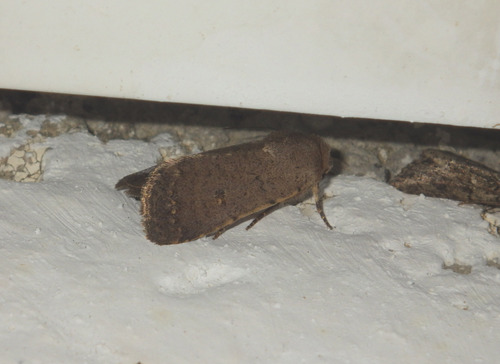
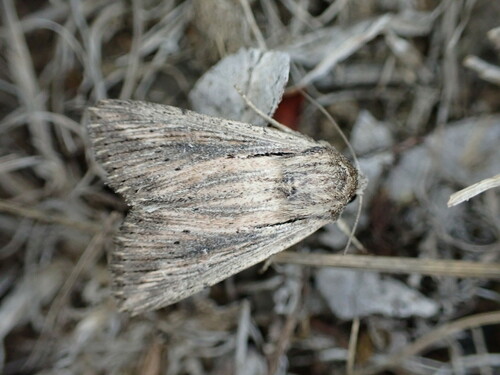
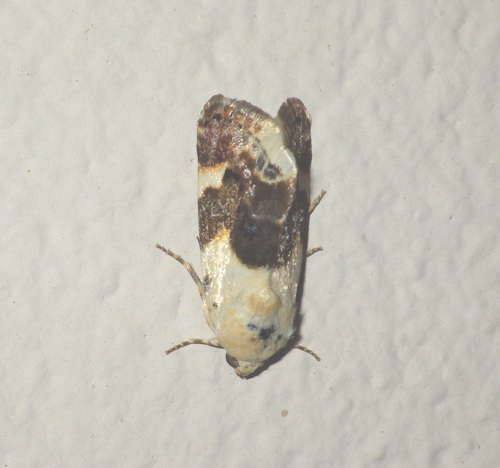
Acontia lucida, the pale shoulder, is a moth of the family Noctuidae. The species was first described by Johann Siegfried Hufnagel in 1766. This species can be found in most of Europe, east to Turkey, Iran and India. It has also been recorded from Algeria. It is a rare migrant to the south coast of Great Britain. The pale shoulder can be found in grasslands, dry meadows, steppes, dunes and roadsides, where the host plants are present.

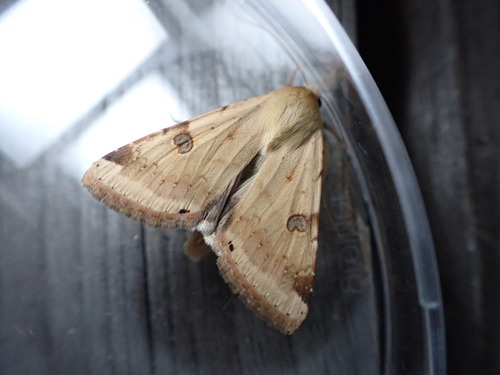
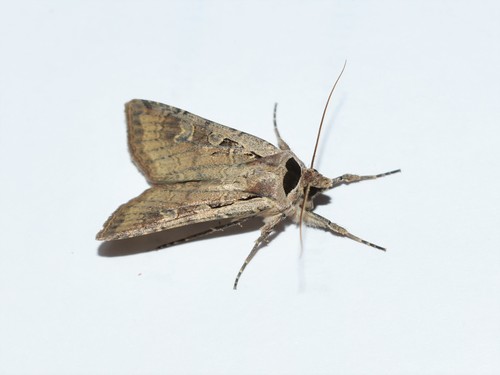
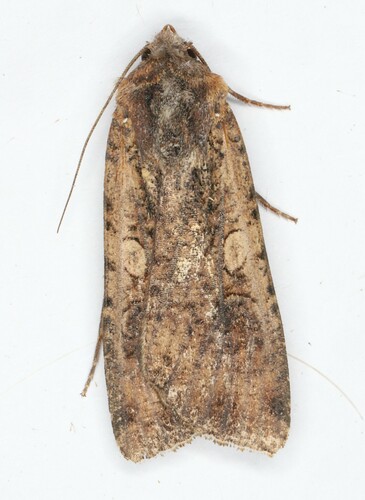
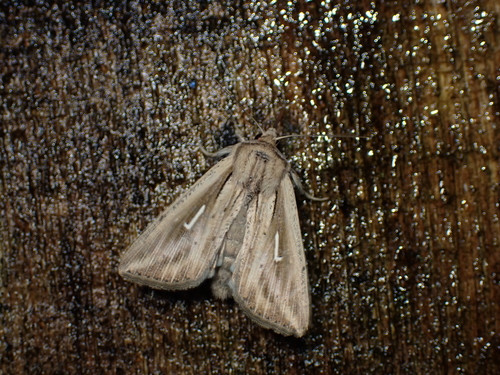
The wingspan of Acontia lucida can reach 26–30 mm. Head, thorax and abdomen are white. The forewings show a greyish-white front part and a wide dark brown median band, dark mottled and marbled, larger in the centre. A white mark is present on the outer edge of the forewings, while a brown mark is close to the apex. Hindwings are whitish fuscous, with a brown band near the apex. Larvae are green or brown, with transversal whitish bands.

The larvae are polyphagous, feeding on various herbaceous plants, mainly on mallow (Malva species), common marshmallow (Althaea officinalis), field bindweed (Convolvulus arvensis), goosefoots (Chenopodium) and dandelion (Taraxacum). Adults are on the wing on... Wikipedia →
Global Distribution

Parks Where Found

# Park Country Daily sighting probability
1 Sierra Nevada National Park 🇪🇸 Spain
~10%
2 Cévennes National Park 🇫🇷 France
~10%
3 Doñana National Park 🇪🇸 Spain
~10%
4 Sierra de Guadarrama National Park 🇪🇸 Spain
<5%
5 Pyrénées National Park 🇫🇷 France
<5%

Cities Where Found

# City Country Daily sighting probability
1 Marrakesh 🇲🇦 Morocco
~10%
2 Algiers 🇩🇿 Algeria
~10%
3 Rome 🇮🇹 Italy
~10%
4 Lyon 🇫🇷 France
~10%
5 Belgrade 🇷🇸 Serbia
~10%
6 Madrid 🇪🇸 Spain
~10%
7 Athens 🇬🇷 Greece
~10%
8 Budapest 🇭🇺 Hungary
~10%
9 Barcelona 🇪🇸 Spain
~10%
10 Milan 🇮🇹 Italy
<5%

Before you go

What are the chances of seeing a Pale Shoulder in Sierra Nevada National Park?

With luck

About 10% of wildlife watchers report a Pale Shoulder sighting in Sierra Nevada National Park on a given day, based on 11 verified sightings from GBIF citizen-science data from 2019 to 2026. It is the 183rd most-seen of the 479 insects we can rate there. Over three days the chance rises to about 30%, and over a week to about 60%, if each day is a fresh chance.

When is the best time to see a Pale Shoulder in Sierra Nevada National Park?

September

In that month about 30% of wildlife watchers report a Pale Shoulder in Sierra Nevada National Park on a given day, against under 5% in October to March, the lowest months.

What time of day is best to see a Pale Shoulder?

Between 9 pm and midnight

Across all the parks we cover, that three-hour window holds the most Pale Shoulder sightings with a recorded time, and about 6 in 10 of them come between 6 pm and 6 am: it is seen both by day and at night.

Is Sierra Nevada National Park the best place to see a Pale Shoulder?

Yes

Of the 5 parks where we can rate Pale Shoulder sightings, Sierra Nevada National Park has the highest daily chance: about 10%. Next come Cévennes National Park (France, about 10%) and Doñana National Park (Spain, about 10%).

Which relatives of the Pale Shoulder live in Sierra Nevada National Park?

Same family: Noctuidae

The closest relatives of the Pale Shoulder that you can see in Sierra Nevada National Park (family Noctuidae, Cutworm Moths and Allies) are Turnip Moth (about 20%), The Bordered Straw (about 20%) and Silver Υ (about 20%), with each one's daily chance of a sighting.

Where does the Pale Shoulder sighting chance come from?

GBIF citizen-science records

It is estimated from how often the Pale Shoulder is recorded against all the insects logged in Sierra Nevada National Park (11 verified sightings from 2019 to 2026), calibrated against known sighting rates. Figures are rounded to the nearest 10% because citizen-science data supports honest approximations, not decimals, and months with records from fewer than five people show "—". How it works.

← Back to Sierra Nevada National Park