Red-Underwing Skipper

Red-Underwing Skipper

Spialia sertorius

Daily sighting probability ~10% · With luck
at Sierra Nevada National Park

In 3 days ~30% in a week ~60%

12 Verified sightings at Sierra Nevada National Park From 2019 to 2026
120 In all 6 parks
May Best month
☀️ Diurnal When it's spotted

About the Red-Underwing Skipper

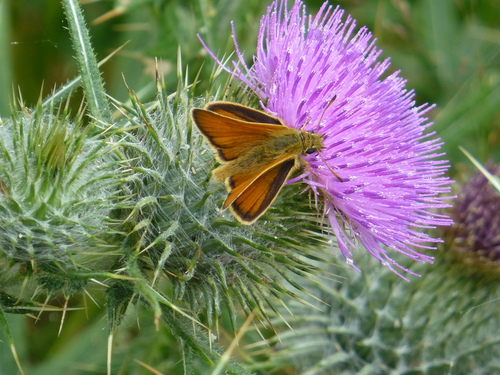
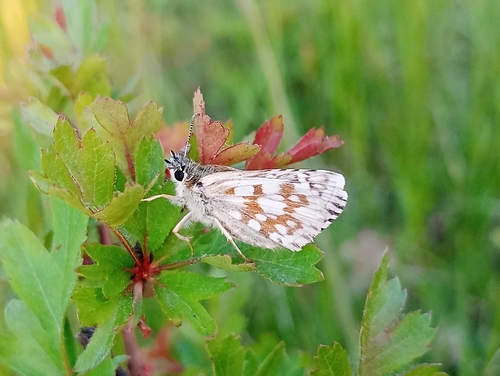
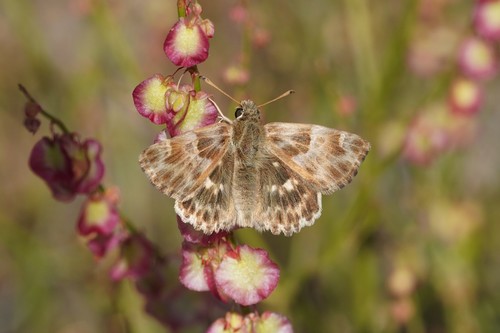
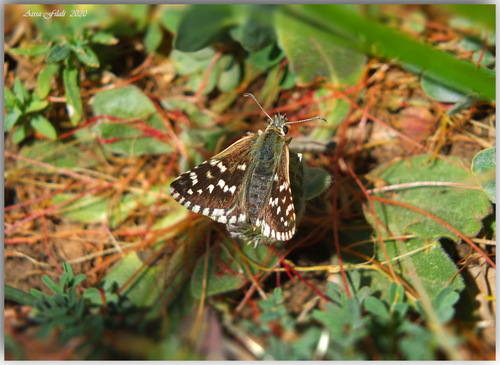
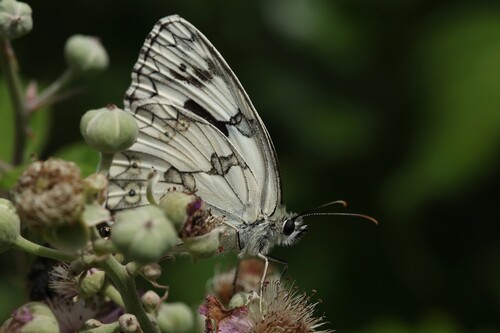
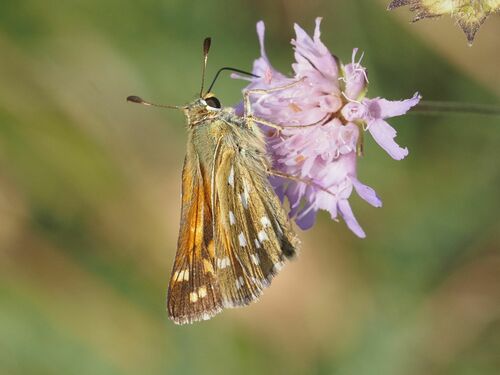
Spialia sertorius, commonly known as the red-underwing skipper, is a butterfly of the family Hesperiidae. The red-underwing skipper can be confused with the species of the genus Pyrgus. The underside has a cinnamon-red to yellowish base tone, while it is primarily greenish to brownish in the Pyrgus species. Since this coloring is less evident in older butterflies (and deviations occur), the characteristic arrangement of the spots on the underside of the hind wing should always be used to determine. On the upper side of the forewing, there is a series of small, distinctly bright spots in the submarginal bandage, which runs in a regular flat curve to the front edge. The four areas of the post-discal region further towards the wing base are also in a row, while in the species of the genus Pyrgus, only three are side by side, and the fourth is disengaged. The wingspan is 22–26 mm.

The identification situation in Spain is difficult, as the Spialia rosae described from there in 2016 flies together with Spialia sertorius at altitudes around 1000 m. Spialia sertorius is commonly found in Western and Central Europe. To the south, the area extends over southern... Wikipedia →

Global Distribution

Parks Where Found

# Park Country Daily sighting probability
1 Mercantour National Park 🇫🇷 France
~10%
2 Sierra Nevada National Park 🇪🇸 Spain
~10%
3 Cévennes National Park 🇫🇷 France
~10%
4 Ecrins National Park 🇫🇷 France
~10%
5 Pyrénées National Park 🇫🇷 France
~10%
6 Sierra de Guadarrama National Park 🇪🇸 Spain
<5%

Cities Where Found

# City Country Daily sighting probability
1 Jerusalem 🇮🇱 Israel
~10%
2 Prague 🇨🇿 Czechia
<5%

Before you go

What are the chances of seeing a Red-Underwing Skipper in Sierra Nevada National Park?

With luck

About 10% of wildlife watchers report a Red-Underwing Skipper sighting in Sierra Nevada National Park on a given day, based on 12 verified sightings from GBIF citizen-science data from 2019 to 2026. It is the 169th most-seen of the 479 insects we can rate there. Over three days the chance rises to about 30%, and over a week to about 60%, if each day is a fresh chance.

When is the best time to see a Red-Underwing Skipper in Sierra Nevada National Park?

May and July–August

In those months about 20% of wildlife watchers report a Red-Underwing Skipper in Sierra Nevada National Park on a given day, against under 5% in September to April, the lowest months.

What time of day is best to see a Red-Underwing Skipper?

Between 10 am and 1 pm

Across all the parks we cover, that three-hour window holds the most Red-Underwing Skipper sightings with a recorded time, and about 9 in 10 of them come between 6 am and 6 pm: it is a daytime animal.

Is Sierra Nevada National Park the best place to see a Red-Underwing Skipper?

Among the best

Of the 6 parks where we can rate Red-Underwing Skipper sightings, Sierra Nevada National Park ranks 2nd at about 10%, level with the leaders once rounded. The best odds are in Mercantour National Park (France, about 10%).

Which relatives of the Red-Underwing Skipper live in Sierra Nevada National Park?

Same family: Hesperiidae

The closest relatives of the Red-Underwing Skipper that you can see in Sierra Nevada National Park (family Hesperiidae, Skippers) are Common Branded Skipper (about 20%), Sage Skipper (about 20%) and Small Skipper (about 20%), with each one's daily chance of a sighting.

Where does the Red-Underwing Skipper sighting chance come from?

GBIF citizen-science records

It is estimated from how often the Red-Underwing Skipper is recorded against all the insects logged in Sierra Nevada National Park (12 verified sightings from 2019 to 2026), calibrated against known sighting rates. Figures are rounded to the nearest 10% because citizen-science data supports honest approximations, not decimals, and months with records from fewer than five people show "—". How it works.

← Back to Sierra Nevada National Park