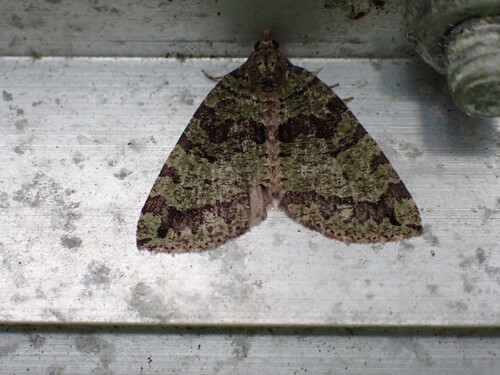
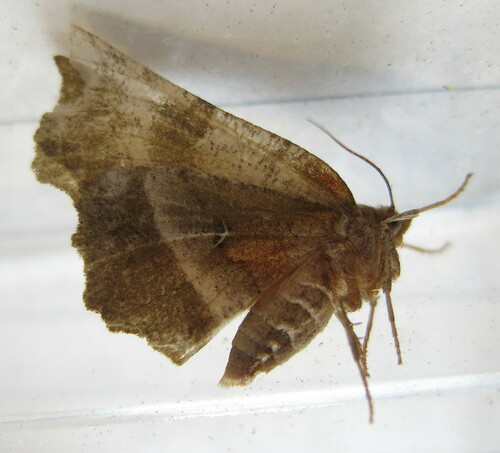
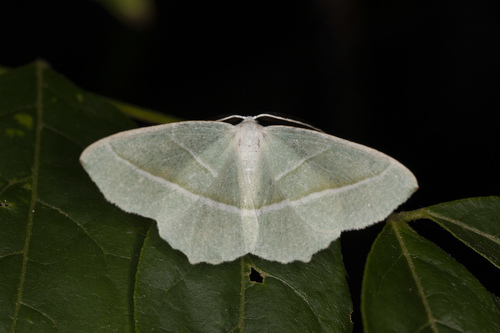
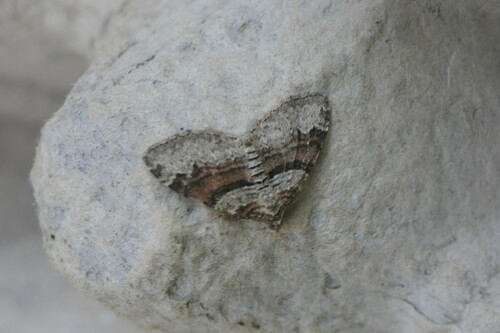
Common Emerald

Common Emerald

Hemithea aestivaria

Daily sighting probability ~10% · With luck
at Snowdonia National Park

In 3 days ~20% in a week ~40%

7 Verified sightings at Snowdonia National Park From 2019 to 2026
59 In all 5 parks
July Best month
🌙 Nocturnal When it's spotted

About the Common Emerald

The common emerald (Hemithea aestivaria) is a moth of the family Geometridae. The species is found throughout the Nearctic and Palearctic regions and the Near East. It is mostly commonly found in the southern half of Ireland and Britain. It was accidentally introduced into southern British Columbia in 1973.

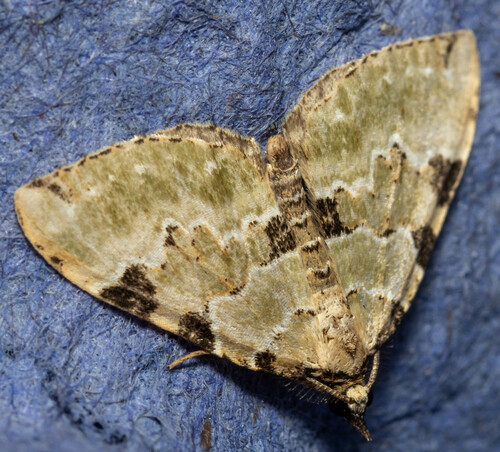
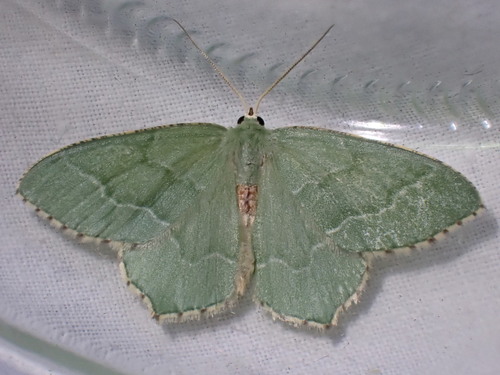
All wings are generally soft grey-green with grey and white chequered fringes and narrow white fascia, two on the forewing, one on the hindwing. The green colouration tends not to fade over time as much as in other emeralds. The hindwings have a sharply angled termen giving the moth a very distinctive shape. The wingspan is 30–35 mm.

It flies at dusk and night in June and July and will come to light. The larva is green with reddish-brown markings and black v-shaped marks along the back. The young larva will feed on most plants but later it feeds on trees and shrubs. The species overwinters as a larva.

^ The flight season refers to the British Isles. This may vary in other parts of the range. Aralia Artemisia Betula – birch Camellia Carpinus – hornbeam Castanea – chestnut Citrus Corylus – hazel Crataegus - hawthorn Diervilla... Wikipedia →

Global Distribution

Parks Where Found

# Park Country Daily sighting probability
1 Bavarian Forest National Park 🇩🇪 Germany
~10%
2 Snowdonia National Park 🇬🇧 United Kingdom
~10%
3 Wadden Sea National Park 🇩🇪 Germany
~10%
4 Pyrénées National Park 🇫🇷 France
<5%
5 Cévennes National Park 🇫🇷 France
<5%

Cities Where Found

# City Country Daily sighting probability
1 Liverpool 🇬🇧 United Kingdom
~10%
2 Kharkiv 🇺🇦 Ukraine
~10%
3 Manchester 🇬🇧 United Kingdom
~10%
4 Copenhagen 🇩🇰 Denmark
~10%
5 Birmingham 🇬🇧 United Kingdom
~10%
6 London 🇬🇧 United Kingdom
~10%
7 Amsterdam 🇳🇱 Netherlands
~10%
8 Rotterdam [The Hague] 🇳🇱 Netherlands
<5%
9 Porto 🇵🇹 Portugal
<5%
10 Seattle 🇺🇸 United States
<5%

Before you go

What are the chances of seeing a Common Emerald in Snowdonia National Park?

With luck

About 10% of wildlife watchers report a Common Emerald sighting in Snowdonia National Park on a given day, based on 7 verified sightings from GBIF citizen-science data from 2019 to 2026. It is the 294th most-seen of the 387 insects we can rate there. Over three days the chance rises to about 20%, and over a week to about 40%, if each day is a fresh chance.

When is the best time to see a Common Emerald in Snowdonia National Park?

June and July

In those months about 10% of wildlife watchers report a Common Emerald in Snowdonia National Park on a given day, against under 5% in August to May, the lowest months.

What time of day is best to see a Common Emerald?

Between 11 pm and 2 am

Across all the parks we cover, that three-hour window holds the most Common Emerald sightings with a recorded time, and about 7 in 10 of them come between 6 pm and 6 am: it is mostly seen at night.

Is Snowdonia National Park the best place to see a Common Emerald?

Among the best

Of the 5 parks where we can rate Common Emerald sightings, Snowdonia National Park ranks 2nd at about 10%, level with the leaders once rounded. The best odds are in Bavarian Forest National Park (Germany, about 10%).

Which relatives of the Common Emerald live in Snowdonia National Park?

Same family: Geometridae

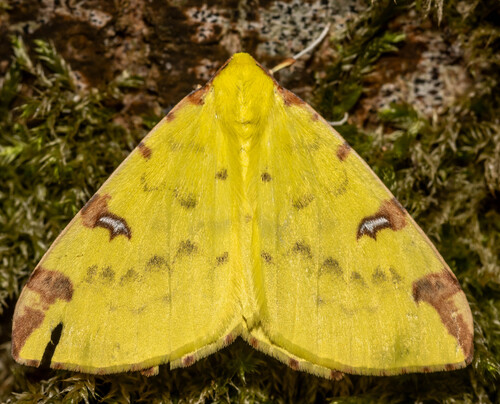
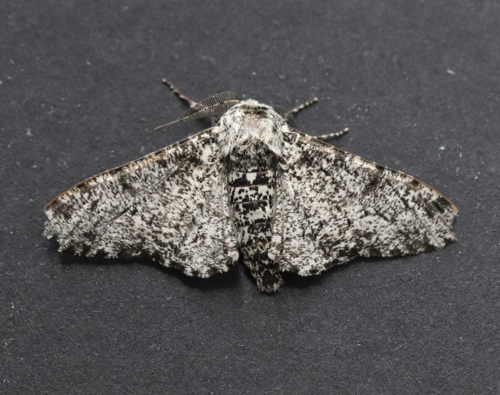
The closest relatives of the Common Emerald that you can see in Snowdonia National Park (family Geometridae, Geometer Moths) are Brimstone Moth (about 30%), Small Phoenix (about 20%) and Peppered Moth (about 20%), with each one's daily chance of a sighting.

Where does the Common Emerald sighting chance come from?

GBIF citizen-science records

It is estimated from how often the Common Emerald is recorded against all the insects logged in Snowdonia National Park (7 verified sightings from 2019 to 2026), calibrated against known sighting rates. Figures are rounded to the nearest 10% because citizen-science data supports honest approximations, not decimals, and months with records from fewer than five people show "—". How it works.
← Back to Snowdonia National Park