Treble Bar

Treble Bar

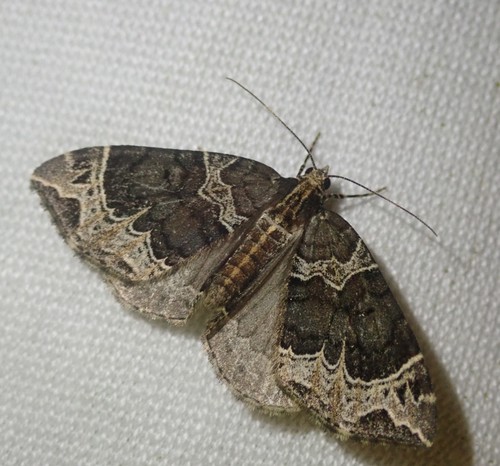
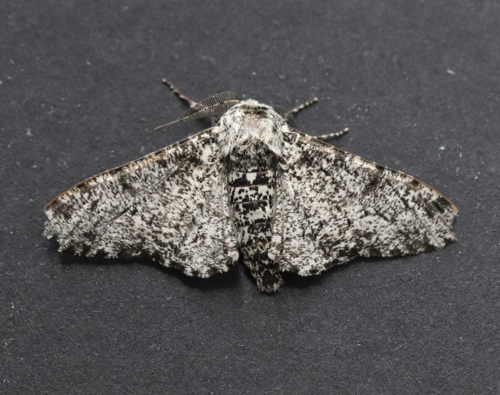
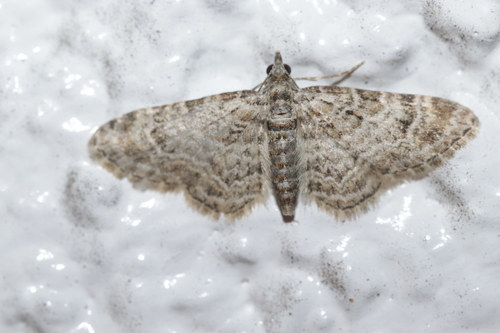
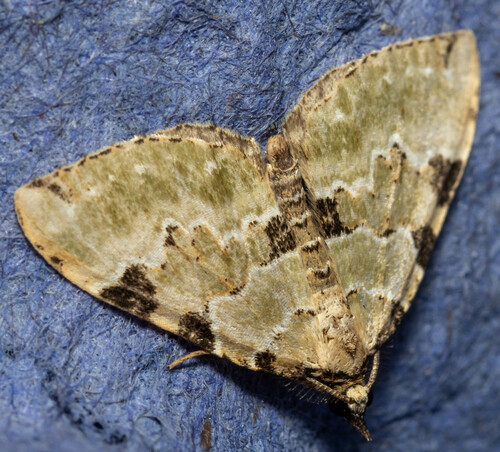
Aplocera plagiata

Daily sighting probability ~10% · With luck
at Snowdonia National Park

In 3 days ~20% in a week ~40%

6 Verified sightings at Snowdonia National Park From 2019 to 2026
23 In all 4 parks
August Best month
☀️ Diurnal When it's spotted

About the Treble Bar

Aplocera plagiata, known as the treble-bar or St. John's wort inchworm, is a moth of the family Geometridae. The species was first described by Carl Linnaeus in his 1758 10th edition of Systema Naturae. It is found throughout the Palearctic region and the Near East.

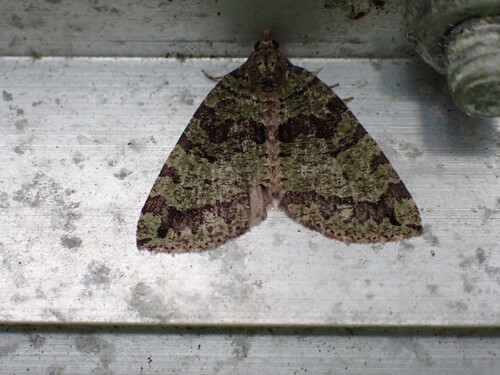
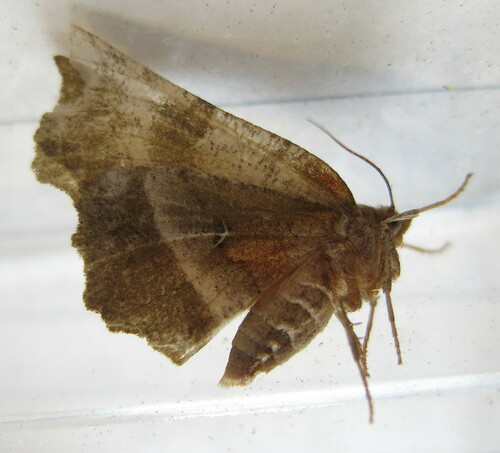
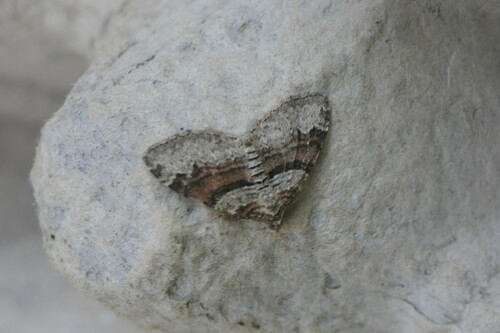
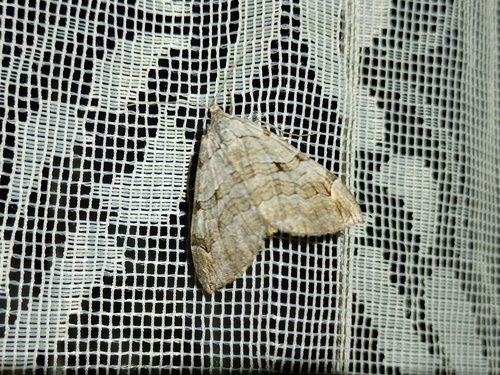
This species varies considerably in size (wingspan 37–43 mm) and colouration, but is generally grey with three characteristic dark fascia across each forewing, that resemble a musical 'Staff', giving it its common name. The hindwings are pale grey or buff. Many forma have been described. (See Prout's The Macrolepidoptera of the world)

Aplocera plagiata is difficult to certainly distinguish from its congener Aplocera efformata (See Townsend et al.) One or two broods are produced each year. In the British Isles, the adults can be seen at any time from May to September. The species flies at night and is attracted to light.

The egg is whitish, without gloss, micropylar rosette 11- to 12-leaved, the sides with regular polygonal reticulation, each cell again more irregularly subdivided. The larva is also very variable, being green to reddish brown with alternating darker and lighter stripes. It feeds on various species of St John's wort (Hypericum species). It overwinters as a small larva. Wikipedia →
Global Distribution

Parks Where Found

# Park Country Daily sighting probability
1 Snowdonia National Park 🇬🇧 United Kingdom
~10%
2 Bavarian Forest National Park 🇩🇪 Germany
<5%
3 Cévennes National Park 🇫🇷 France
<5%
4 Pyrénées National Park 🇫🇷 France
<5%

Cities Where Found

# City Country Daily sighting probability
1 Kharkiv 🇺🇦 Ukraine
~10%
2 Prague 🇨🇿 Czechia
~10%
3 London 🇬🇧 United Kingdom
<5%
4 Berlin 🇩🇪 Germany
<5%
5 Montreal 🇨🇦 Canada
<5%
6 Portland 🇺🇸 United States
<5%

Before you go

What are the chances of seeing a Treble Bar in Snowdonia National Park?

With luck

About 10% of wildlife watchers report a Treble Bar sighting in Snowdonia National Park on a given day, based on 6 verified sightings from GBIF citizen-science data from 2019 to 2026. It is the 294th most-seen of the 387 insects we can rate there. Over three days the chance rises to about 20%, and over a week to about 40%, if each day is a fresh chance.

When is the best time to see a Treble Bar in Snowdonia National Park?

May–June and August–September

In those months about 10% of wildlife watchers report a Treble Bar in Snowdonia National Park on a given day, against under 5% in July and October–April, the lowest months.

What time of day is best to see a Treble Bar?

Between 6 and 9 am

Across all the parks we cover, that three-hour window holds the most Treble Bar sightings with a recorded time, and about 7 in 10 of them come between 6 am and 6 pm: it is a daytime animal.

Is Snowdonia National Park the best place to see a Treble Bar?

Yes

Of the 4 parks where we can rate Treble Bar sightings, Snowdonia National Park has the highest daily chance: about 10%. Next come Bavarian Forest National Park (Germany, under 5%) and Cévennes National Park (France, under 5%).

Which relatives of the Treble Bar live in Snowdonia National Park?

Same family: Geometridae

The closest relatives of the Treble Bar that you can see in Snowdonia National Park (family Geometridae, Geometer Moths) are Brimstone Moth (about 30%), Small Phoenix (about 20%) and Peppered Moth (about 20%), with each one's daily chance of a sighting.

Where does the Treble Bar sighting chance come from?

GBIF citizen-science records

It is estimated from how often the Treble Bar is recorded against all the insects logged in Snowdonia National Park (6 verified sightings from 2019 to 2026), calibrated against known sighting rates. Figures are rounded to the nearest 10% because citizen-science data supports honest approximations, not decimals, and months with records from fewer than five people show "—". How it works.

← Back to Snowdonia National Park